Happy Birthday To … Me!

A week before we left for D.C., my wife asked what I wanted for my birthday (which is coming up a few days after Mr. Shakespeare’s).  I smiled and said, “We’re about to visit the Folger Shakespeare Library.  I’m pretty sure I’ll find something.”
Fast forward to actually standing in the middle of the Folger Gift Shop.  What should I get, what should I get?  Posters? Jewelry?  Music?  Something about the man, about a specific play, about the sonnets? One of everything, please.

Who are we kidding, I made a beeline straight to what I knew I had to have.

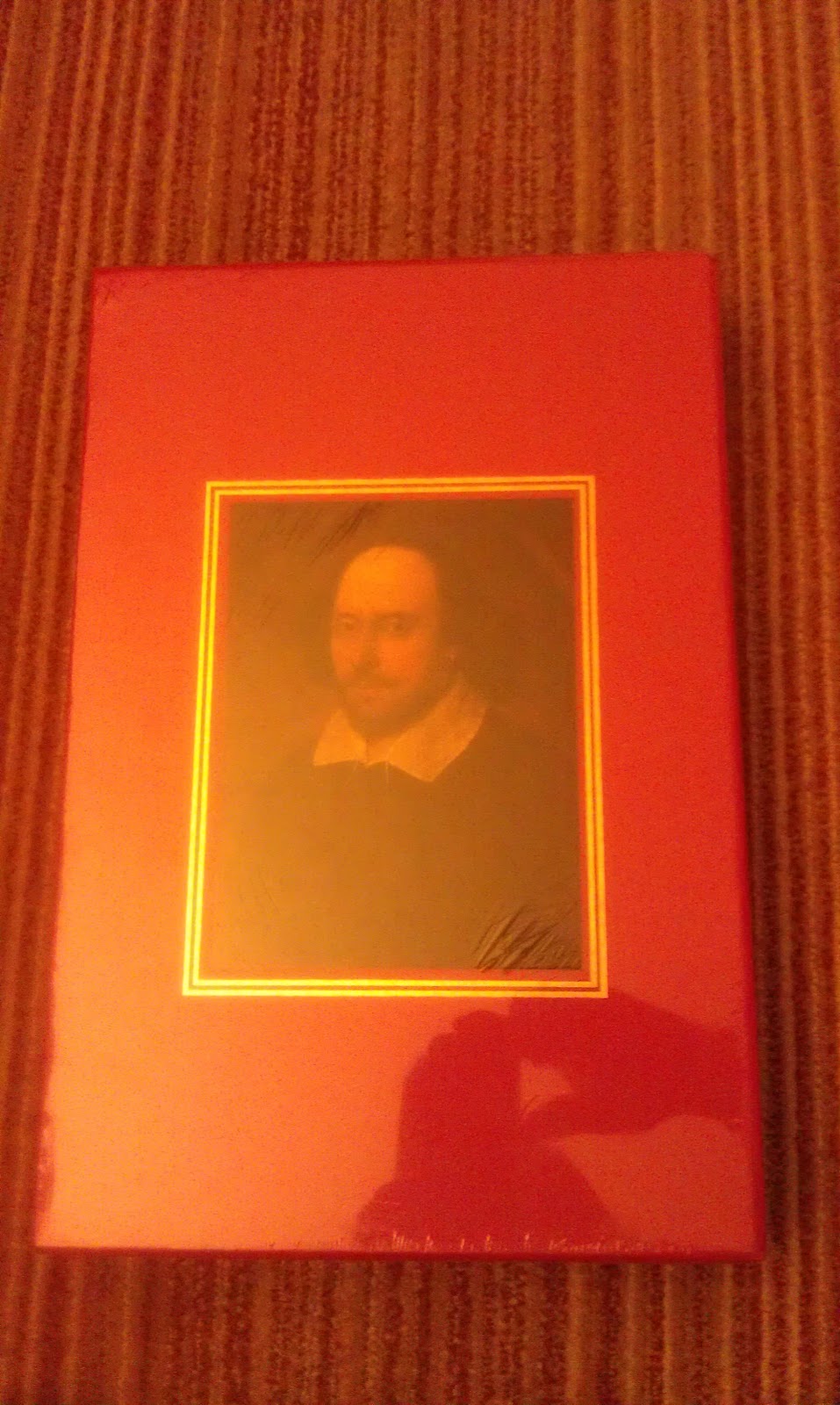
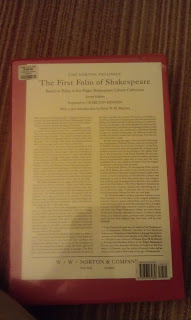
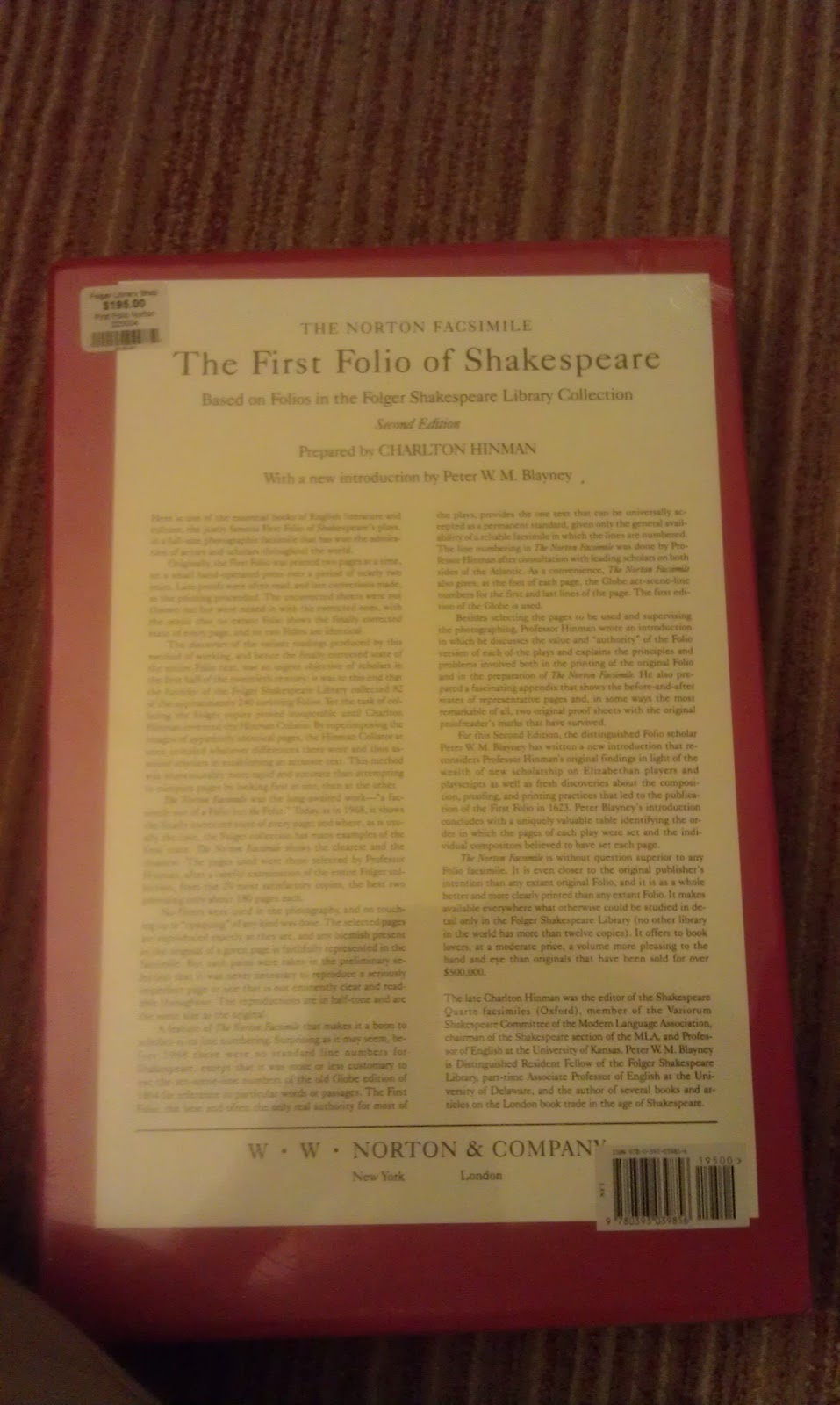
 The First Folio of Shakespeare: The Norton Facsimile

Looking at that Amazon price I see that I just paid more than perhaps I should have, but what can ya do.   I will forever be able to say that I got this one from the Folger itself.  Should have gotten somebody to sign it. 😉

My girls both grabbed for books on the Sonnets, if you can believe that, and I had to talk them out of it.  Not because I don’t think that’s good study material, but because neither of them was any sort of “Sonnets for Kids” translation.  Both were heavy academic books, and I knew that they wouldn’t understand a bit of it.  Instead we settled on some books from one of the Shakespeare for Kids series – one got a book on Shakespeare himself, the other got a translation of Midsummer.  They’ve already read them, and switched. Multiple times.

The boy, on the other hand, went with a cool jester hat (see “Foolish Games” post).  With bells.  Wore it for the rest of our trip, and was a big hit wherever he went.  Bonus, everybody kept saying “Where’d you get that hat?” and I kept saying, “The Folger Shakespeare Library!”  When he was feeling particularly bold he’d then proclaim, “To be or not to be, that is the question!”

I would open up my prize and flip pages, but my wife promptly stole the book back and announced that I cannot have it until my actual birthday.  Bummer!  But, that gives me a whole other reason to post in a few days 🙂

This posting marathon, in celebration of Shakespeare Day, is brought to you by nothing but my time, my resources, and my love for the subject. While we’ll always be the original Shakespeare blog, it takes a significant amount of effort to make us the best in the digital universe.  If you’ve not yet seen how you can show your support, now’s a great opportunity.  If you’ve already done so, thanks very much!
Inside The Vault # 5 : Alan, and The Globe

Down, down, down we travel into the deepest floor of the vault, and there we find Alan Katz (hope I spelled his name correctly!) and Garland introduces me.  “I’ve left quite a few comments on your blog,” he tells me.  I wonder if he’s reading now?  Hi, Alan!  Let me know if I’ve spelled your name correctly!

Georgianna and Garland discuss what cool stuff we might see down here, and they confer with Alan.  “Well,” he says, “There’s The Globe.”  Georgianna agrees that this would indeed be cool.  Garland has apparently never seen what we’re about to see, or has forgotten that they had it.

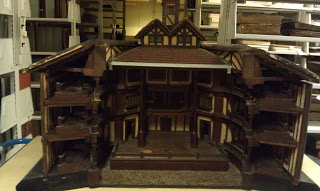
Alan disappears into the stacks and rolls out …

How cool is that!  I actually got a picture of my kids all standing around it, like a doll house.  I currently have a message in to Garland trying to learn more about this item – what time period it’s from, what was its purpose.  But I knew that I had to include it in my photo tour whether I had the research or not.

Update, directly from Alan (who has promised to post more in comments as he finds it):

The Globe was patented by H. Ernest Conklin, of Roslyn, Long Island, born in 1892. He was a scholar at Cornell and Princeton and professor at Rice in the 1920’s. The model was built no later than 1935 and is on a 3/8”:1’ scale.

Funny story – at the end of our tour of the lowest levels, we travelled back up the elevator and Georgianna took a moment to show us just how heavy and secure the vault doors (yes, multiple doors) are.  As she closes and locks the cage I whisper back down the hall, “Good night, Alan!”  Turning to Georgianna I ask, “You do remember to feed him, right?”

Later, while we were at tea (a Folger tradition!) we saw that Alan had escaped.  Garland had to share my joke with him.  “That’s what the book lift is for,” he replied, “So they can send down my food.”

The tour’s stunning and spectacular conclusion is next!

Inside The Vault #4 : Magic, Magic, Magic!

Harry who?

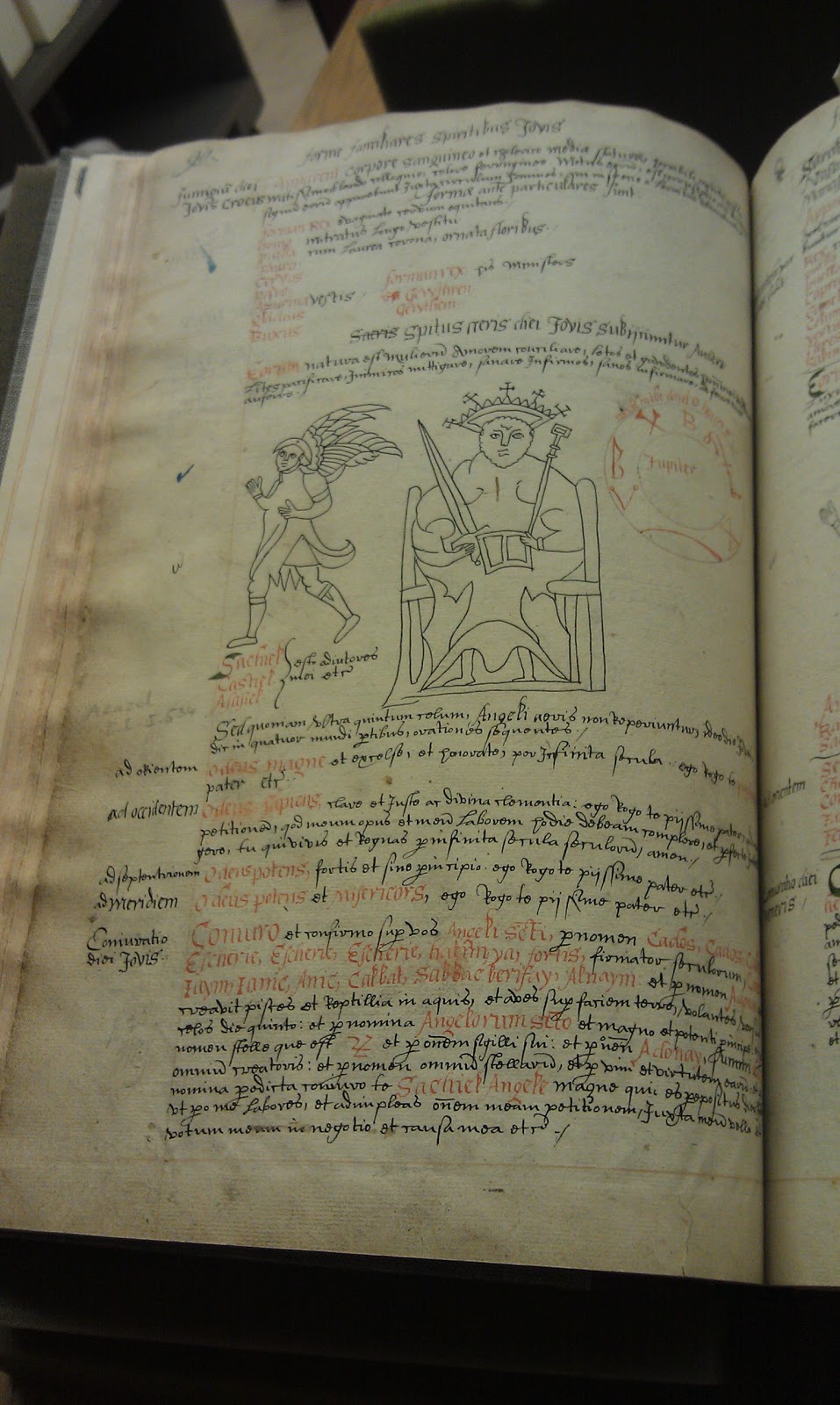
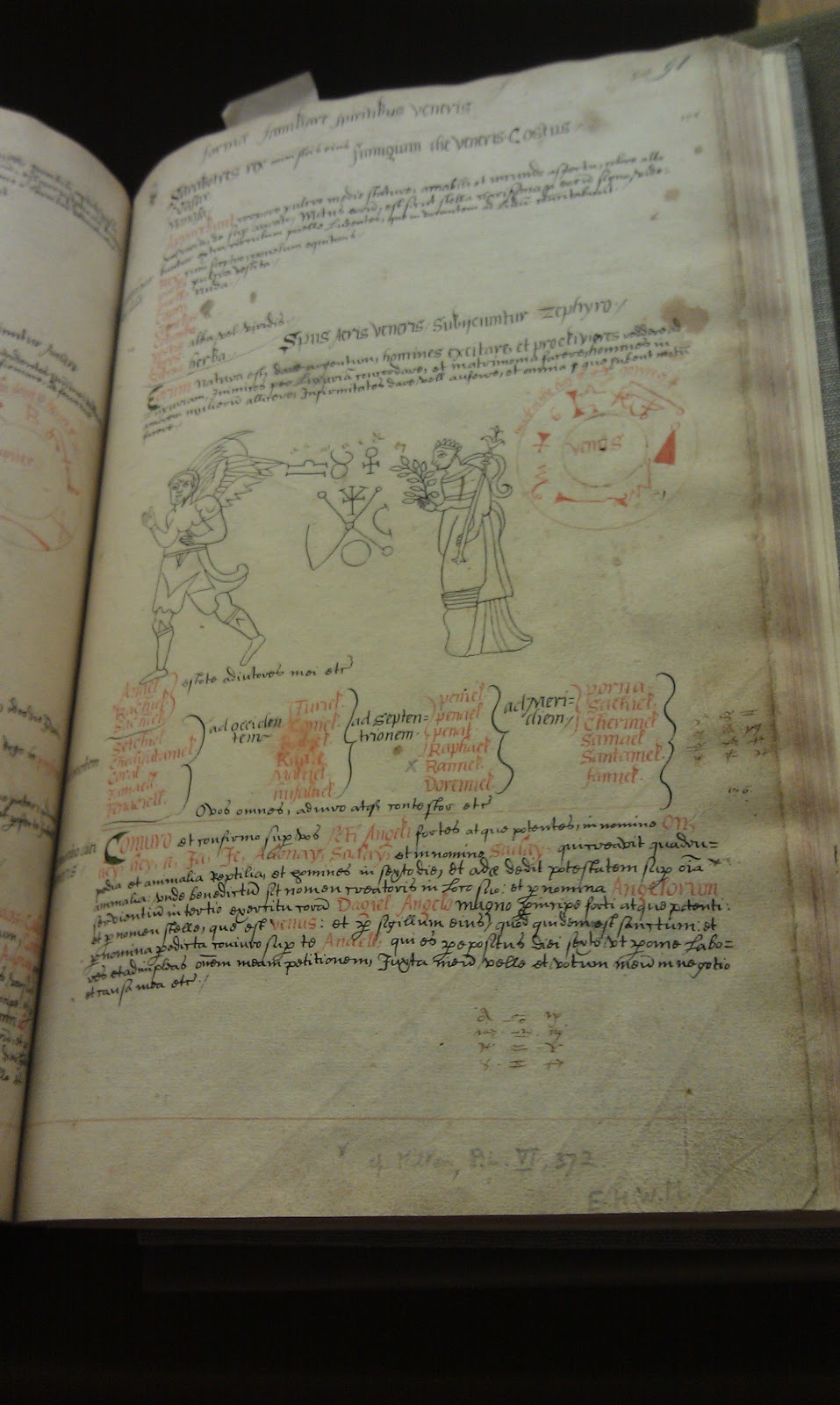
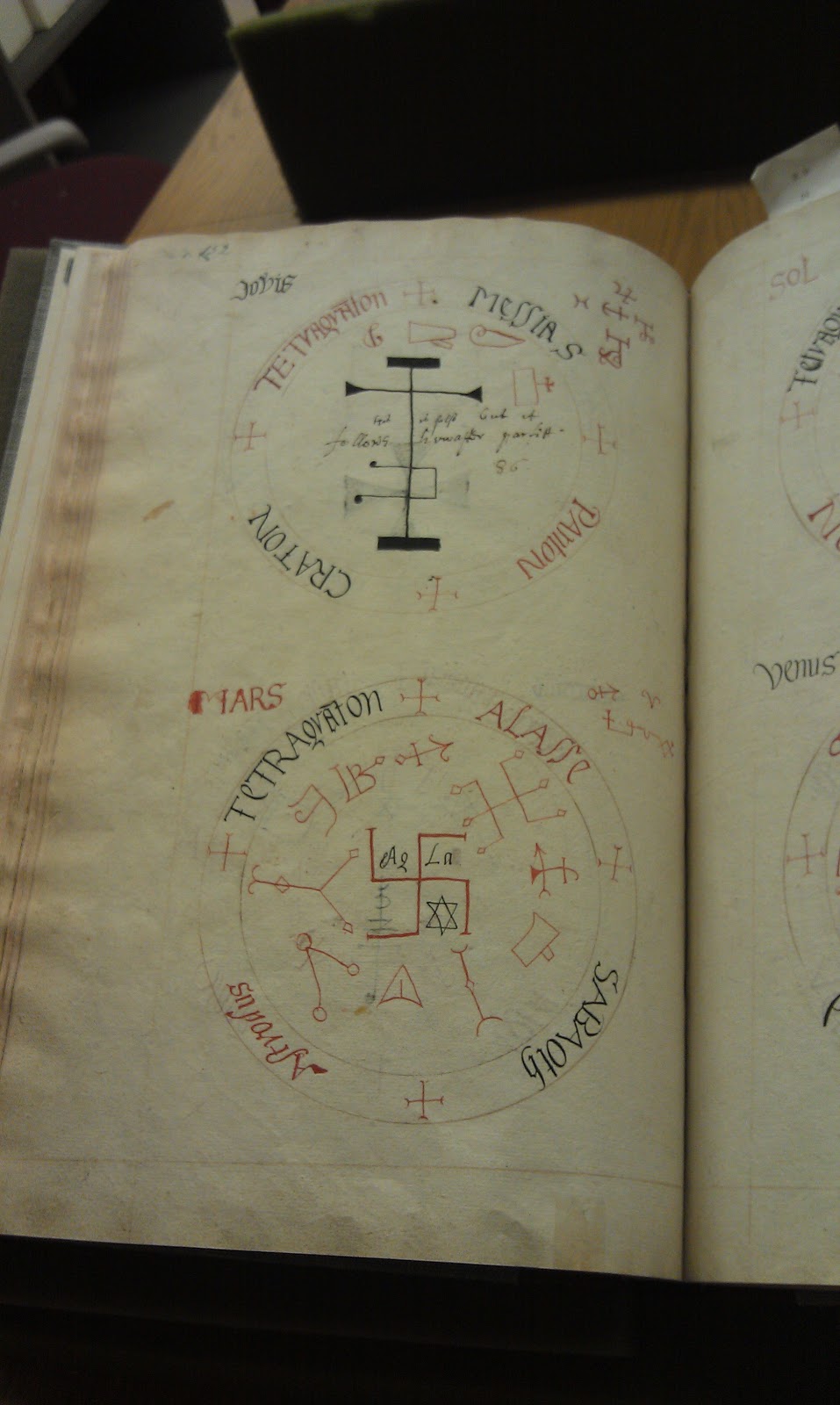
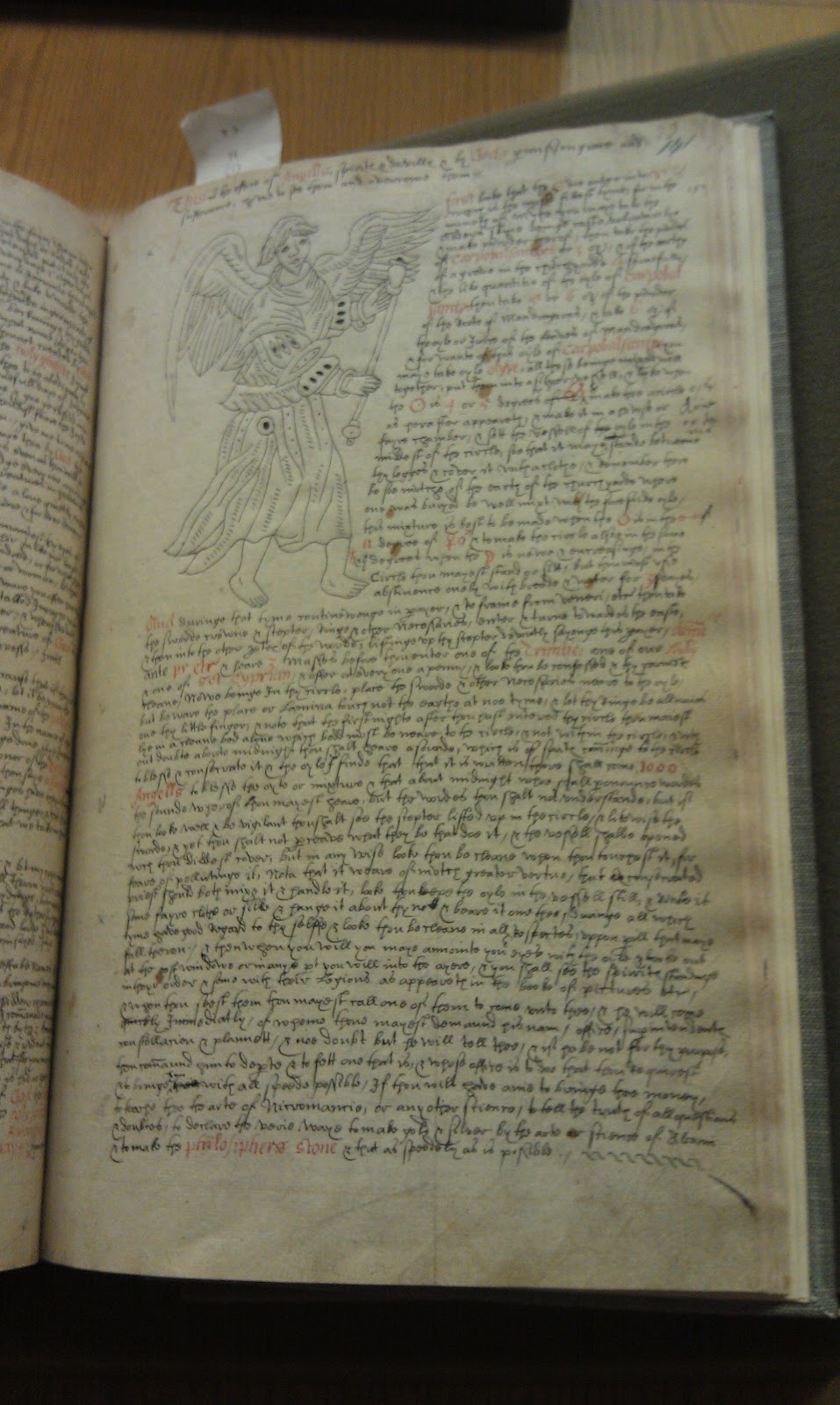
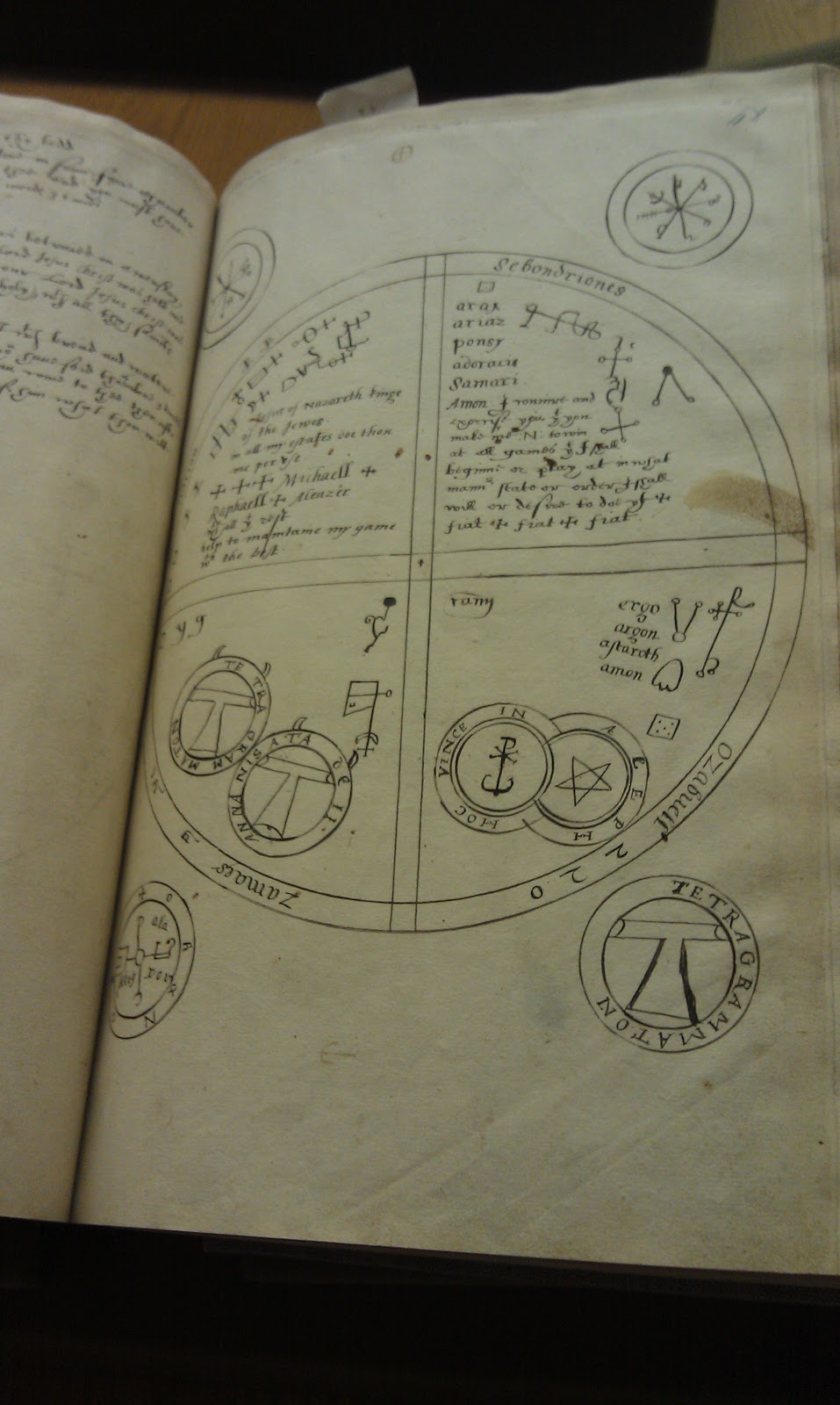
If your kids want to pretend that they’re wizards and witches, let’s show them a real magic book!

More from the Folger page:
One of the treasures in the Folger collection is a handwritten book of magic spells that is over 400 years old. The book is written in English, but also includes magical terms like “abracadabra” and drawings of angels, demons, dragons, and other supernatural creatures.

This book was used by many people over many, many years. Owners added their own notes into the margins, and one person even wrote in page numbers.

Although people in the Middle Ages and even during Shakespeare’s time used magic for lots of different reasons, including healing sick people, helping to find lost objects, or finding the guilty person when a crime was committed, magic was often done in secret.

I wanted to make some sort of King James reference, since he was supposedly more heavily into the whole witchcraft thing?  But this book dates from 1580. I wonder what Shakespeare’s actual experience with this sort of magic might have been?


The trip continues…

Inside The Vault #3 : Beasts!

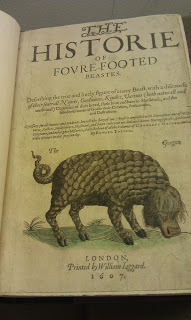
I wish I’d gotten more pictures of this book:

This “Historie of Fovre-Footed Beastes” has a publication date of 1607 by William Jaggard, who’ll come back up later in a different Folio story.

The book itself was fascinating.  Note the color?  No, color printing was not available at the time.  This would have been hand colored.

Inside (maybe I’ll see if Folger’s got some more pictures I can use) was a very wide array of animals that my son had a field day identifying.  Lions!  Goats!  Otters!  Otters?  Yes, even though the otter was apparently not known in England at the time, there was a picture of an otter.  Interesting how knowledge travels.

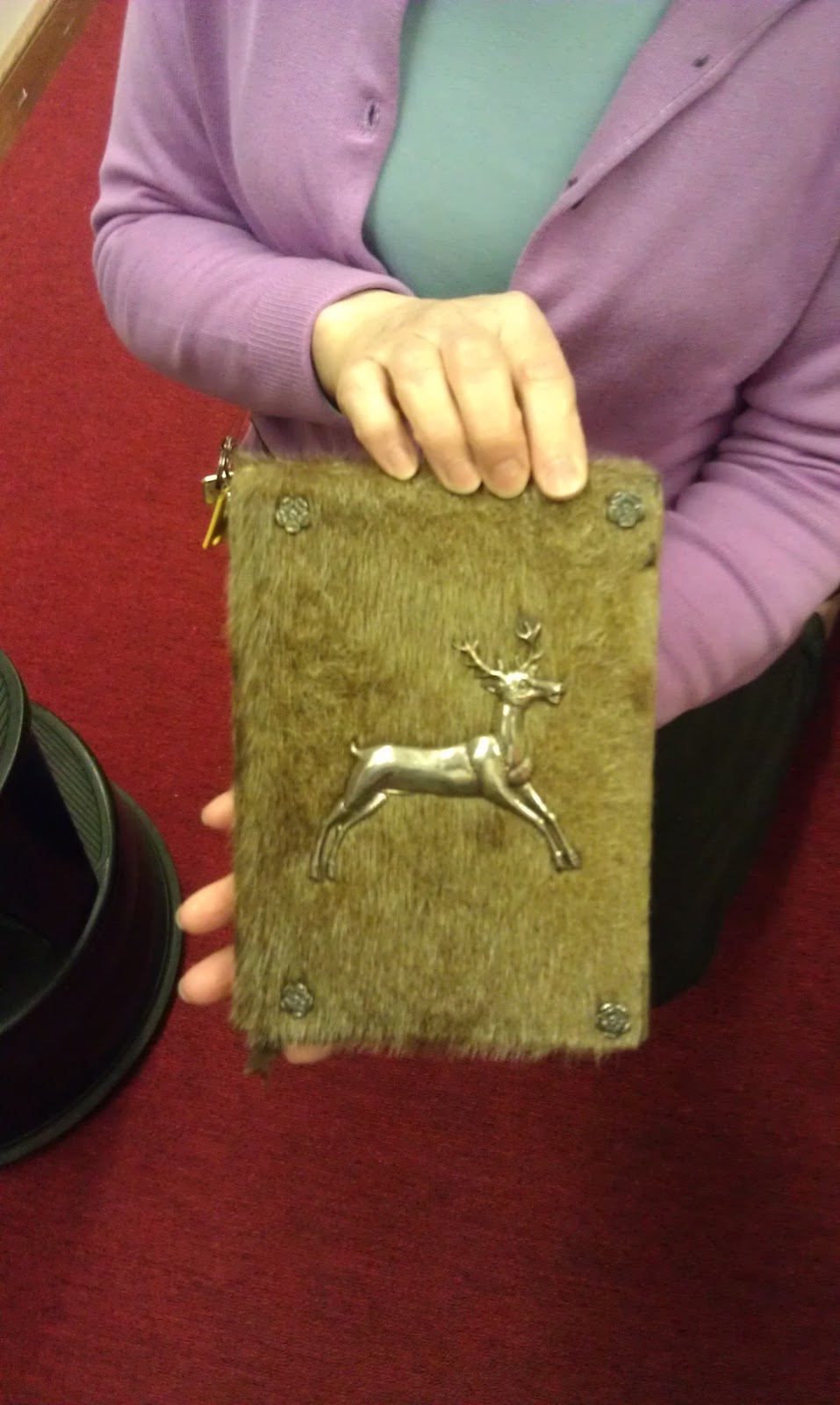
Speaking of beasts, how about this book on hunting?   If this one looks a little funny, that’s because it’s covered in deer fur.

The trip continues …


Shakespeare’s Most Disturbing Deaths

I’m not sure what definition of “disturbing” the Huffington Post used, but the usual suspects are all here in their list of Shakespeare’s Most Disturbing Deaths.

Lavinia of course, and Cordelia. Dedemona. All disturbing in their own different ways.
Macbeth?  Well, I suppose.  We see Macduff walking around with his head later.  That’s pretty disturbing.
Hamlet’s dad.  Hamlet’s dad?  He doesn’t even die in the course of the play!  He makes the list because of the ghost’s *description* of how he died.  Ummm…..that’s a bit of a cop out.
Cleopatra? After admitting that she dies happily (and voluntarily)? You put her on your list of disturbing deaths just because “we think it’d be a pretty bad way to go”?  I call shenanigans.
What do you think? In their padding of a few questionable entries, did they miss any better, more disturbing deaths? 
This posting marathon, in celebration of Shakespeare Day, is brought to you by nothing but my time, my resources, and my love for the subject. While we’ll always be the original Shakespeare blog, it takes a significant amount of effort to make us the best in the digital universe.  If you’ve not yet seen how you can show your support, now’s a great opportunity.  If you’ve already done so, thanks very much!