Jaffrey, NH Gets All The Good Tempests

I’m kind of digging this trend of bringing live stage performance Shakespeare to the big screen.  I can’t possibly get to all the live show I’d like to, so it’s nice to have the option.

This is particularly true of RSC’s recent “digital” version of The Tempest that got all the great writeups for its use of special effects and virtual reality.  (Actually I heard that the performance gets lost in the glitz, but I’d like to see for myself!)

So when I heard that they’re taking the show on the road I was prepared to get in line for my tickets (like I did with Benedick Cumberbatch’s Hamlet).  But … there are no Massachusetts show times listed.  I would understand, if only other big cities like NY, DC, Chicago, etc.. were on the list. Fine.  But the closest city to me with a screening is Jaffrey, New Hampshire? I’ve lived in Massachusetts all my life, raised three children who have all had to do social studies / geography presentations on the New England states, and nobody’s ever so much as mentioned Jaffrey.

Seriously though, I suspect that the calendar is just not updated.  When you select Jaffrey it actually says “Here are other cities with showtimes” and lists several Massachusetts cities including Chestnut Hill and Revere (neither of which I am likely to get to), but when you click on them it goes back to the main list of theatres as if you experienced an error.  I’m hoping to see either Cambridge / Kendall Square on there (which would be walking distance for me), or Burlington, where I saw Benebatch Hamlet.


You Like Shakespeare (Whether You Realize It Or Not)

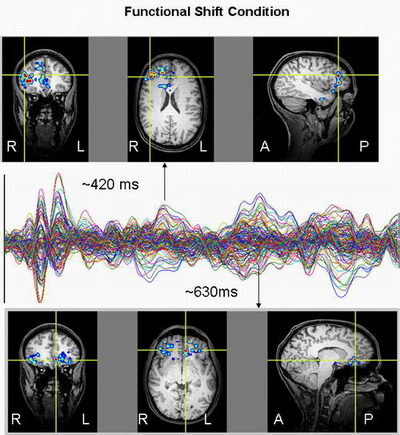
There have been plenty of studies that look at how Shakespeare effects your brain. Here’s another one. They try to determine if the brain is “hardwired” to appreciate the rhyme and rhythm of poetry, such as (but not only) Shakespeare.

Your brain on Shakespeare.

I like the test. They read a specific kind of Welsh poetry to people who did not know the “rules” of that poetry (I suppose it would be a little something like trying to read Haiku to someone without explaining it?) If your poem follows the rules, even when the audience doesn’t know the rules, they rate it more highly than if you break them.

I can totally buy that. It’s not really a big stretch to think of the brain as a giant pattern matching machine, and what is rhythm but “this line follows the same pattern that the last line did?”  You can’t really explain it, you just kind of feel it.  I’m reminded of Dead Poet’s Society where Robin Williams’ students march in a circle, walking in step. They spontaneously begin clapping in rhythm as well.  But Williams never told them to do that.  It just felt more natural to do so. It takes more effort to go against the rhythm than to just go with it.

Can we make the leap that iambic pentameter mimics the beating of the human heart (thump THUMP, thump THUMP)? I’m not sure I’m quite willing to go that far. For starters, that would imply that poetry that is not iambic would feel worse, and that’s not true. I love me some Dr. Seuss and his meter is entirely different.


On The Complexity of Rosalind

“Rosalind and Hamlet are surely the most complex in the vast parade of Shakespeare’s characters.”

So begins this Signature article, “What’s So Complex About Shakespeare’s Immortal Rosalind?

I’m already stumped, and that’s nothing personal against Rosalind.  I’ll give you Hamlet. But a funny thing happened as I sat here thinking, “No, wait, surely there’s a lengthy cast of characters that could vie for that title.”  Complex female characters in Shakespeare’s work. Ummm….hmmm. Maybe they have a point? I keep rattling off names – Desdemona, Juliet, Cordelia – but the word “complex” does not come to mind for each of them, even though they each have their own strengths.  I guess Viola is the obvious competition.

Maybe I’ve not yet seen a good As You Like It, because my impression of Rosalind is inevitably “boy crazy teenager.”  I saw this one interpretation where Rosalind and  Celia, talking about boys, at one point grab each other by the forearms, jumping up and down in a circle while laughing and squealing loudly. You’ve no doubt seen similar played out in many a television sitcom. It didn’t take much creative energy, I’m sure. I didn’t like it, as it left me thinking, “Is this all there is to this one?”

Maybe I’m wrong, though, and I’m open to debate.  I think I’m biased toward Viola in Twelfth Night , however, thanks to Wayne Myers’ book “The Book of Twelfth Night, or What You Will: Musings on Shakespeare’s Most Wonderful Play,” which explores many of the darker themes of that one.  Viola doesn’t have time to finish mourning for her dead brother before she assumes his identity. Let’s see Rosalind try that!

Rosalind.  Complex?

P.S. – Can I get a word in about the editor’s note?  The article’s title says “the immortal Rosalind,” to which the editor adds, “a character who has never lived and therefore can never die.”  So…literally, in the literal sense of the word, every fictional character.


Let Slip The Sled Dogs of War

Shackleton's Shakespeare
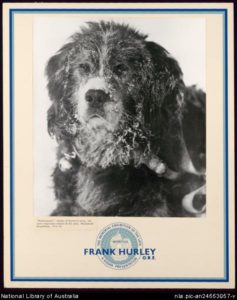
Who’s a good boy?

Learn something new every day.  Perhaps you’ve heard of Ernest Shackleton, the Antarctic explorer?  Fine.  But did you know that one of his lead sled dogs was named Shakespeare? I don’t know why I would have known that, but I’m happy that I learned it.  Like a moon of Uranus, just something to bust out during games of trivia.

They had 69 dogs apparently, but for some reason the linked page only lists names for 66 of them.  I’m not exactly sure who was in charge of naming them. Shakespeare’s the only name from literature, except perhaps Hercules and maybe Mercury. Everything else is stuff like “Surly” or “Rufus” or “Fluff.”

Unfortunately the story does not end well for Shakespeare and the King’s Dogs.  They were running out of food and it was taking more to feed the dogs than to feed the men, so the necessary decision was made to put many of the dogs – including Shakespeare’s team – down, that the explorers wouldn’t starve.


And The Winners Are …

I know this post is about a week late, but the idea just came to me over the weekend and I didn’t want to just throw it away 🙂

The 2017 Shakespearean Academy Awards

Animated Feature Film:   I’ll Hold My Mind, Were She A Zootopian

Cinematography, Directing: ‘Ban, ‘Ban, Ca-CaliLaLaLand

Costume DesignFantastic Beasts With Two Backs And Where To Find Them

Documentary (Short Subject):  Bruised White Helmets and Bended Swords

Film Editing, Sound Mixing: A Hawk From A Hacksaw Ridge

Makeup and Hair StylingSelf-Slaughter Squad

Music (Original Score), Production Design‘Ban, ‘Ban, Ca-CaliLaLaLand

Sound Editing: Arrivals of My Watch

Visual EffectsYou Kiss by The Jungle Book

Writing (Original Screenplay): Manchester By The Sea Of Troubles

Best Picture: Well Shone, Moonlight!


(And I’d like to award the special Shakespeare Geek Award to Hidden Behind An Arras Figures because I thought that was a good joke and I wouldn’t get to use it otherwise!)