Inside The Vault #4 : Magic, Magic, Magic!

Harry who?

If your kids want to pretend that they’re wizards and witches, let’s show them a real magic book!
More from the Folger page:
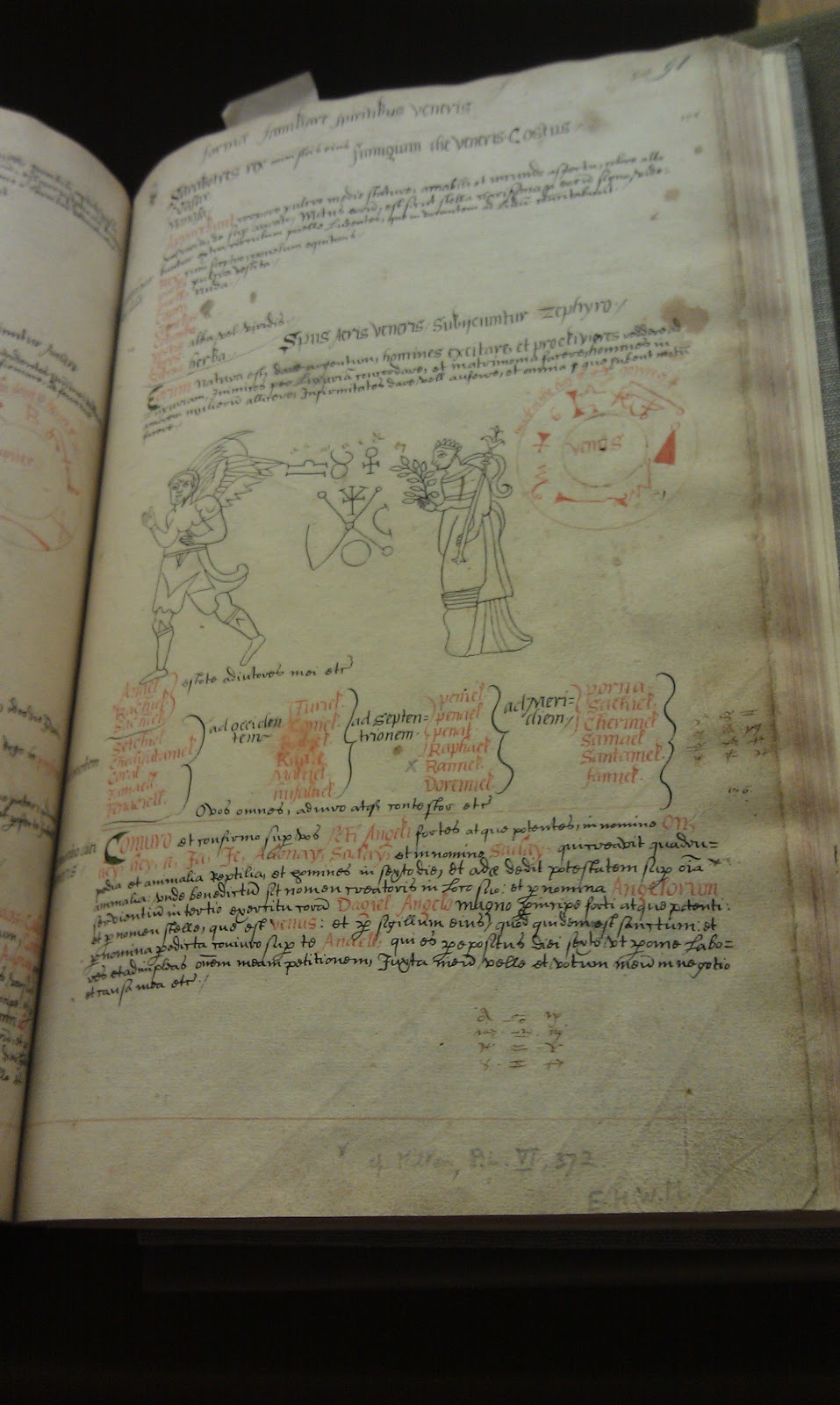
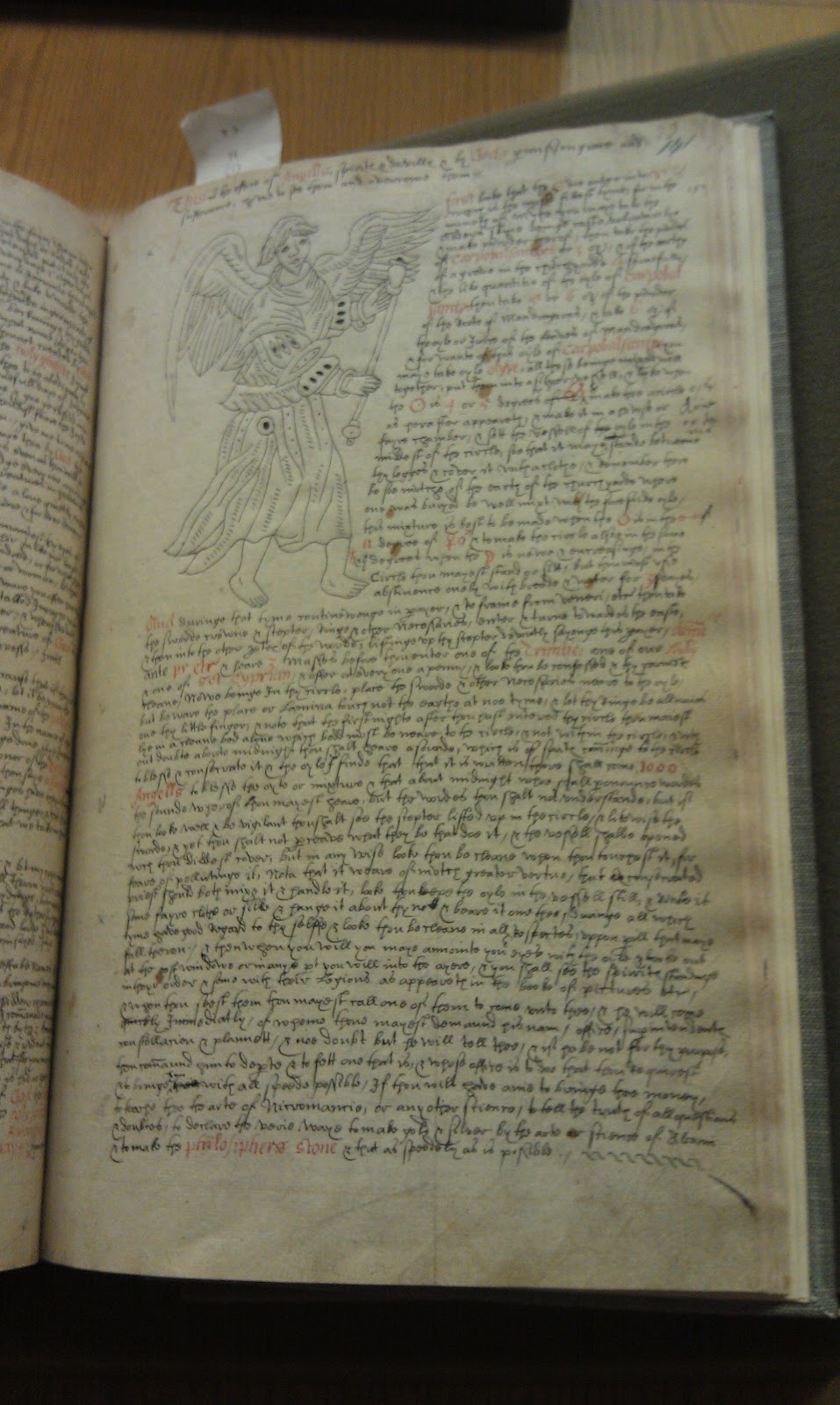
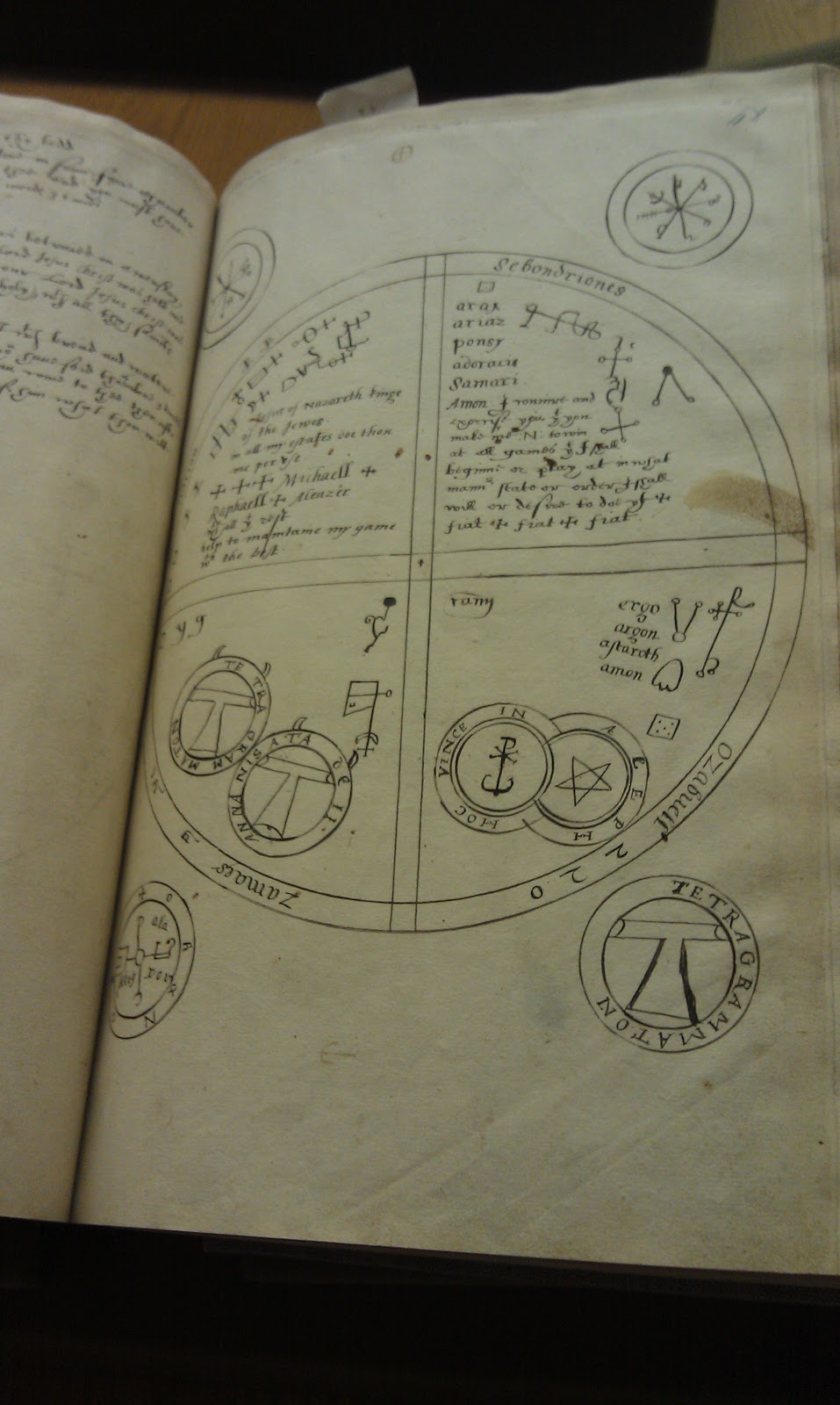
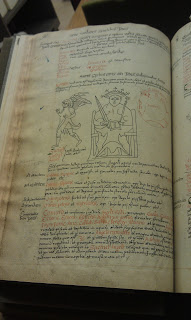
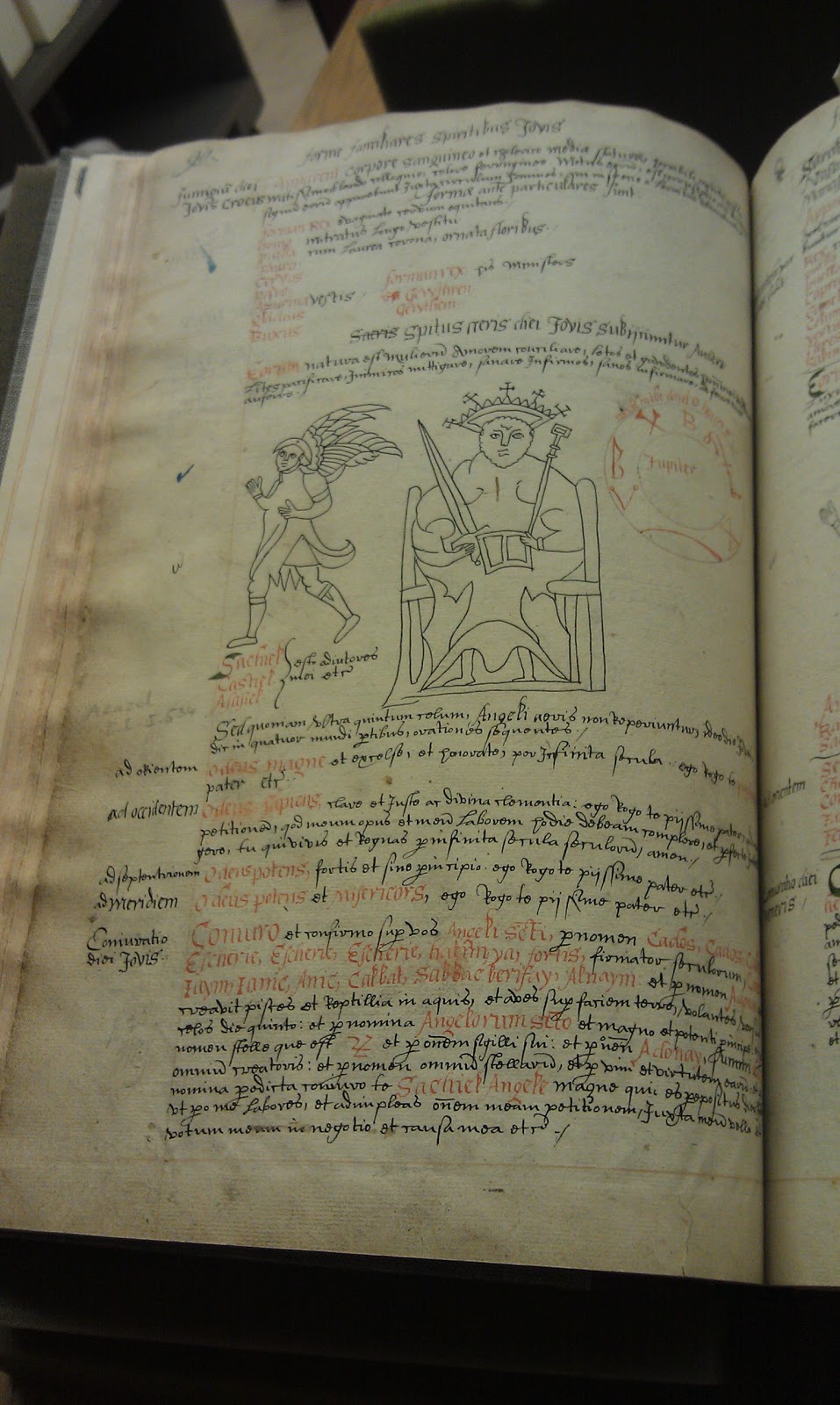
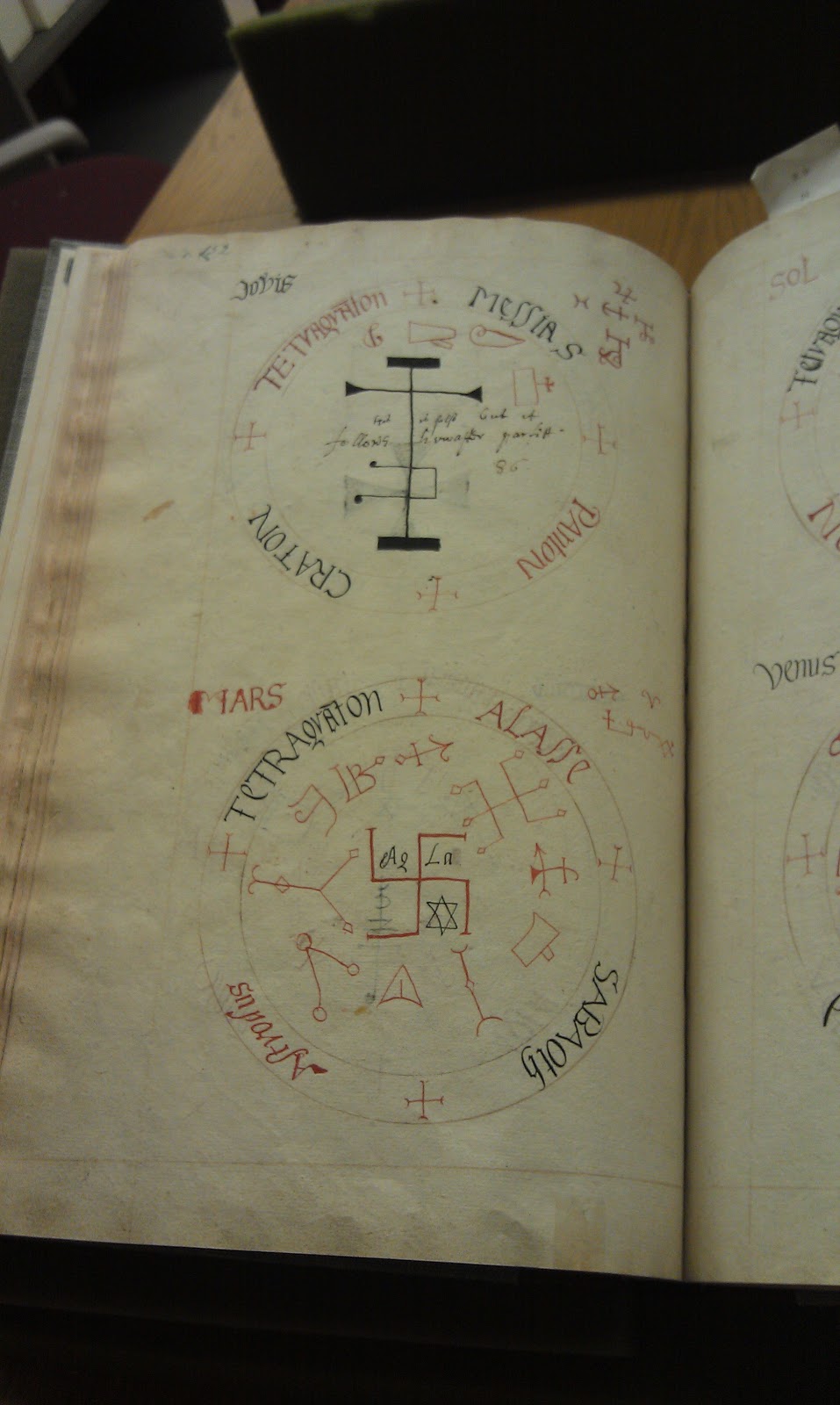
One of the treasures in the Folger collection is a handwritten book of magic spells that is over 400 years old. The book is written in English, but also includes magical terms like “abracadabra” and drawings of angels, demons, dragons, and other supernatural creatures.

This book was used by many people over many, many years. Owners added their own notes into the margins, and one person even wrote in page numbers.

Although people in the Middle Ages and even during Shakespeare’s time used magic for lots of different reasons, including healing sick people, helping to find lost objects, or finding the guilty person when a crime was committed, magic was often done in secret.

I wanted to make some sort of King James reference, since he was supposedly more heavily into the whole witchcraft thing?  But this book dates from 1580. I wonder what Shakespeare’s actual experience with this sort of magic might have been?


The trip continues…

Inside The Vault #3 : Beasts!

I wish I’d gotten more pictures of this book:

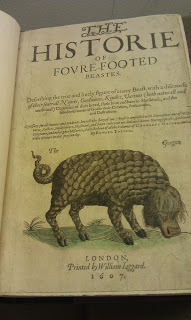
This “Historie of Fovre-Footed Beastes” has a publication date of 1607 by William Jaggard, who’ll come back up later in a different Folio story.

The book itself was fascinating.  Note the color?  No, color printing was not available at the time.  This would have been hand colored.

Inside (maybe I’ll see if Folger’s got some more pictures I can use) was a very wide array of animals that my son had a field day identifying.  Lions!  Goats!  Otters!  Otters?  Yes, even though the otter was apparently not known in England at the time, there was a picture of an otter.  Interesting how knowledge travels.

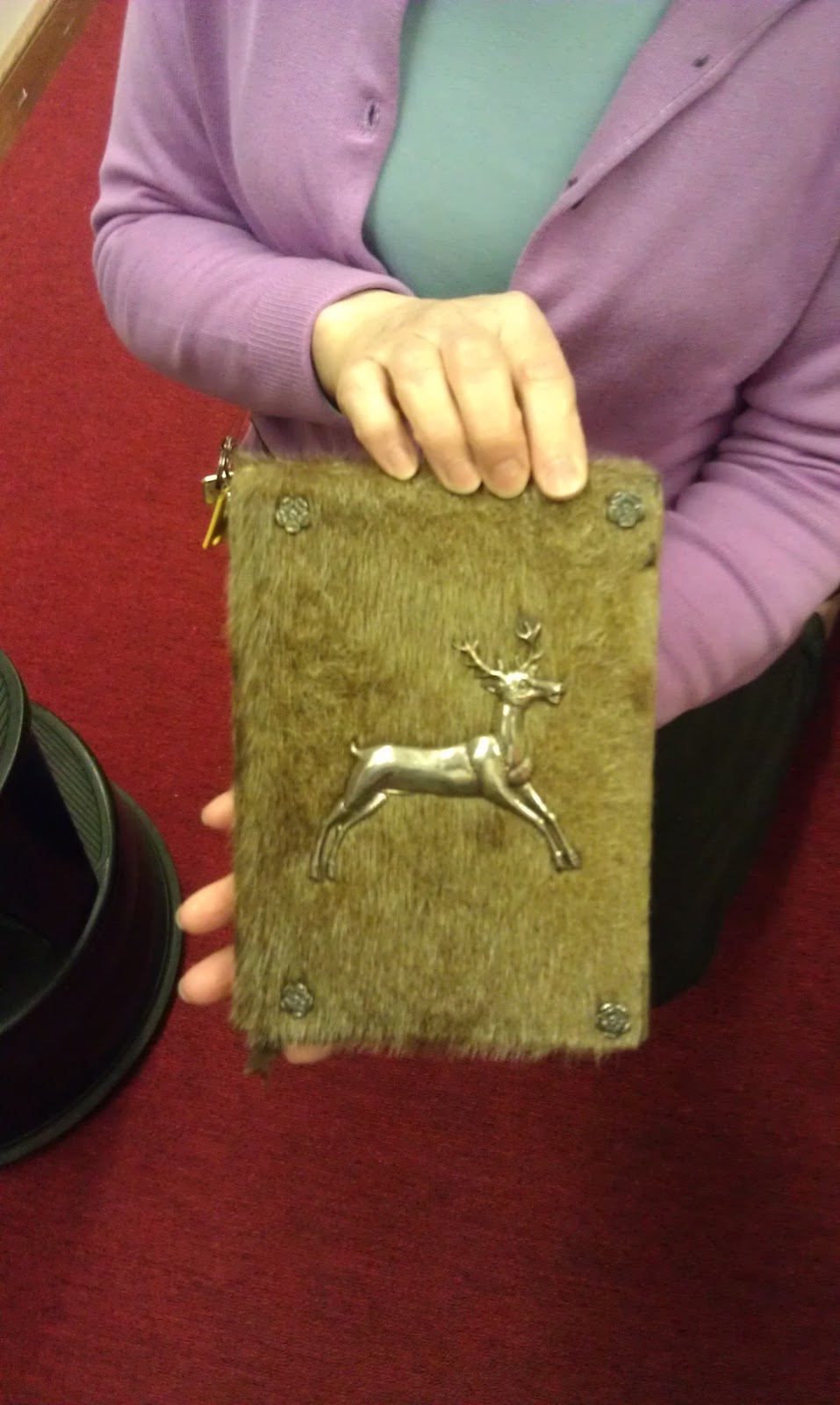
Speaking of beasts, how about this book on hunting?   If this one looks a little funny, that’s because it’s covered in deer fur.

The trip continues …


Shakespeare’s Most Disturbing Deaths

I’m not sure what definition of “disturbing” the Huffington Post used, but the usual suspects are all here in their list of Shakespeare’s Most Disturbing Deaths.

Lavinia of course, and Cordelia. Dedemona. All disturbing in their own different ways.
Macbeth?  Well, I suppose.  We see Macduff walking around with his head later.  That’s pretty disturbing.
Hamlet’s dad.  Hamlet’s dad?  He doesn’t even die in the course of the play!  He makes the list because of the ghost’s *description* of how he died.  Ummm…..that’s a bit of a cop out.
Cleopatra? After admitting that she dies happily (and voluntarily)? You put her on your list of disturbing deaths just because “we think it’d be a pretty bad way to go”?  I call shenanigans.
What do you think? In their padding of a few questionable entries, did they miss any better, more disturbing deaths? 
This posting marathon, in celebration of Shakespeare Day, is brought to you by nothing but my time, my resources, and my love for the subject. While we’ll always be the original Shakespeare blog, it takes a significant amount of effort to make us the best in the digital universe.  If you’ve not yet seen how you can show your support, now’s a great opportunity.  If you’ve already done so, thanks very much!

Inside The Vault #2 : Quartos Quartos Quartos

So there we are in the vault.  Georgianna goes digging for something to show us next, and Garland tells me, “Around the corner are the Quartos.”  I take my oldest, and we head around the corner.  Yes, you could say that there are Quartos.

Since we were just looking and no one was explaining the significance of these particular volumes, I can’t really say what we are looking at.  I highly doubt that “original” (or close to it) editions are shoved on top of each other like that.  If you look carefully you will see a Romeo and Juliet dated 1599, however.  That’s pretty cool!  These are almost certainly not original bindings, so maybe it’s not such a big deal to have them rubbing up against each other.  It’s what’s on the inside that counts. Don’t judge a quarto by its cover!
Oh, and Bardfilm also suggested that I ask about the only known Q1 edition of Titus Andronicus in existence.  There’s a big Titus on the far right end of that first picture. Think that’s it?
 
I had no idea they were so small.  Well, I mean, I knew they were small, but after having seen the Folios all spaced out on their own shelves with nothing else surrounding, to turn the corner and see all these tiny books at once.
 
“You can’t be back there!” I hear Georgianna call.  “Sorry, it’s the rules, I’m not back there with you.  That’s actually why there’s two of us here, Garland is my backup.”
 
“Yes,” says Garland, “Technically I’m supposed to tackle you if you make a break for it.”
 
What’s funny is that I don’t know if this is really a rule, or if they didn’t appreciate my sense of humor.  See, in arranging this visit I was going back and forth over email with Garland, and conferring with Bardfilm (who has been to Folger) on what I should see.  What he jokingly suggested, and what I jokingly wrote back to Garland, was

Oh, and @Bardfilm said you’ve got Quartos just lying around and asked me to grab him one on the way out. 🙂

Now it all makes sense!The trip continues…


Shakespeare Under Water

Dr. Carl Atkins, a regular contributor to this site, sent me a link to this amusing article that he was sure I would not have seen.  What kind of article do you get when you’re friends with a legit medical doctor who is also an author of Shakespeare books?

Why, an article from one of his medical journals, of course.  About drownings in Shakespeare.

Starting with the story of 5yr old Jane Shaxspere (who may have been the inspiration for Ophelia?) the article moves on through Twelfth Night, The Tempest, Richard III, Merchant of Venice and even King John, all of which demonstrate their own variations on drowning, falling, submerging, and the fear of these things.  Just how prevalent was drowning in Shakespeare’s day? Was it the sort of thing where you woke up in the morning and thought, “I hope I don’t drown today!”

This posting marathon, in celebration of Shakespeare Day, is brought to you by nothing but my time, my resources, and my love for the subject. While we’ll always be the original Shakespeare blog, it takes a significant amount of effort to make us the best in the digital universe.  If you’ve not yet seen how you can show your support, now’s a great opportunity.  If you’ve already done so, thanks very much!