
Come On In and Cover Shakespeare

Here’s an idea that just hit me over in the bad Shakespeare thread:

All Shakespeare performance is cover songs.  Discuss.

Think about it.  Somebody writes the lyrics to a song, and the music.  Somebody else comes along later and performs their version of it.  Maybe they change it up, maybe they try and stay true to the original as best they can.  Maybe it’s worse than the original, maybe it’s even better.  Maybe it’s just … different.  But there’s no doubt that everybody listening understands, “Ok, wait, is he actually doing Britney Spears’ Hit Me Baby One More Time?”  Whether you like the original or not, and whether you like this version or not, are entirely subjective.
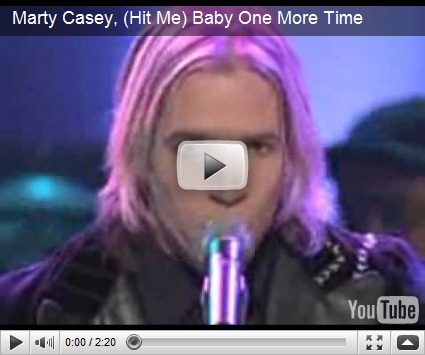
Isn’t Shakespeare in the exact same situation, save one important caveat?  He gave us the words, and if you know how to read them, he gave us the “music”, for lack of a better term.  Then it’s up to who comes along later to decide how true they’ll stay to the original, what they’ll keep and what they’ll change, how they’ll “make it their own” to steal an American Idolism. The caveat? Surely somebody knows what I’m going to say.  For any given cover song, chances are almost perfect that we have an original.  That is simply not true with Shakespeare.  Nobody today gets to see what it looked like originally.  Even the best recreations only get half way there, because we didn’t live when Shakespeare did. It’s like trying to listen to songs from the 1960’s today, if you weren’t there.  You can research history all you like, but Neil Young’s “Four dead in Ohio” song just can’t possibly be the same if you weren’t alive to wake up the next morning and read that in the papers. This, in turn, makes me think of another post on the subject of quality, that maybe I’ll have time for later today, I’m not sure.  I think we’re getting pretty metaphysical here.

Praise for Slings & Arrows

I first discovered this show back in August 2005, but missed it because I didn’t have the Sundance Channel. I got to watch it for real in February 2008. I’m now, as I mentioned, watching it again.  It’s being shown on the Ovation Network, if your cable provider offers that channel.  They’re currently in the third and final season, though, so your best move might still be the DVD set. In short? The setting is a Shakespeare theatre company, tackling one of the great plays each season – Hamlet, Macbeth, King Lear.  Each has its own issues (Hamlet played by the up and coming Hollywood actor who only wants it for the screen cred, a Macbeth portrayed by someone who’s played it so often he no longer takes direction, and so on…)  There is a back story that reads much like a soap opera.  The director is crazy, haunted by the ghost of his former director, for instance. It might well be the best “show about Shakespeare” ever put to television. Every episode is loaded with opportunities to discuss Shakespeare.  Just this moment, as I sit here watching a King Lear scene, the actor playing Lear goes off on a screaming tirade that his daughters are not showing proper respect for the verse. During the Hamlet season they discuss details like whether Gertrude may have killed Ophelia.  You can watch every episode a dozen times and find a dozen things to talk about each time.  The crime is that the show only lasted 3 seasons, and 6 episode seasons at that. If you’ve seen the show, what was your favorite season?  Convince those that haven’t that they simply must by the DVD right now.

Is Midsummer A Critique of Queen Elizabeth?

Spotted via Twitter, I had to dig a little bit to get to this interview with Helen Hackett on the subject of Queen Elizabeth.  Definitely check it out for the bits on Spenser’s Faerie Queen, but stay for the Shakespeare.  Here, have a taste:

Once you start thinking about this it is quite obvious – you have Titania the Fairy Queen who is infatuated with an ass. Well, you can’t think about the Fairy Queen without thinking about Elizabeth because of Spenser. Titania is made to be a slave to lust, a comical figure, her powers are mocked and she is brought back under the authority of a husband. That is implied to be the norm.

The connection might be obvious, but I guess I never thought about it.  The way Hackett paints the picture, nobody was happy with Elizabeth at the time (she’d not had an heir, for instance) and Shakespeare was being pretty blatant in his criticism.

Fan, Or Geek?

Yesterday I was speaking with someone who said, “Shakespeare fans, or as you call them, geeks.”

I don’t think it’s quite that easy.  I think there’s a difference, I’m just not sure I can explain it.   I know plenty of Red Sox fans, for example, but I’ve never heard some one call themselves a Red Sox Geek.

From where I sit, it goes something like this.  A Shakespeare fan knows that there’s Shakespeare on Boston Common, so he goes to see the show.  Likes it, maybe talks about it over dinner with the friends that came with.  A geek wears his Shakespeare t-shirt with a joke very few people will get, live tweets the show, looks for other “geeks” in the audience to bond with (like those that brought Othello to Othello?), and goes home afterward to get on the blogs and talk about the show, and any other topics that come up tangentially, as long as the conversation will continue.

Maybe the distinction lies there, in the social circle.  I could be a Shakespeare fan entirely by myself.  I don’t need to hang out with other Shakespeare fans.  I can just read it, see it, and like it.  Done.  But I’m not like that, I’m a geek about it.  I needed an outlet for my love of the subject, and when I couldn’t find one, I made one.  And what I’ve found in the intervening years is that fellow geeks have flocked here for the same reasons.
Or, getting back to the sports thing I mentioned earlier, perhaps there is still some level of academic association with the term, confused so often with “nerd” as it is.  Star Wars geek, math geek, theatre geek.  Since I’m clearly on this side of the line, I can’t really speak to the other side – does anybody want to step up and proclaim themselves a marathon geek or a weightlifting geek?

What do you folks think?  When asked, in the real world, are you a fan or a geek? How would you explain it?

Is There Such A Thing As Bad Shakespeare?

This oughtta be good for some discussion.  What, exactly, is “bad Shakespeare”?  If you saw 6yr old children attempting Henry V, would you call it bad?  What about prisoners behind bars, or juvenile delinquents, or any other situation where it’s to be performed by people who are not actors by trade?  What about a good actor who does a less than stellar job? Here’s my thinking.  The only way that it’s bad is when it doesn’t show appropriate respect for the source material.  If your production is attempting to do a good job, then by definition I think you’re on the positive side of the scale because even if the words aren’t coming out of your mouth properly, you know that you want them to, you are striving to make that happen, and that’s a good thing.  But if you’re phoning it in, and you couldn’t care less whether you’re reciting Lear or the phone book, that’s where I think I have a problem. Make sense?  I will be disappointed with a production not because of its quality, but because of its effort (or lack thereof). I’m tempted now to apply this reasoning to movie version of the play like Ethan Hawke’s Hamlet, or Al Pacino’s Merchant of Venice, but it’s not that easy since I don’t know rationale that went into some directorial decisions.  Did they really think they were doing Shakespeare justice in some of their choices?  Or did they think that the source material needed a serious overhaul to make it better?  I can say I didn’t like Hawke’s Hamlet (I’ve not seen Pacino’s Merchant, only read reviews), but I couldn’t necessarily call it “bad Shakespeare” unless I sat down with the man himself and got his opinion on why he did what he did.