Review : Will #9

Ok we’re heading toward a big finish and lots of plots are moving forward.
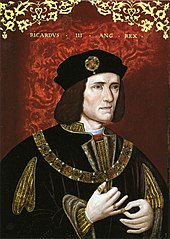
Richard Burbage is a changed man after coming out of the plague house. He’s showing more attention to Moll, which is pleasant. Shakespeare has written Richard III for him, but for some reason his father James wants to play the role (because “I made this theatre and I’ll play any role I want.”).  There’s actually a nice father/son moment between the two where Richard says, “You also made me, so when I play the role, it’ll be you playing the role as well.”

Alice Burbage has fallen under the spell of Southwell, agreeing not only to be baptized but also to carry Southwell’s book to … wherever it is that it needs to go.

This doesn’t go well after Marcus narcs on them to Topcliffe in an attempt to save his son.  Southwell and his people have no time for this, dispatching Marcus when he tries to prevent Southwell from escaping, and then leaving Alice behind to be captured.  Marlowe is there, however, and won’t stand for it. He brings Sir Francis Walsingham in (I kept thinking it was Bacon, to be honest), just before Alice can be whipped and tortured.  This however doesn’t stop Topcliffe from beating her (after everyone’s left them alone), and potentially choking her to death.  I honestly don’t know what’s going to happen.  I don’t know the real Alice Burbage’s story, so it’s quite possible that she dies in this. I’m curious.

There’s some Richard III content in this one as they teach Presto (the street urchin) to play the role of Prince Edward.  Honestly I wish I knew more about the play. I can’t recognize it from the quotes, other than the obvious ones.

Next week is the final episode. I have no idea if we’ll get another season. I have no idea what the ratings have been.  I guess I’ve liked it, once we got past the ridiculous sex and violence. I’ve watched every episode.  It’ll be a shame when it’s over.


Review : Will #8

Ok, after a great episode that was weak on sex and violence we’re back with blood flying.  This one opens up not just with a disembowelling but a decapitation. Awesome. This time it’s somebody we know – the fat guy from a few previous episodes who was captured and tortured. And this time we see Southwell in the audience praying for his soul.  This does not sit well with Marcus, whose son was busted by Topcliffe last week.

I don’t get most of this episode. There’s very little Shakespeare in it.  Their friend Autolycus – who is part of the storyline so infrequently that I would forget his name were it not for the reference to the text – has a new girlfriend.  Which ends up with him getting plague.  How that happens? I don’t know.


But he ends up in a plague house, which basically means he’s dead.  But a twist!  Burbage can’t let him go alone, so agrees to be boarded up in a plague house with him.  What? Did that actually happen? We know he’s not going to die, so I’m not sure what the writers are getting at with this little side trip.

Shakespeare has an idea – he’s going to write a story exposing the Queen’s torturer Topcliffe.  That play? Richard III.

Shakespeare learns that Southwell now has Alice Burbage on his side as well, which gets them (Shakespeare and Southwell) into an argument since Shakespeare sees it as putting Alice in harm’s way, while Southwell is


starting to be shown as a bit of a nut who cares only about people’s eternal spirit and is thus not troubled by people being captured and tortured.

Best line of the night? Alice says that Shakespeare’s offering nothing of value to the world because who cares about Henry VI Parts 1, 2, 3. He swears that he is working on a play of such greatness… to which she responds, “What, part 4? Does it have a funny dog?”  Ouch.

Marlowe is still his typical atheist self. Having failed to meet the devil he

wants to see Southwell, to meet god. We know how that’s going to go.

It’s clear that the story is racing toward some conclusions, but that also means focusing on the story that they’ve been telling, rather than Shakespeare’s biography. So you know how I’m going to feel about that.  I get it, I get why it’s necessary. I’m just not all that interested in it.  An episode like this is in the background while I do other things.

Let’s see what the next episode has for us!  There’s only ten I’m told, so whatever’s going to happen is going to happen soon.

The Expression “Waiting for the Other Shoe to Drop”

Howdy, y’all! Bardfilm here!

Ever since I hacked into Shakespeare Geek’s blog, I’ve been waiting for him to get within shouting distance of a computer and shut me out. In fact, he tweeted something that made me suspect he was on to me. The expression for the state I’m in is “waiting for the other shoe to drop.”

You may not know that the expression comes from Shakespeare’s day. You see, Thomas Dekker wrote a hilarious comedy called The Shoemaker’s Holiday. It was so popular that audiences were crying out for a sequel. And the Elizabethan theatre was all about the sequel—I mean, three parts to Henry VI?

Everyone thought a sequel was coming, and it was rumored that Shakespeare was going to collaborate on the piece. They were so excited, they felt like they were on pins and needles, only that expression hadn’t been invented yet. So they started saying “We’re waiting for the other Shoemaker’s Holiday to drop.”

Of course, that expression was awkward, so it was shortened to “We’re waiting for the other Shoemaker to drop.” And then it was shortened still further to “We’re waiting for the other Shoe to drop,” giving us the expression we all know and love.

So I’ll keep this up until that shoe drops.

In the meantime, “Let not the creaking of shoes nor the rustling of silks betray thy poor heart to Shakespeare Geek!”

Quick! Before he gets back!

Bardfilm here, and I’m worried that Shakespeare Geek will get back and learn that he’s been hacked. Before he does something irrevocable, I’ll use this Bully Pulpit one last time.  Here goes . . .

Finding Nemo is Pericles

Up is King Lear

Monsters, Inc. is Titus Andronicus

Beauty and the Beast is Taming of the Shrew (and so is The Lady and the Tramp)

Pocahontas is The Tempest

Robin Hood is As You Like It

Dumbo is King Henry VIII

and

The Lion King is Hamlet!

Did Hamlet Intend to Kill Polonius?

Heigh, ho! Bardfilm here.

I just read a brief 2001 article by Eric Sterling that argues that Hamlet knew that it was Polonius behind the arras and that he kills him on purpose (rather than killing him by mistake, thinking him to be Claudius).

Here’s his argument in a nutshell:

It’s an interesting idea, but I’m not sure Sterling addresses the counterarguments sufficiently. He asks us to consider the lines “I took thee for thy better” and “For this same lord I do repent” as Hamlet pretending he mistook Polonius for Claudius.

Does Hamlet have enough motive to kill Polonius? If he knows it’s Polonius back there, how can he kill him without a soliloquy examining the pros and cons of such an action?