My Kids Have Never Read The Plays (Part 2)

So, what to do?  An expectation has been set – by me, by my daughter, by her friends – that since she’s grown up with this stuff, she will walk through Romeo and Juliet. Then she opens the text and is lost just like everybody else.

I knew what I had to do.  I fired up the home video server and went to the 1968 Zeffirelli movie, which I’m pretty sure they’re going to watch in class (some classes have already sent around a permission slip because of the infamous nude scene).

I quickly realize this isn’t going to work, because they’re not on the text. My daughter’s got the text in her lap and fully plans to use the video as a supplement to the source material, and right from the start, this movie is writing its own text.

Well that’s not going to work.  Hello again, Mr. DiCaprio.  I don’t think I ever would have imagined using Baz Luhrmann’s 1996 Romeo+Juliet to help my daughter with her homework, but here we are.  Say what you want about the acting and the directing, but the thing is they actually are using the text. And I think that’s important.  Right within the first few minutes, during the showdown at the gas station, the whole “bite your thumb at us” scene really gets the point across.  There’s real tension there, like it could all explode at any moment.  Which it does, by the way, as if this was a Michael Bay film.

Picture it.  I’m there manning the remote control, pausing and declaring, “Shh! This is the best part!” every other scene.  I realize I sound like my son when we tell him to turn off the YouTube video he’s watching for the twentieth time, but I don’t care.  To me they are all the “best” parts because what I really mean is, “This is something you should not miss.”

This is how the afternoon went.  My daughter’s got the text in her lap, and periodically looks up at the screen, then flips a page to catch up to where they have skipped. She’s clearly not doing that thing teachers fear where the students say “Forget this, why read it if I can watch the movie?”  We’re doing this voluntarily before the assignment has even begun specifically so that she can deep read the text later.

While the movie is going on, we get to what’s always been my big point.  Friar Laurence comes on scene, and I pause.  “Something to consider,” I tell her, “Is whether you think Friar Laurence is a good guy or a bad guy.”  Or why some people chose to interpret Mercutio as gay. Or whether Lord Capulet is a good father who has a bad moment later in the play, or if he never really meant everything he said to Paris in the early scenes.  “This particular movie,” I tell her, “will make choices for all of those questions.  A different production would make different choices. When you read the text, you get to decide for yourself which interpretations you think are correct, for your vision of the play.”

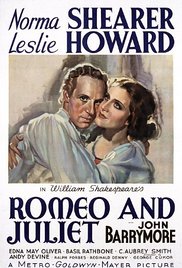
I just realized, writing this, that I also have the Norma Shearer / John Barrymore 1936 Romeo and Juliet.  May have to fire that up and see how it handles the text, for comparison!  Can’t have her seeing just the one version and using that as her baseline for future interpretation.

We’re on school vacation so it’s still a few days before they actually start studying the text for real. I have no idea if the teacher is going to do what they did to me thirty years ago, working through it a line at a time and not letting any word go unanalyzed.  “What do you think he means by carry coals?”  “Who cares?”  Maybe teaching methods have gotten a little more … flexible, since my time?  I have no idea.  Whatever it ends up being, all I know is that I’ll be right there with all the tools at my disposal to make sure she’s got everything she needs.

My Kids Have Never Read The Plays. Surprised?

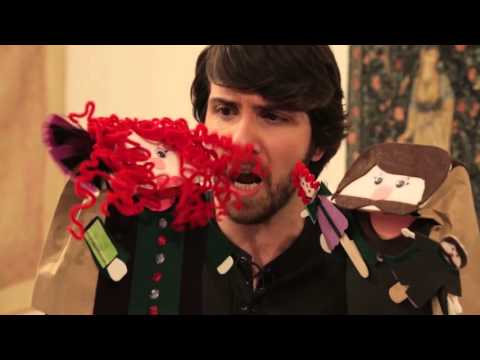
As my oldest daughter starts “officially” learning Romeo and Juliet this month at school, it’s been a fascinating adventure in seeing just how prepared she is. We own a version with gnomes, and a version with seals. Whenever the Leo DiCaprio version is on tv I tend to put it on and proclaim, “This is the best part!” and let the kids watch until my wife comes in, sees how violent it is, and suggests that it’s maybe not appropriate. I’ve got graphic novels and pop-up Globe Theatres and finger puppets and action figures and if you’ve been a long time reader of the blog you know that my kids have grown up, by design, surrounded by Shakespeare.

All she needs do now is actually open up the text and read the thing, because she’s never done that. Also, by design.

I am a huge, huge proponent of reading the plays.  Every time the subject comes up and people rush to the “The plays were meant to be performed, not read!” side of the room I stand squarely on the opposite side to defend the value of the text.  You can see a dozen or a hundred performances of Romeo and Juliet and all you’ll ever have at the end of the day is someone else’s interpretation. But don’t get me started.

I’m aware that the text can be intimidating.  It’s easy to say “The Capulets and Montagues hate each other, and the play opens with a big fight scene.”  Then you turn the page and see

SAMPSON 

Gregory, o’ my word, we’ll not carry coals.

GREGORY 

No, for then we should be colliers.

SAMPSON 

I mean, an we be in choler, we’ll draw.

GREGORY 

Ay, while you live, draw your neck out o’ the collar.

SAMPSON 

I strike quickly, being moved.

GREGORY 

But thou art not quickly moved to strike.

And if you’re a typical middle school student you’re going to be lost already.  As was my daughter. In preparation I’d given her the Spark Notes version of the play, because it’s the kind of thing I happen to have lying around the house.  I chose that one because it would have glossary information right there on the page. But she was already doing that thing I worry about, where every individual word became a hunt through the glossary.  Trees, forest.  The big picture is quickly lost.

My theory has always been that if you learn everything else about the play except the text, that the text will come easily. I think that perhaps I’ve been mistaken.  I have expected it to come easily because it comes easily to me.  I no longer remember what it’s like to see the text for the first time. It’s impossible to get “The play opens with a fight” from the clip above.  Sure, eventually you get to “I will bite my thumb at them, which is a disgrace to them that bear it.”  You can start to figure out what’s going on by then – but that’s a dozen or so lines in.  How do you tell a student “Skip that part and get to the good stuff?” How do they know which parts to fast forward?

To be continued …

I’m Always for More Shakespeare, but … Horror Shakespeare?

There’s lots of Shakespeare coming to television it seems. I’ve written in the past that there’s no less than three separate Romeo and Juliet adaptations in the works.

But what shall we make of Lifetime Channel’s A Midsummer’s Nightmare? I tagged it thinking that it’d be some zany spin on the mistaken identities and love potions, you know, the usual stuff.

Nah. Looks like a direct competitor to Grimm or Once Upon A Time in that it’s going to be “horror” versions of Shakespeare plays, instead of fairy tales:

“A Midsummer’s Nightmare,” from A+E Studios, is described as an adaptation of Shakespeare plays that are turned into contemporary horror mysteries. Each season would take on a different play, starting with “A Midsummer Night’s Dream.” Screenwriter Anthony Jaswinski is adapting “Midsummer” as a story that finds two young lovers on a getaway in the woods who wind up in a struggle to survive as friends arrive to lure them home.

This sound interesting to anybody? I suppose if you told me they’re going to work in the original text I might be curious, but otherwise it sounds like it’s got the potential to have about as much Shakespeare as the Lion King. I don’t think I’ll be setting my DVR.

Good Night, Sweet Prince

[Those of you on Twitter have seen these but not everybody’s following @ShakespeareGeek on Twitter…]

It’s become tradition here to mourn the passing of great artists by mustering up an appropriate Shakespearean tribute.  Prince is a special case, having no traditional Shakespeare credits to his name (although “When Doves Cry” does feature on the Romeo+Juliet soundtrack).  But why should that stop us?

Sixteen hundred zero zero almost out of time,
Tonight we’re gonna party like it’s 1599!  

The purple rain, it raineth every day. 

Let’s go crazy!
Let’s put an antic disposition on! 

I’d dream if I could, a courtyard,
An ocean of violets in bloom…
…but they all withered when my father died.

Give my robe, put on my raspberry beret.
I have immortal longings in me. 

My kingdom for a little red corvette! 

Good night, sweet Prince.  And flights of angels sing thee to thy rest.

Brace Yourselves. It’s Time.

“We start Romeo and Juliet next week!”

It was the moment I’ve literally been waiting eight years for.  Last night at dinner, my daughter informed me that her class was starting Shakespeare this week.

My children have literally been raised on Shakespeare – my oldest since she was old enough to ask me questions, my middle since before she can remember, and my youngest since before he could walk (he saw his first Tempest while still in a stroller).

August, 2007.  Or this one from March 2006 where I even wrote, “My daughter is only four and it pains me that I can’t share Shakespeare with her yet.”

I have Shakespeare action figures in the house. My phone plays “Shall I Compare Thee To A Summer’s Day” (as sung by Pink Floyd’s David Gilmour).  My children start asking me questions about Shakespeare, and the journey begins.  It’s been around them since before they can remember, of course, but now we can actually interact on the subject.  The link is just one of many, many stories I’ve posted over the years.

Many times I have gone into classrooms to volunteer, knowing full well that second and third graders are unlikely to understand and retain the original language. Instead, my mission has always been to break the stigma of Shakespeare as difficult and boring, something to be dreaded.  I will often say to classrooms, “Even if you don’t understand everything that we talked about today, one day years from now when you’re in high school, a teacher is going to drop Romeo and Juliet in front of you and while some of the kids groan and roll their eyes, you’re going to be the ones to say, “Ohhhhhhh!  I get this!” Obviously my children will be the ones to lead by example. Their friends and schoolmates will only see me a couple of times a year (if that).  My children eat sleep and breathe it.

And now that day is here. Has the mission been a success? Is my daughter going to fly through the class, bringing all kinds of passion for the subject with her to share? Will the teacher discover the junior Shakespeare geeklet she’s destined to become?

Her first assignment is to write a sonnet.  So I suppose that the teacher’s doing some sort of crash course in all things Shakespeare before diving into the play, which is fine and probably necessary. She tells me that part of the assignment is to write an actual, good sonnet and not just count syllables, and I nod my approval at this teacher’s standards.  I ask what she knows about sonnets, she says something about syllables and then tells me that they literally just started today, so they haven’t covered much.  I ask her what a “volta” is, and tell her to get back to me when the class gets that far.

I ask whether she’s at all mentioned that she was raised on Shakespeare, has known Sonnet 18 since she was five years old, and along with her siblings can count herself as the youngest person to ever see the inside of the Folger Shakespeare vault.  She said, “It hasn’t come up.”

It turns out that she’s deathly afraid of her Shakespeare teacher.  He’s one of those guys with a dark, sarcastic sense of humor that’s very intimidating to the students. I’ve seen it in action, and I’m not a fan. But I’ve seen it only briefly, through my daughter’s filter, so I may have been too hard on the guy. It’s quite possible that I’d get along with him swimmingly. He’s a good teacher, her grades are good. He’s just not the kind of guy students feel that they can have any sort of extra conversation with.

I remind my daughter that this has been years in the making and she will be missing a tremendous opportunity if she doesn’t say *something*.  I fully expect that most of the other students in the room know her relationship to Shakespeare, so maybe one of them will say something.  Even if he’d asked, “Is anyone already familiar with Shakespeare?” she would have had the opportunity to say any number of things, she’s got a literal lifetime of relevant stories.

The best possible outcome is that she does mention it, the teacher is receptive, and I get to come in and volunteer in that class.  I’m not holding out hope, though, because as the kids have gotten older the room for volunteer parents in that capacity has approached nil.  In elementary school, any diversion from the norm is seen as interesting and entertaining for the students, a break from the pattern, and is welcome. But as they get older it’s more about “What are you teaching them, how much time are you spending on that topic, and how are you going to measure it? Ok, great, move on. Repeat.”  I can keep my fingers crossed – honestly, I won’t be able to help it, I’ll be thinking of what I’d say if given the chance – but I have to be prepared for the opposite end of the spectrum, which is that she tells him and he doesn’t care, and it turns into just a regular series of lessons like with geometry where the teacher says one thing, then my daughter comes home and I explain all the good and interesting stuff that the teacher has chosen to gloss over.

I will report back regularly.  Brace yourselves, it’s going to be a bumpy ride!