Did Hamlet Lie?

Over on the Shakespeare section of Reddit, a question came up that I’d never seen before:

Is Hamlet really telling the truth about what happened on the ship?

The submitter’s argument is basically that the story is too unbelievable.  Why would the pirate take Hamlet prisoner, and then taxi him back home?  Why would Rosencrantz and Guildenstern just sit back and let that happen, having been charged to get Hamlet to England?

The general consensus is that no, Hamlet’s not lying, and there’s enough evidence to prove that (both in the text and historically).

It’s fun to grab at a random angle like this every now and then, and re-examine bits of the play you might previously have been skimming over.  During the conversation I wondered, “Once they lost Hamlet, why did R&G bother continuing on to England, anyway?”  But then I remembered, their mission was to deliver that letter (which ended up being their execution order). They never knew that Hamlet was the primary reason for their trip.  It does make you wonder what they were thinking when they watched a pirate ship sail away with the prince, though.  “Oooooo!  Claudius is gonna be *pissed*!”

Don’t miss the later posts in the thread that focus on Shakespeare’s use of exposition, and just how big a deal it would be to have a character lie while doing that.  I personally like digging through the text, but that’s mostly because at any given time I can find and search texts, whereas the historical stuff?  I never know if there’s some book I’ve missed that completely negates everything I think I’ve just learned.

Bard Baby Names

[Thanks to reader Angela for the link!]

When each of my children was born, people would ask me whether I was going to name them something from Shakespeare.  I did, in my own way.  Katherine, my oldest, knows well the story of her shrew-ish namesake (and her little sister loves the story about the beautiful younger daughter who all the boys want, who can’t get married until the mean older sister finds a boy who likes her).  She gets double points because her middle name, Delia, reminds me of Cordelia, the best of daughters.

My second child, Elizabeth, is not so much a Shakespeare name as a Shakespearean one – and I’ve even had conversations with her about that.  Her middle name, Anne, also happens to be the name of Shakespeare’s wife.  So there ya go.

The boy was tricky.  It was easy to pick “classic” girls’ names that have been around long enough that they meant something to Shakespeare.  But for boys we get a whole lot of Italian / Spanish sounding -o names (Banquo, Romeo, Petruchio etc…) while the more English sounding names (Richard, Henry, Edgar, Edmund…) just didn’t do anything for us.  So the boy didn’t get a Shakespeare name.  He’s Brendan.  One day Brendan Fraser will do some Shakespeare and then we’ll have a connection.

But!  I’m deep into the story and haven’t served up the link to Shakespeare Baby Names that Angela sent me.  It’s funny that the author clearly tries to suggest that only realistic names were included (so no Iago), but then Cymbeline is in the list.  Really?

Lots of minor characters listed, obviously because they had a modern connection already (like Celia, Audrey, Marina, etc…) but does that mean I could have called my son Christopher and argued that he was named after Christopher Sly from the induction of Shrew?

I still don’t see many names on the boys’ list that would have made it in my house.  Caliban? Horatio?  Interestingly the list includes Richard, but no Henry.  What’s wrong with Henry?  My son is in class with a Henry right now.

The Very Best of Shakespeare Geek : Bardfilm Guest Posts

If there’s something I’ve learned over the years I’ve been doing this, it’s that there’s two sure fire ways for a post to pull crazy traffic.  The first is to hit the SEO (search engine optimization) just right so that you show up on the first page of Google results (see “How old was Romeo?” for an example) (( Oh, thank you Google for letting me know that Li’l Romeo is 29 years old.  Wow. ))

The second way?  The second way is to get Bardfilm to write you a guest post.  Every time he drops a new list on my virtual doorstep, I know it’s going to be a good day.

If you’ve not had a chance to read them all, you’re missing out.  Let’s fix that problem.  Gathered together here, right now, for the very first time on stage simultaneously, I present Bardfilm’s Lists:

If you’re not subscribed to Bardfilm’s own site, what are you thinking?  Go do it.  Right now.

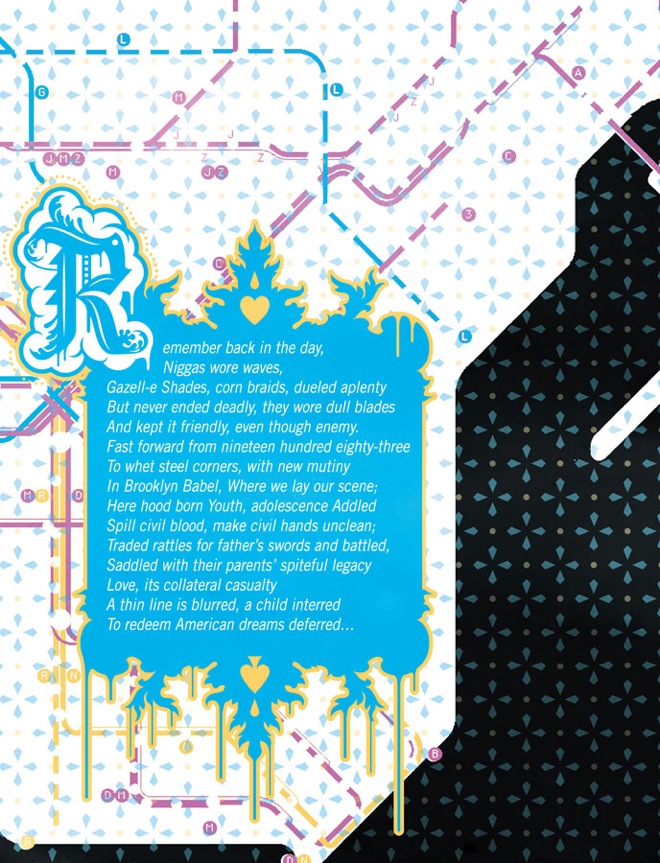
Prince of Cats! Hip Hop Shakespeare Comic

Though not a huge comic fan myself, I’m always curious when a new comic / Shakespeare adaptation pops up.  I’ve seen my share of graphic novels and “Manga Shakespeare,” and the Kill Shakespeare series has certainly had its share of the spotlight lately.  Then there’s the classic, Neil Gaiman’s Sandman books.

So here we have new entry Prince of Cats, a “hip hop” retelling of the obvious (Romeo and Juliet,  just in case it’s not obvious — Prince of Cats is something that Mercutio calls Tybalt).  I’m about as far from “street” as they come, so I’m not sure how much of an opinion I get on this sort of thing.  Mostly because I don’t know how much it takes itself seriously and how much is a play on the classic “blacksploitation” flicks of old.

As always I’m interested in the source material, and how much survives.  From the screenshots found in the article I see gems like these:

“Sheeeeit, where’s Tybalt?”

and

“Indeed, knave! Redeem thy kicks for thy skin.”

Interesting.  I’ll leave it up to other more “culturally sensitive” folks to tell me what I’m supposed to think of this project.  I didn’t want to ignore it just because I don’t know what to say about it.

One question, though — why is that one dude wearing his hat down over his face?  He looks like a character straight out of Fat Albert.

More on the Psychology of Romeo and Juliet

A couple weeks ago I stumble across a mention of The Romeo and Juliet Effect in a book about motivation and will power.

Today among the various Shakespeare feeds I scan I spotted this 2008 Psychology Today article entitled, “Romeo and Juliet’s Death Trip: Addictive Love and Teen Suicide.”  

There are no great insights to be found.  The author pretty much skims the story for various death references and ties them all back to suicide, including the claim that Romeo is suicidal over Rosaline at the opening of the play.  I think that’s a bit much.  That’s not suicidal, that’s emo.  Not the same thing.

The article’s at least entertaining, though, and I appreciate that.  I wonder how far his tongue was in his cheek while writing it?

Father Laurence tries cognitive behavior therapy:

I’ll give thee armour to keep off that word:
Adversity’s sweet milk, philosophy (read “psychology”),
To comfort thee, though thou art banished. . . .
rouse thee, man! thy Juliet is alive,
For whose dear sake thou wast but lately dead;
There art thou happy: Tybalt would kill thee,
But thou slew’st Tybalt; there are thou happy too:
The law that threaten’d death becomes thy friend
And turns it to exile; there art thou happy:
A pack of blessings lights up upon thy back;
Happiness courts thee in her best array.

But then (oy!!!) the good Father resorts to pharmacology: he gives Juliet a potion to make her appear dead.