
http://drb.lifestreamcenter.net/Lessons/RomJul/test_act_2-3.htm I love this. A huge test on Romeo and Juliet (Acts 2 and 3). If I didn’t have so much to do at my day job I would print it out, take it, and then research the answers myself to see how well I do. It does cover lots of bases, ranging from “Who said this and why” to “Tell me if you understood the story properly” to “Is this an example of a simile or a metaphor”, so that’s good. Still, though, it always feels weird to me to break down the plays into such small bits. To dissect something, first you have to kill it. I have a different idea for a test – how about we go to a production of Romeo and Juliet, and then at intermission, ask people in the audience if they felt that the Friar knowledge of herbs was an example of foreshadowing. Then ask whether or not they care, and whether or not the answer to that question impacts their enjoyment of the show. Yes, we’re talking about education, so there are certain things you should be tested on. But at some point can’t you appreciate it for a work of art, too? The true/false questions are interesting to me. On the one hand I like some of them, like #9, which asks whether Juliet hates Romeo for killing Tybalt. Since Juliet tells her *mother* that she hates Romeo, this question shows whether the student realizes that she was just saying that, and didn’t really mean it. But then look at #12, “The Nurse comforts Juliet when her father says she must marry Paris.” I went back and looked up the Nurse’s speech. I’m not sure if “Look, Romeo is banished, and you could do worse than Paris” counts as “comforting”. But isn’t that a matter of interpretation? The Nurse probably thinks she’s being comforting, but Juliet pretty much never looks at her the same again (“ancient damnation, o most wicked fiend!”) Yes, Juliet had asked for “comfort”, and that was the Nurse’s response, so perhaps the teacher expects a true answer her. But, like the “I’m only telling my mother I hate Romeo, I don’t, really” thing from question #9, shouldn’t we take Juliet’s “thou hast comforted me marvellous much” to be equally deceptive? Is comforting an active or a passive verb – does the person doing it or receiving it get to decide whether it worked? Maybe I’m nitpicking, but I think this is a big part of why I like to talk about Shakespeare, when we get to show examples of how people can miss the big picture because they’re too busy dissecting the individual word choices. I’m cool with the reader having to interpret when Juliet’s words don’t match what she’s feeling – that’s something people do every day. But when the hardest part of the question is determing what the teacher wants for an answer, because you can justify both, well, then you’re kind of stuck.
Category: Shakespeare Plays
William Shakespeare is widely regarded as one of the most influential playwrights in history, and his plays have been performed and studied for centuries. From the timeless tragedy of Romeo and Juliet to the hilarious antics of A Midsummer Night’s Dream, Shakespeare’s plays continue to captivate audiences around the world. Whether you’re a fan of tragedy, comedy, or romance, there’s a Shakespeare play for everyone. So why not revisit these timeless classics and discover the magic of Shakespeare for yourself?
Browse the entire text of Shakespeare’s plays right here on Shakespeare Geek.
Eddie Murphy Does Romeo And Juliet
http://us.imdb.com/title/tt0415343/ Wait…what? Will this be the Eddie Murphy of 48 Hours and Trading Places, or he of Daddy Day Care and Dr. Doolittle? Seems Mr. Murphy may have a project cooking to “reimagine Romeo and Juliet from the parents’ viewpoint.” Ok then.
Romeo and Juliet Flipbook
Absolutely outstanding! Great stuff.
Speaking of Animated Romeo and Juliet
http://featurefilmnews.com/2008/03/26/russia-gets-some-3d-shakespeare/ Last week or so I was all about “Sealed With A Kiss”, a children’s animated version of Romeo and Juliet with sealife. Well here comes another one. This time it’s in 3D! That’s different. Instead of sea lions, we’ll have sparrows and pigeons. Russian ones, to be precise.
Moons Of Uranus
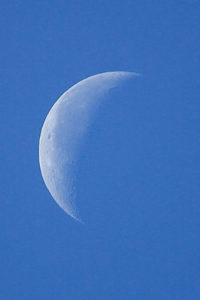 So a friend asks me today if I know the story of Uranus’ moons. Of course I know that they are named for Shakespearean characters, but he asks me why that is – why aren’t they named in the more traditional Greek style of the time.
Interesting question! The most I can find from wikiing around goes a little something like this:
In 1851, there were 3 known satellites of Uranus. Then a fourth was discovered. Astronomer John Herchel, son of William Herschel (who had discovered the first two), proposed the naming scheme: Umbriel, Ariel, Oberon, Titania. Umbriel being the newest one. It’s unclear whether the other three had names which were then changed, or if they simply hadn’t been named yet (they were discovered as far back as 1787, so it is unlikely that they had no names at all).
Here’s how I think the story goes. But first, a story of my own.
Once upon a time, I started a new job, and they gave me two server computers to set up. As the computer geeks out there may know, particularly in Unix land, you have to name your servers. Naturally, I named them Macbeth and Macduff. Seemed logical since I had the set. Well, later on, we hired someone to do that job for us who decided that my naming scheme had been “mac- words” and proceeded to go to town, so to speak, creating things like “macaroniandcheese”, “macgruffthecrimedog”, and a few others I can’t remember.
This later became “mc” words, including “mcfly” (Back to the Future), which somebody took and turned into “80’s catchphrases” and named a machine “bueller” for Ferris Bueller, and so on. Sometimes naming schemes take a funny turn.
Now, back to the story. Folks may recognize “Umbriel” as a character from Alexander Pope’s Rape of the Lock. It is also reminiscent of the Latin umbra-, for shadow. Umbriel is the darkest of Uranus’ moons. So I like to think that maybe Herschel was poetically inspired by the darkness and selected Umbriel as a fitting name.
It so happens, and this is where it gets interesting, that there is also a character in Pope named Ariel. “Aha!” thinks Herschel, “Ariel is also a Shakespearean character! And you know, there’s lots more Shakespeare characters than Pope characters to choose from. Maybe I should use Shakespeare instead.” Thus we got Ariel, Oberon and Titania (the two biggest, by the way, and thus the king and queen).
Almost a century later we got Miranda, and these days there’s something like 27 of them, as noted in the originally linked post. The only hole in my theory is that he named them all at the same time. If he really wanted to be consistent he could have chucked Umbriel and gone all Shakespeare.
I have no idea how the names really came about, I just like the idea of a guy 150 years ago using the same sort of creativity to name planets that I use to name my computers. Perhaps the geekiest bit of the story is that as late as 1986 somebody named one of the moons Belinda….which is back to the Pope scheme again! So surely there’s an astronomer out there with a geeky sense of humor just like mine who decided that not only was he not messing with the naming scheme, but he was actually being more true to the original. I like him.