Rough, Rug Headed Bunch o’ Forgers

I didn’t have time to put together a real piece on Shakespeare for St. Patrick’s Day, so I thought we’d do more of a smorgasbord 🙂

Old Castle, but not Oldcastle.
An Old Castle, But Not An Oldcastle

When I went googling for Shakespeare and the Irish, I found that Shakespeare created the Irish stereotype. I also learned that Shakespeare apparently wrote a play called The History of Sir John Oldcastle, which was a new one on me.  That is the true name, of course, of Sir John Falstaff. But I don’t recall him having his own play.

But, according to the link, this is where Shakespeare refers to the Irish as “rough rug headed kerns,” whatever that means.  That line is actually in Richard II [II.i], so I’m not sure where the Oldcastle / Falstaff connection comes in.

For something completely different we have the William Henry Ireland, who was so set on discovering lost Shakespeare manuscripts that he just sat down and wrote a bunch of them himself.

Lastly, is Macmorris in Henry V really the only Irish character Shakespeare ever wrote?  I’ve never really looked into it.  And if that’s the case, why does he sound so much like Sean Connery, who is Scottish?

What ish my nation? Ish a villain,
and a bastard, and a knave, and a rascal. What ish
my nation? Who talks of my nation?

Where else does Ireland (or anything having to do with Ireland) show up in the works?  I could swear that there’s more crossover in King Lear but I haven’t gone and dug into it.

Happy St. Patrick’s Day, everybody!


Look out! Ides!

My co-workers couldn’t wait to tell me to Beware the Ides of March today.  It’s probably the most well-known calendar date associated with Shakespeare. But other than knowing that March 15 = Ides of March, and that’s when Brutus and the gang went all stabby stabby on their boy Julius, do people really know anything else about it?

Beware the Ides of March
Do not go to the Senate today.

I admit that I didn’t know much myself, so I went looking last night in preparation. I consulted my Asimov’s Guide, which is always guaranteed to have enough detail on every possible digression you might make from the play’s main action.  Seriously, I tried to read what Asimov has to say on Merchant of Venice and came away knowing how much the human liver weighs.

Once again, Asimov does not disappoint. Ides is one of three reference dates in the Roman calendar:

  1. The Kalends, or first day of the month, is also obviously where the word calendar comes from :). It is believed that originally it was supposed to coincide with a new moon.
  2. Nones, meaning “ninth” and representing the half moon. Ninth because it was literally nine days(*) before the Ides.
  3. Ides, the day of the full moon. Although we naturally think the fifteenth for Ides, that’s only true for some of the months with thirty-one days. It falls on the thirteenth for the others.

So basically their calendar wasn’t just a matter of counting from one up to thirty-ish and starting over.  You counted relative to the different days, such as “two days before Ides”. I just keep thinking of that old rhyme “Thirty days hath September, April June and November” and wondering what in the world Roman school children must have had to learn instead.

If you’re confused already, definitely don’t visit the Wikipedia page (linked above) that goes on to describe how you would refer to dates for each month.  Just be thankful Shakespeare (and Brutus?) picked an easy one to remember. Speaking of which, remember to Beware the Ides of March!

(*) It’s not just Roman numerals that give computer programmers stress, apparently.  When counting relative to these reference days, you would use the day itself as one rather than zero. So the “ninth” day actually comes eight days before the Ides. Got that?  If today is Wednesday, and I say, “How many days is it until Friday?” and you said, “Three days.  Wednesday, Thursday, Friday.”

Are Shakespeare’s Plays Encoded In The Digits Of Pi?

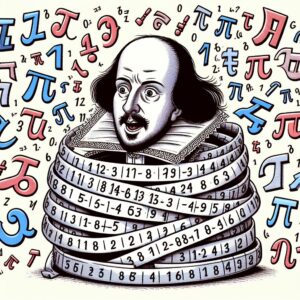
William Shakespeare wrapped up and struggling with the pi

I thought that for Pi Day this year, we could look at this age-old question. In short, it goes something like this:  “Since pi is infinite and non-repeating, does that mean that if you encoded the letters in Shakespeare’s work to numbers, that we could find the complete works of Shakespeare in the digits of pi?”

Short answer?  No.  (Or, to be specific about it, “It’s not proven, no.”)

Here’s a video that explains it better than I can:

Here’s the problem in a nutshell.  People tend to think of “infinite” as “representing all possible combinations,” and that’s an incorrect assumption.  Say, for example, that we had the repeating sequence 1, 0, 11, 0, 111, 0, 1111, 0 … and so on.  That sequence is infinite and non-repeating.  However, you can easily prove that it does not contain all possible number combinations.

The term for what we want to happen is for the digits of pi to be a “normal” infinite number, which means that all combinations are equally likely to occur.  If that proves to be true – which it has not yet – then yes, you would have a case that the works of Shakespeare would appear.

However, you will have a different “multi universe” problem. If you assume that all possible combinations exist within pi, that means that Macbeth does.  As well as Macbeth with a happy ending, Macbeth as a cat, Romeo and Juliet where they’re both transgender and live happily ever after, and, yes, even the complete works of the Earl of Oxford. Literally, every combination is possible, whether they make sense or not. You could probably state that they are in there, but you would not be able to extract them to find the subsequent great works of English literature.  So then, it literally has no value at all.

Personally, I find it much more interesting to determine where your name appears in pi or the longest string of repeating digits in pi.

On a completely different note, my daughter won her school’s Pi memorization contest when it was her turn a couple of years ago, and now her younger brother is up. Hope he successfully defends her title!  I’ll have to let everybody know how it goes since I’m scheduling this in advance 🙂

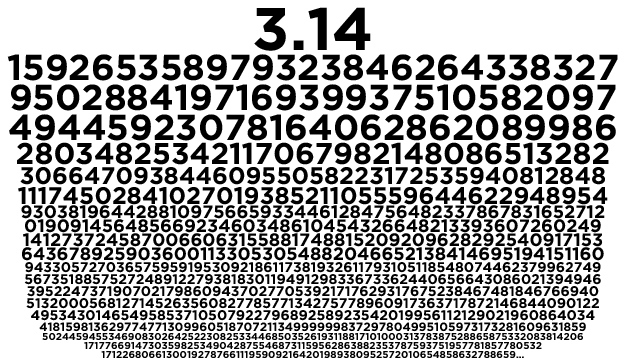
The Digits of Pi
Shakespeare, are you in there?

Conclusion

I see this question come up periodically, and I don’t think that we’ve covered it recently, so I wanted to make sure we had something to say about the subject.  No, as of right now, we do not have proof that the digits of pi contain Shakespeare’s works. Or any other string of significant length.  But it’s fun to think about, isn’t it?  If this question even occurred to you in the first place, you’ve got some geek in you!  Welcome to the club.

Happy Pi Day, everybody!

Boy Meets World Meets Shakespeare

My kids were just the right age for Girl Meets World, the spin-off of the longer running and more popular Boy Meets World. But 1993-2000 I was already out of college and not really the audience anymore. I was going to say Saved By The Bell was more my thing but that was 1989-1993 and I would have been in college for that too!

Anyway, I didn’t have to follow the show religiously to know the Mr. Feeny character, played by William Daniels (who I knew from St. Elsewhere). Maybe it’s precisely because I was older that I could appreciate the importance of school teachers. When I did watch I would be thinking, “You stupid children, listen to the man. He knows what he’s talking about. He cares about you and wants you to succeed in life. That’s his job.”

Well today I learned that the actually wooed Daniels to the role with Shakespeare:

I live on the other side of the fence from you, Cory. It’s impossible not to face in your direction every once in a while and notice the people in the next yard. And through the years as I’ve gotten to know them, it is apparent they are fine individuals. But, their real strength comes from being a family. And do you know why they are a family, Cory? Because at one time a man and a woman realized that they loved each other and pursued the unlimited potential of what may come from that love, and here you are. There is no greater aspiration than to have love in our lives, Mr. Matthews. Romeo knew it and died for it.

In case you’ve never heard of the show and are now thinking about binge-watching it on Netflix, beware:

There were more Shakespeare references tied to Mr. Feeny’s character, but most of them landed on the cutting room floor, including the Romeo and Juliet speech.

Oh, well.  It had potential!

If you loved Mr. Feeny too, apparently this and other stories come from Daniels’ new book There I Go Again: How I Came to Be Mr. Feeny, John Adams, Dr. Craig, KITT, and Many Others.

For those that know the show and the character and know where I’m coming from, enjoy one of the great television finale moments. Total spoilers but come on it aired almost 20 years ago if you wanted to see it and never did you might as well:

You Think You Loved Sir Patrick Stewart Before?

This post has no Shakespeare in it, just one of the world’s greatest living Shakespeareans. I know that’s upset some people in the past when we dare to look at the actors as people, rather than just their roles.  So consider this the disclaimer!

Sir Patrick Stewart has a new dog.  Specifically he and his wife are fostering a pitbull named Ginger. Here he gives the details on Conan:

For a clip I like even better you have to check him trying to take the dog for a swim. It does not go well, but it should certainly make everybody’s day. I wish I could embed the clip. That’s a link to his Twitter.  If you’re not following that you really should, he’s posting plenty more clips.

It’s true that this is the story of a person fostering a dog, something that no doubt happens all around the world all the time and is rarely newsworthy. I don’t care.  What I see is a 70+yr old man who hasn’t had a dog since he was a boy, who now gets to act like he’s a boy all over again. Pure joy radiates off the man, and that makes me happy. He’s given us plenty of things to he happy about, so if you’ve enjoyed his performance as Macbeth or Claudius or Prospero or any of the other myriad roles he’s played, time to enjoy him just being himself for a change.