Knock Knock! The Definitive List of Shakespeare Knock Knock Jokes (Guest Post)

From time to time, Bardfilm and Shakespeare Geek have tried putting a Shakespearean spin on some of the classic genres of humor. They’ve previously tackled light bulb jokes and dealt with why the chicken crossed the road. Finally, the great challenge of the Knock knock joke proved irresistible. Here are some Shakespearean knock-knock jokes that you can use to entertain or torment your friends, colleagues, and children.  No, you don’t need advanced Shakespeare knowledge to get all of them – but it certainly helps sometimes!

Knock, Knock.
Who’s there?
Oberon.
Oberon who?
Oberon the other bank you might try to catch some fish.

Knock, Knock.
Who’s there?
Noah.
Noah who?
Noah’s the winter of our discontent.

Knock, Knock.
Who’s there?
Dogberry.
Dogberry who?
Dog bury a bone in my petunias again, dog get sent to the pound.

Knock, Knock.
Who’s there?
Julius Caesar.
Julius Caesar who?
Julius, seize her! She’s the one who stole my wallet!

Knock, Knock.
Who’s there?
The Earl of Oxford.
The Earl of Oxford who?
Exactly.

Knock, Knock.
Who’s there?
Wherefore means.
Wherefore means who?
No, “wherefore” means “why.” How many times do we have to go over this?

Knock, Knock.
Who’s there?
Nay, answer me!  Stand and unfold yourself.
Long live the king?

Knock, Knock.
Who’s there?
Laertes.
Laertes who?
Layer Ts and sweaters to stay dry and comfortable on the ski slopes.

Knock, Knock.
Who’s there?
The Nightingale.
The Nightingale who?
Ha! Fooled you! It’s really the Lark.

Knock, Knock.
Who’s there?
Orlando.
Orlando who?
Or Lando or Leia or Luke or Chewbacca will pilot the Millennium Falcon.

Knock, Knock, Knock, Knock, Knock, Knock.
Who’s there?
Tom.
Tom who?
Tom R. O. and Tom R. O. and Tom R. O.  We creep in this petty pace from day to day.

Knock, Knock.
Who’s there?
Shelly.
Shelly who?
Shelly compare thee to a summer’s day?

Knock, Knock.
Who’s there?
Hal.
Hal who?
Hal long until Henry IV dies and I can become king?

Knock, Knock.
Who’s there?
Gracie Zar.
Gracie Zar who?
Gracie Zar’s Ghost!

Knock, Knock.
Who’s there?
Et.
Et who?
Et tu, Brute? Then fall, Caesar!

Knock, Knock.
Who’s there?
Utah.
Utah who?
Utah me language, and my profit on it is I know how to curse!

Knock, Knock.
Who’s there?
The cause, my soul.
The cause, my soul who?
Let me not name it to you!

Knock, Knock.
Who’s there?
Leon.
Leon who?
Leon Macduff.

Knock, Knock.
Who’s there?
Rosencrantz.  No, wait, Guildenstern! *sigh*—let me get back to you.

Knock, Knock.
Who’s there?
Ferris.
Ferris who?
Ferris foul and foul is fair.

Knock, Knock.
Who’s there?
Lysander.
Lysander who?
Lie, Sander, and you’ll get in trouble, Sander.

Knock, Knock.
Who’s there?
Cordelia.
Cordelia who?
Oh, that’s real nice, Daddy. I come all the way from France with an army to rescue you and that’s the welcome I get.

Knock, Knock.
Who’s there?
Falstaff.
Falstaff who?
[Excessively Loud Belch]

Knock, Knock.
Who’s there?
Will Shakespeare.
Will Shakespeare who?
Will Shakespeare or just stand there holding one as long as I get to be on stage.

Knock, Knock.
Who’s there?
Desdemona.
Desdemona who?
Nobody.  I myself.  Farewell.

Knock, Knock.
Who’s there?
Riese.
Riese who?
Riese and not the need.

Knock, Knock.
Who’s there?
The Porter from Macbeth.
The Porter from Macbeth who?
The Porter from Macbeth, who wants to know how you like it! Knock, Knock. Knock, Knock. Knock, Knock. Knock, Knock. Knock, Knock. Knock, Knock. Knock, Knock. Knock, Knock.

Knock, Knock.
Who’s there?
Interrupting Chorus.
Interrupting . . .
O FOR A MUSE OF FIRE!

Knock, Knock.
Who’s there?
Demetrius.
Demetrius who?
Just try to Demetri us before we Demetri you!

Knock, Knock.
Who’s there?
Hamlet.
Hamlet who?
Ham let Ophee fall in love with him.

Knock, Knock.
Who’s there?
Hamlet.
Hamlet who?
Hamlet the dogs out!  (woof, woof woof woof…)

Knock, Knock.
Who’s there?
Helena.
Helena who?
Helena handbasket is where this world seems to be going.

Knock, Knock.
Who’s there?
Pericles.
Pericles who?
Well, I know it’s not Hamlet, but it’s not that unknown.

Knock, Knock.
Who’s there?
Rosaline.
Rosaline who?
Yeah, that’s what Romeo said as soon as he saw Juliet.

Knock, Knock.
Who’s there?
Lloyd.
Lloyd who?
Lloyd, what fools these moytals be.

Knock, Knock.
Who’s there?
Mary.
Mary who?
Mary, your manhood mew.

Knock, Knock.
Who’s there?
William Shakespeare.
William Shakespeare who?
William Shakespeare cans so they explode when you open them.

Knock, Knock.
Who’s there?
Interrupting Richard the Third.
Interrupting Richard the . . .
HORSE!

Knock, Knock.
Who’s there?
Amos.
Amos who?
Amos shapen knave; his mother was a witch, and one so strong that could control the moon!

Knock, Knock.
Who’s there?
Otis.
Otis who?
Otis too, too solid flesh! I wish it would melt, thaw, and resolve itself into a dew!

Or . . .

Otis too true! How smart a lash that speech doth give my conscience.


Knock knock.
Who’s there?
Mike.
Mike who?
Mike Ingdom for a horse.

Knock knock.
Who’s there?
Arthur.
Arthur who?
Arthur world’s a stage, and all the men and women merely players.

Knock knock.
Who’s there?
Toby.
Toby who?
Wait—sorry. Not Toby.
Make up your mind! Who’s there?
Toby or not Toby, that is the question.
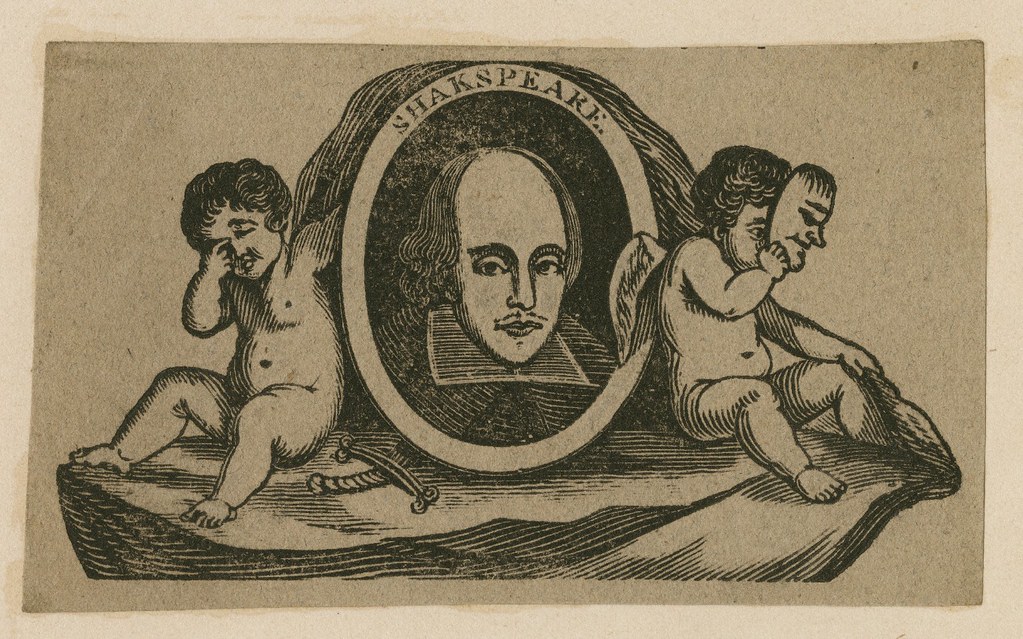
Shakespearean Knock Knock JokesWe thank kj, the author of Bardfilm, for this guest post. Bardfilm is a blog that comments on films, plays, and other matters related to Shakespeare.
Inside The Vault #6 (Conclusion): The Most Beautiful Book In The World

Before I’d ever left for my trip, I was speaking with Bardfilm about what I might hope to see in the vault.  He replied that I might ask to get a look at Folio #1, what Mr. Folger called, “The most beautiful book in the world.”

And there I was, standing in front of a wall of Folios (a post unto itself!) and I went for it.  Garland Scott had told me that I might be able to see it, “if it’s not out.”  I assume that these sorts of items are often lent out to other institutions for study.   “Is Folio #1 in?” I asked.

“I think so,” Georgianna replied, digging for something she wanted us to look at.  “It would be up there if it was.”

That’s how they refer to their Folios, apparently.  I want to curl myself up in the pages and go to sleep.  The folks that see them every day say, “Oh, that one is over there somewhere.”

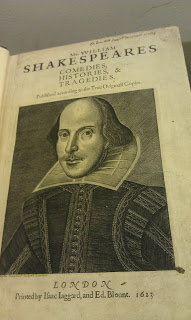
Why is #1 so special?  It’s got a note (well, mostly a signature) from the original owner, stating that he’d received it as a gift from the printer, William Jaggard.  Though it would be a mistake to assume that this makes it the actual *first* First Folio, it’s certainly evidence for being one of the very earliest.  After all, William Jaggard died in November 1623, shortly before the first actual purchase of a Folio took place. So if this book truly was a gift, it was most definitely a very, very early copy.

I asked again, once we’d seen a few things and I get the feeling our time in this particular room is coming to an end.  “Any chance I can see #1?”

And, just like that, I can.  Georgianna pulls it down from its shelf, opens the gigantic box that contains the book, and lays it out on the table for me.  I am staring at a one of a kind, almost 400-year-old book.

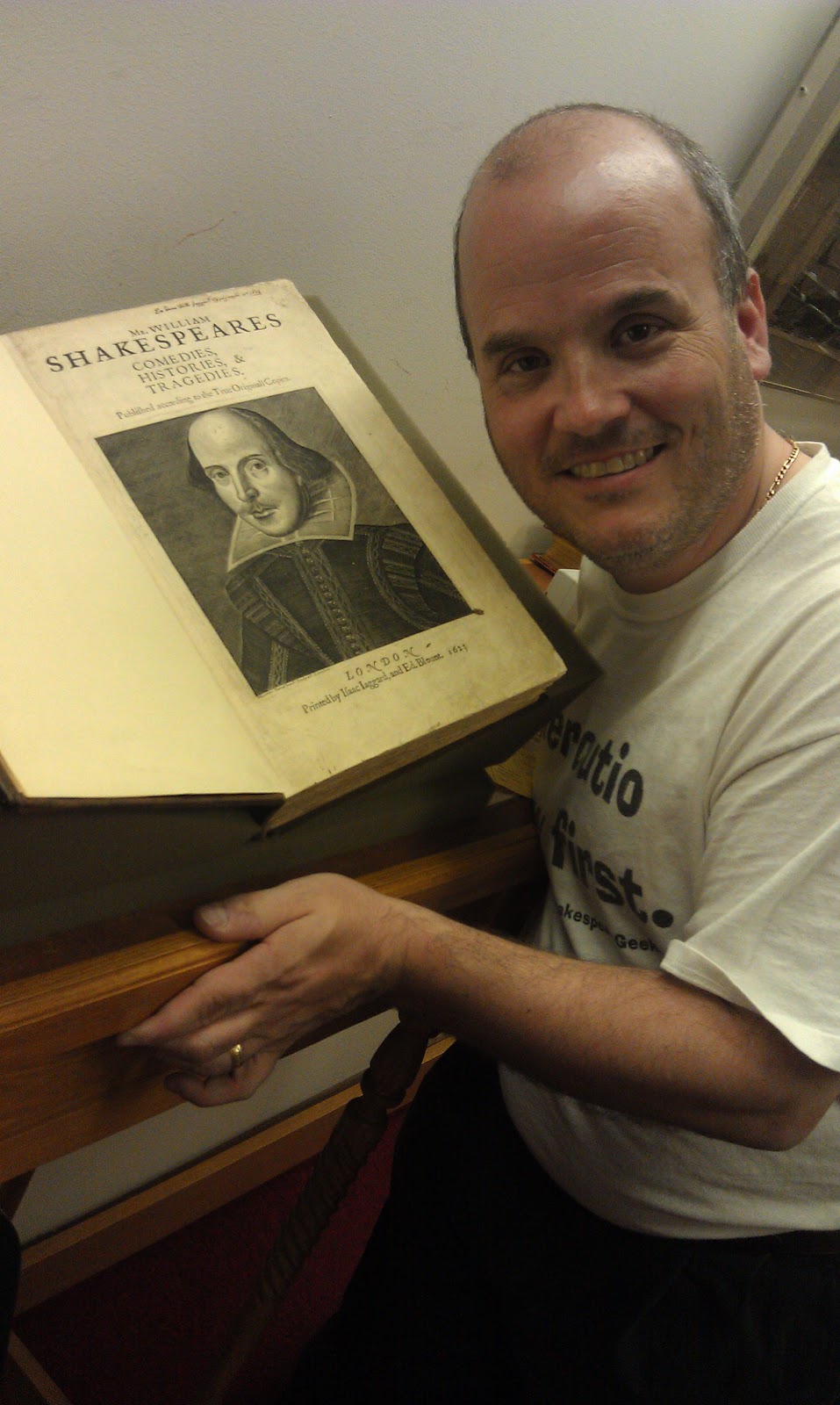
And there it is.  The picture is not the greatest, but you can see the mark in the upper right corner that identifies this as a gift from Jaggard (posthumously, I’ve learned).  Amazing.  No, I did not flip through it.  I consider myself lucky to have gotten to see it.
Oh, and to do this.
Best estimates have that book as one of the top 3 most valuable in the world, possibly approaching $10 million.  For the record, I’m not touching it, nor tasting it.  I was quite careful. But I know that my guardians were ok with this particular boldness because not only did Georgianna not have heart failure, she took my camera from Garland and took the picture herself because she didn’t like the way Garland was doing it! 🙂
Today I showed this picture to a coworker.  “You look so happy!” she said.  “Look how happy you look!  It must be amazing to be that passionate about something that it can make you that happy.”
Yes.  Yes it is.
Though this was not the last stop on my tour, this is the last post in my “In The Vault” series.  Once again, a tremendous and sincere Thank You to Garland Scott and Georgianna Ziegler for allowing my family and I this once(?) in a lifetime opportunity!

Inside The Vault # 5 : Alan, and The Globe

Down, down, down we travel into the deepest floor of the vault, and there we find Alan Katz (hope I spelled his name correctly!) and Garland introduces me.  “I’ve left quite a few comments on your blog,” he tells me.  I wonder if he’s reading now?  Hi, Alan!  Let me know if I’ve spelled your name correctly!

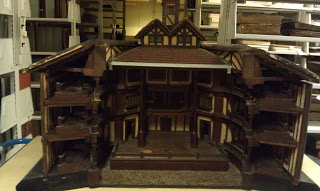
Georgianna and Garland discuss what cool stuff we might see down here, and they confer with Alan.  “Well,” he says, “There’s The Globe.”  Georgianna agrees that this would indeed be cool.  Garland has apparently never seen what we’re about to see, or has forgotten that they had it.

Alan disappears into the stacks and rolls out …

How cool is that!  I actually got a picture of my kids all standing around it, like a doll house.  I currently have a message in to Garland trying to learn more about this item – what time period it’s from, what was its purpose.  But I knew that I had to include it in my photo tour whether I had the research or not.

Update, directly from Alan (who has promised to post more in comments as he finds it):

The Globe was patented by H. Ernest Conklin, of Roslyn, Long Island, born in 1892. He was a scholar at Cornell and Princeton and professor at Rice in the 1920’s. The model was built no later than 1935 and is on a 3/8”:1’ scale.

Funny story – at the end of our tour of the lowest levels, we travelled back up the elevator and Georgianna took a moment to show us just how heavy and secure the vault doors (yes, multiple doors) are.  As she closes and locks the cage I whisper back down the hall, “Good night, Alan!”  Turning to Georgianna I ask, “You do remember to feed him, right?”

Later, while we were at tea (a Folger tradition!) we saw that Alan had escaped.  Garland had to share my joke with him.  “That’s what the book lift is for,” he replied, “So they can send down my food.”

The tour’s stunning and spectacular conclusion is next!

Inside The Vault #4 : Magic, Magic, Magic!

Harry who?

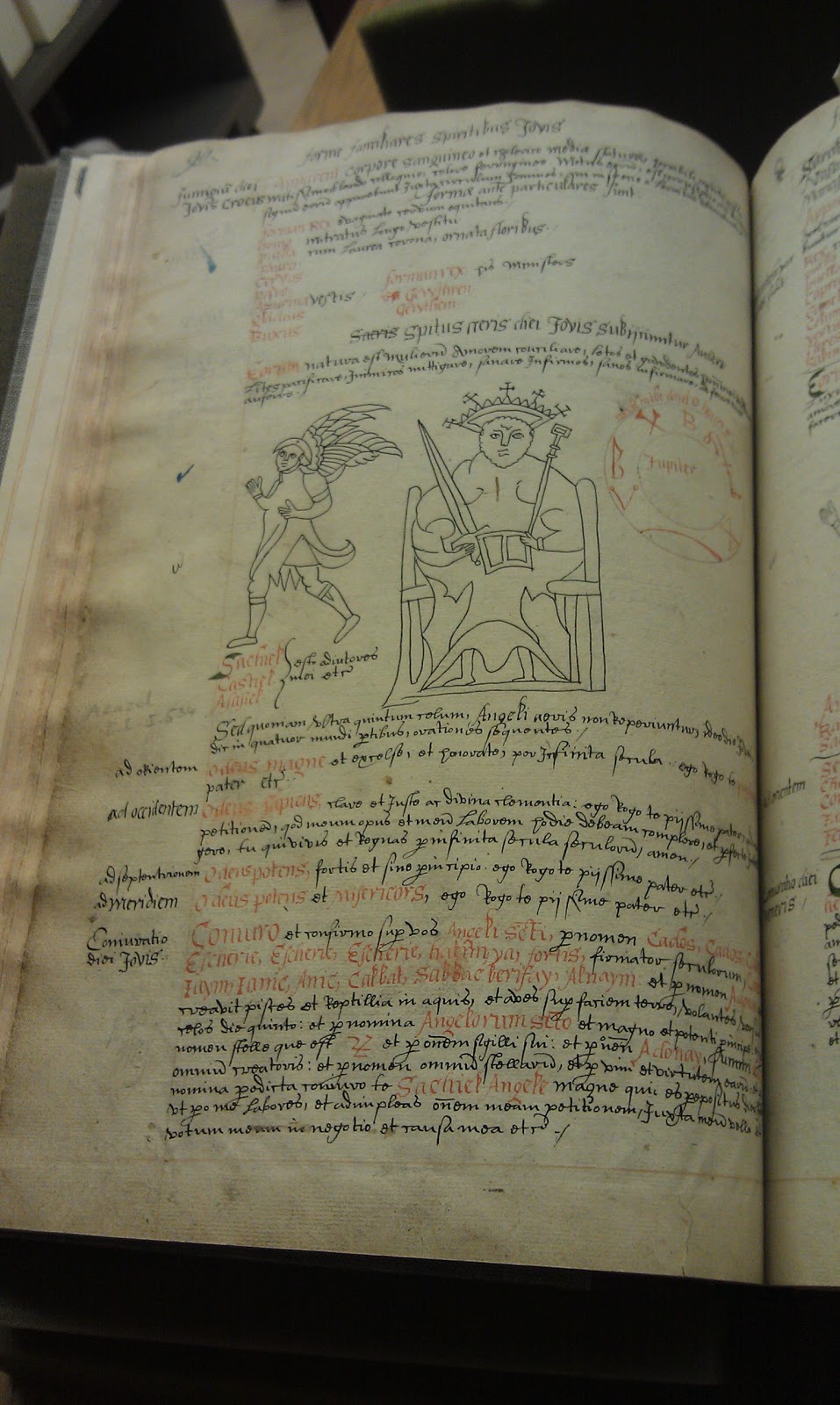
If your kids want to pretend that they’re wizards and witches, let’s show them a real magic book!

More from the Folger page:
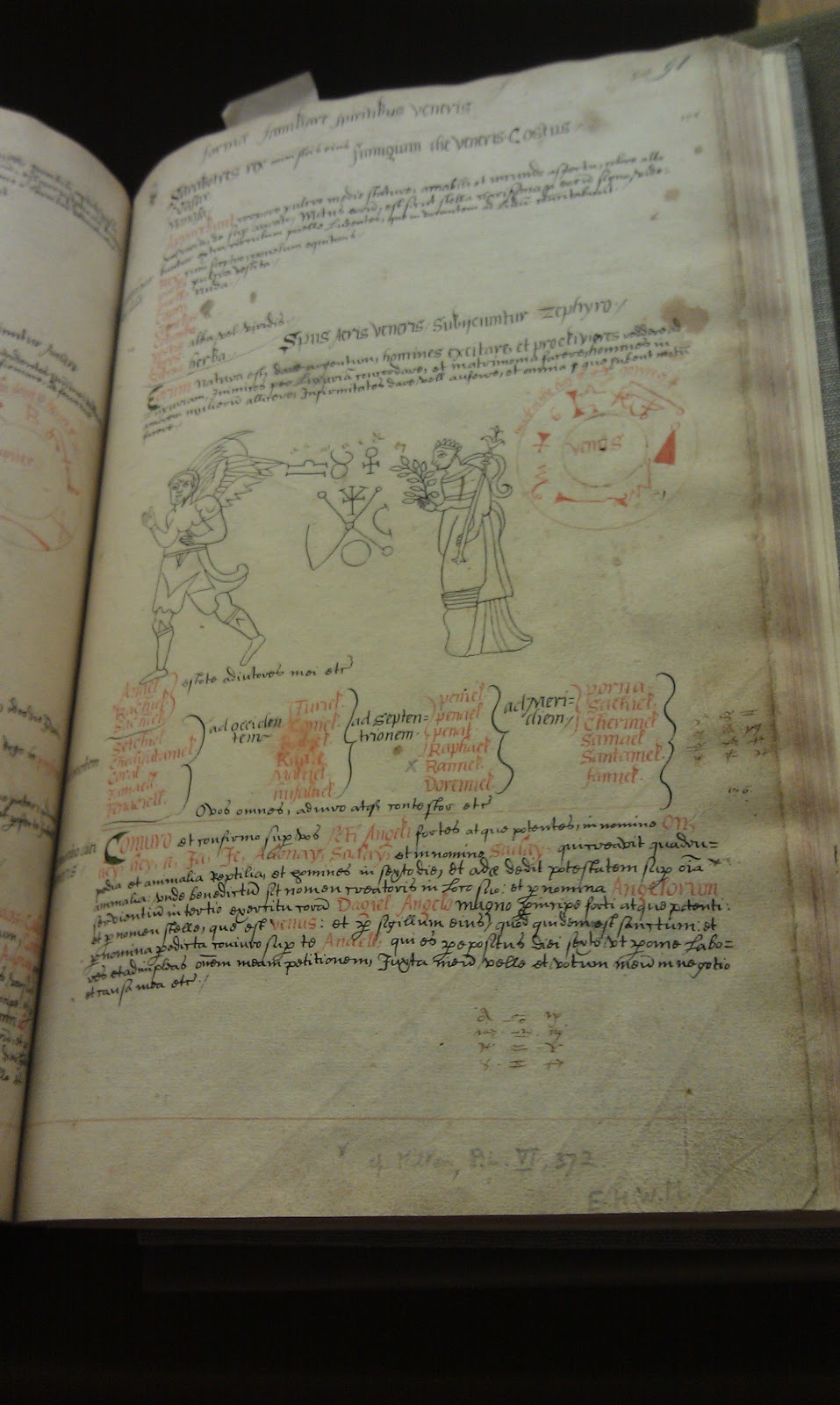
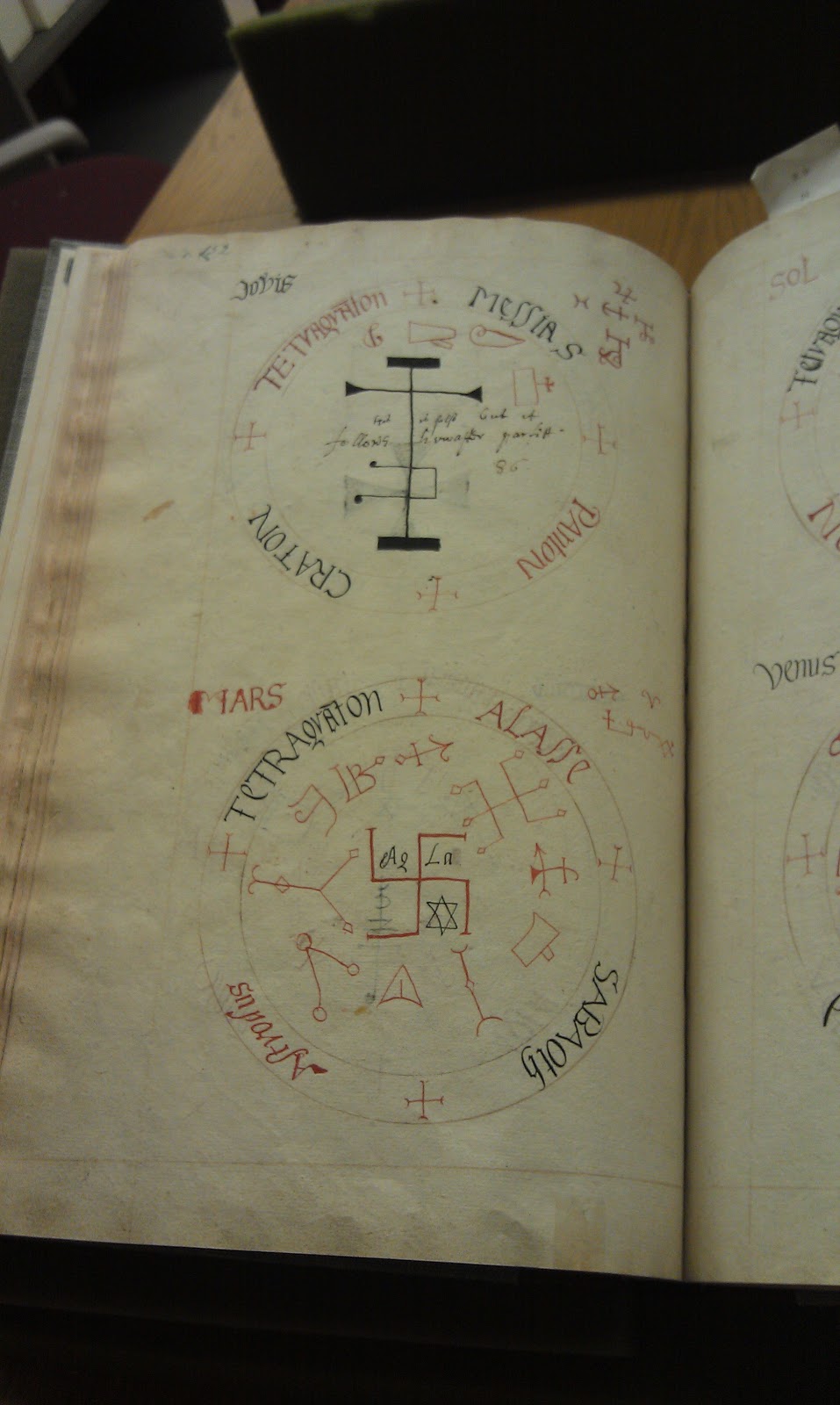
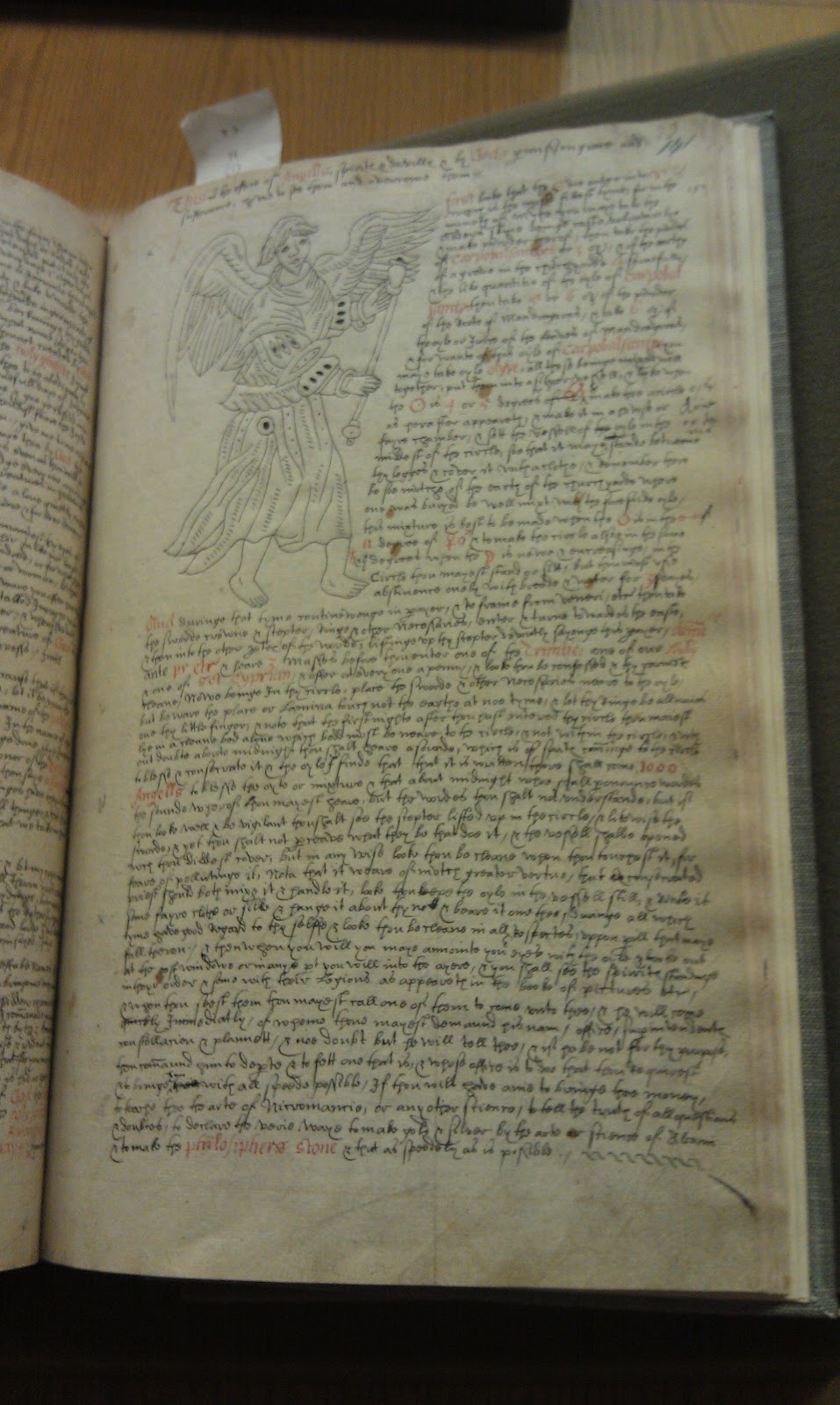
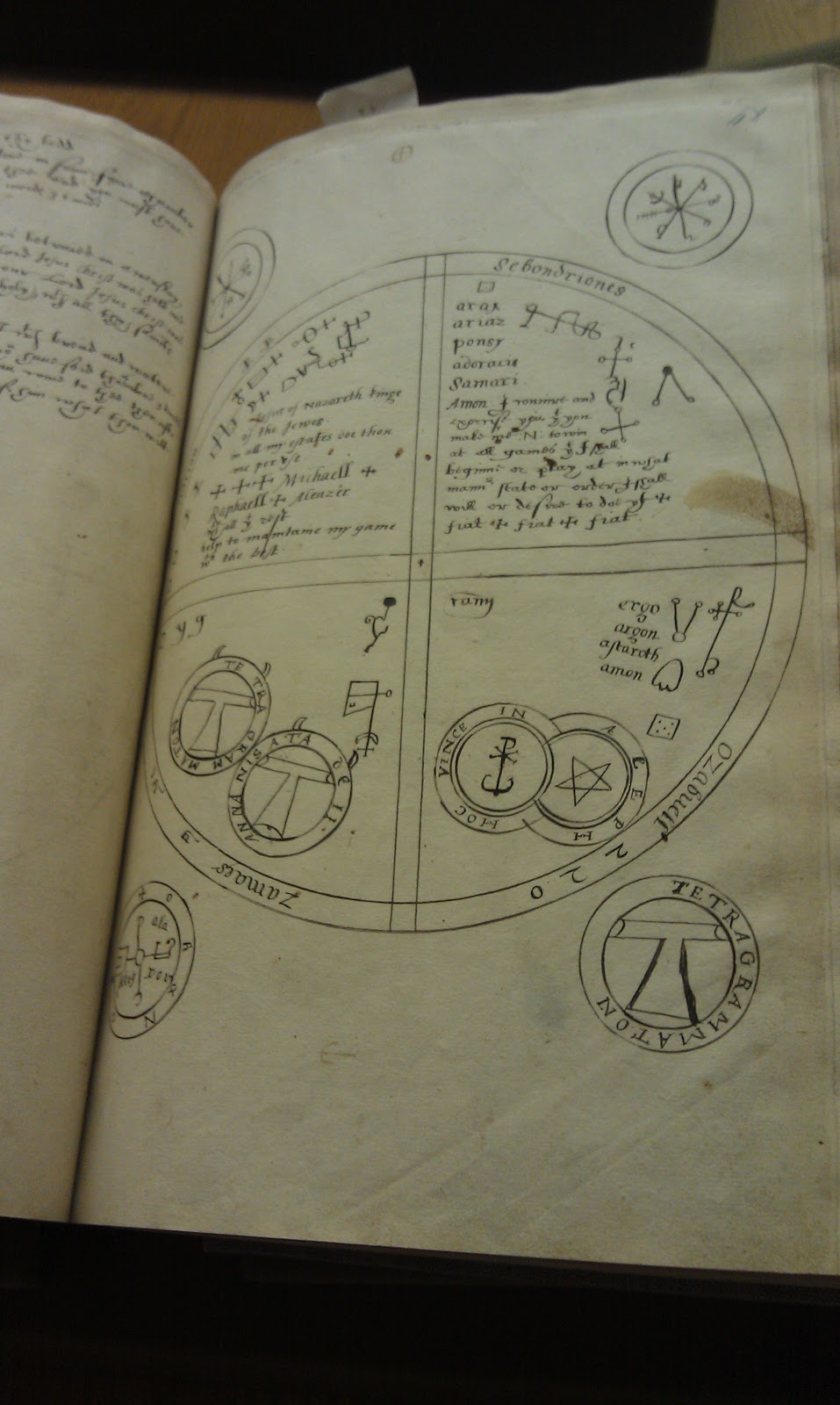
One of the treasures in the Folger collection is a handwritten book of magic spells that is over 400 years old. The book is written in English, but also includes magical terms like “abracadabra” and drawings of angels, demons, dragons, and other supernatural creatures.

This book was used by many people over many, many years. Owners added their own notes into the margins, and one person even wrote in page numbers.

Although people in the Middle Ages and even during Shakespeare’s time used magic for lots of different reasons, including healing sick people, helping to find lost objects, or finding the guilty person when a crime was committed, magic was often done in secret.

I wanted to make some sort of King James reference, since he was supposedly more heavily into the whole witchcraft thing?  But this book dates from 1580. I wonder what Shakespeare’s actual experience with this sort of magic might have been?


The trip continues…

Inside The Vault #3 : Beasts!

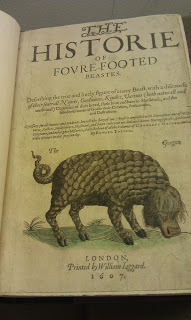
I wish I’d gotten more pictures of this book:

This “Historie of Fovre-Footed Beastes” has a publication date of 1607 by William Jaggard, who’ll come back up later in a different Folio story.

The book itself was fascinating.  Note the color?  No, color printing was not available at the time.  This would have been hand colored.

Inside (maybe I’ll see if Folger’s got some more pictures I can use) was a very wide array of animals that my son had a field day identifying.  Lions!  Goats!  Otters!  Otters?  Yes, even though the otter was apparently not known in England at the time, there was a picture of an otter.  Interesting how knowledge travels.

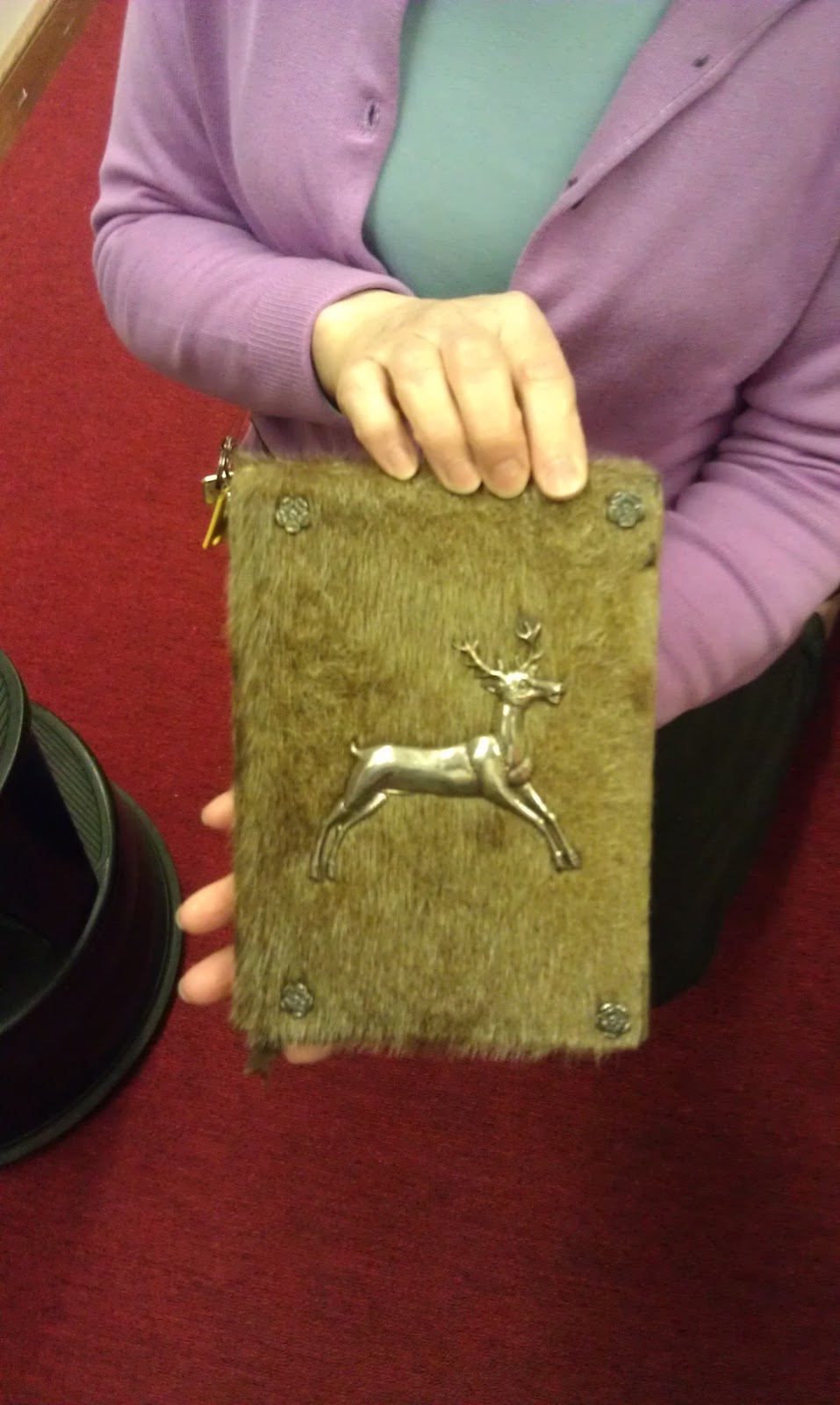
Speaking of beasts, how about this book on hunting?   If this one looks a little funny, that’s because it’s covered in deer fur.

The trip continues …