
Rosenbaum’s Shakespeare Wars continues to be the most serendipitous book I’ve ever read. By that I mean that I’m never quite sure when I’ll turn the page into a new chapter and he’ll be talking about something I was just talking about two days ago. In this case it’s the “When I shall die” line (as opposed to “When he shall die”) that we talked about last month. Certainly it’s supposed to be “Give me my Romeo, and when he shall die, cut him out in little stars….” rather than the version Luhrman gives us, “When I shall die, cut him out in little stars….” After all, if he’s not dead, why are you cutting him up? Oddly, though, my googling showed that most Shakespeare versions do in fact have it as I, not he. Rosenbaum gets to this near the end of his book, speaking of a trip to Bermuda. He even points out that most editors do indeed go with the “he” version (which is apparently Fourth Quarto) because the “I” version makes no sense. And what Rosenbaum offers (not his own hypothesis, but rather one he heard, though I do not have the book handy to quote the original author) immediately makes sense to me, I’m just not sure if I love or hate it. He goes back to the more bawdy version of “die”, namely “orgasm”. He says that Juliet, a mere 13 yrs old and not married, is to put it bluntly thinking about wedding sex, and how good it’s going to be. You have to admit, if you make that little word translation, it still fits. Now you’ve got an anxious young girl, in love but also certainly in lust, waiting for that big moment when … ummm….hmm, how can we say this and keep it clean? Shall we say, when she gets to consummate her marriage? It’s going to be so good, she tells herself, that all she’ll see are stars, and her Romeo. (I’m not sure when all the rest of the world comes into it, though?) I love it because it works, pretty much. It’s somewhat crude, it’s the sort of thing you don’t talk about when you talk about the story like it’s the greatest love story ever told, but sex is certainly a part of that type of love, and it’s certainly believable that a virginal bride-to-be is contemplating what it will be like. (Now that I’ve seen that interpretation, other parts begin to fall into place – “I have bought the mansion of a love, but not possessed it, and though I am sold, not yet enjoyed”???) I hate it because it destroys what I consider to be one of the most romantic lines in the entire play. It’s an opportunity for Juliet to explain how much Romeo means to her. Normally it’s the guy spouting all the poetry and the “You’re my world” stuff. Sometimes it’s nice to hear it back the other way. What would Juliet do without Romeo? She would repaint the heavens in his image, and the rest of world would say, “Wow, yeah, we like that better. Who is that guy?” 🙂 Thoughts? Nobody mentioned the sex interpretation the first time we discussed that line, so I’m curious if it is a popular interpretation.
Category: Shakespeare Geek
Characters, Sorted By Number Of Lines
http://www.opensourceshakespeare.org/views/plays/characters/chardisplay.php?sortby=lines&searchterm=

UPDATE – OpenSource Shakespeare has actually removed the “sort by lines” feature and replaced it with “sort by speeches”. This is somewhat more accurate, as there is no set rule about line breaks in most of the text.
However, counting speeches isn’t remotely as fun. One character might have 10 small speeches, compared to 3 lengthy speeches from someone else.
The results are still what you’re thinking – Falstaff, Richard III and Henry V top the list, all of whom appear in multiple plays. The remainder of the top ten might as well be, “Title Characters” — Hamlet, Othello, Antony, Cleopatra. Even Timon (of Athens) gets in there.
The one spoiler? Iago, He’s got almost as many speeches as Othello!
Open Source Shakespeare is a great resource for doing things like this (not my idea, I just found it). Here, we have characters sorted by the number of lines. Obviously, it’s a little crude as Shakespeare himself shows up in the #1 spot with no plays listed, but right behind him are Falstaff and Henry V (both having appeared in numerous plays with major roles, it only makes sense), and then Hamlet (who, for only have a single play, has the most lines). Other interesting bits…
Othello and Iago have almost an identical number of lines.Anthony has more lines than Cleopatra – but he was in Julius Caesar, too.Behind Cleopatra, Rosalind from As You Like It has the most lines for a female.Romeo has substantially more lines than Juliet, though they both have quite a few. Lady Macbeth, on the other hand, has barely 1/3rd the number of her husband’s lines. Tybalt barely registers with just 17 lines!
Welcome John Hudson of The Dark Lady Players!
http://www.darkladyplayers.com
If you don’t recognize the name, John Hudson is known for having put forth Amelia Bassano Lanyer as the latest contender for the Authorship Question (also known as the “Shakespeare was a black Jewish woman?!” theory).
When I first posted about the theory I wondered aloud if it was a joke. I also wondered why the discussion is always about As You Like It, since it seems that you’d want to go right to Shylock if you’re going to argue that a Jewish person created him. So when I got email from Mr. Hudson, I apparently have no shame, I dove right in and asked both questions :). Answers printed with his permission:
Q: With all due respect, are you serious? Or is this some larger satirical joke on the Authorship question as a whole that’s gone over my head?” (paraphrased)
A: Actually I am serious–which is why in March last year I went to London to present this theory to Mark Rylance and the Shakespearean Authorship Trust, who treated it seriously and brought her in as candidate number 8 at the top of the ‘other candidates’ section of their website. I would also not be spending money putting on demonstration allegorical versions of the plays unless I was serious!
Q: Why have I not heard anyone ask about Merchant, or even Taming of the Shrew? Why would Bassano have written such misogynistic, anti-Semitic works?
A: This theory holds that the plays are written as allegories—as was much of Elizabethan and Renaissance literature—so they have a meaning in some cases on the surface that is opposite to what they really mean underneath. Both MOV and Shrew are quite complex, so it is easiest if I begin referring you to my analysis of more straightforward plays like MND and AYLI (which we are currently rehearsing for production in late July). Once you see how those work it is easier to make analogies to the others. For instance I would show why the way that Adam disappears half-way through AYLI is a parallel to the way that Shylock disappears half way through MOV–and what happens to them is similar. (I would however refer you to the literary signatures she has left on the two Shrew plays, which have also recently been detected by Rene Weis in Shakespeare Unbound pg 177).
(I certainly plead ignorance regarding the depth of these arguments, but that answer to the Shylock question does seem similar to the “nonono, it’s not anti-Semitic, it’s showing us the dark side of anti-Semitism” case that we’ve spoken of.)
Hudson goes on to add, “The only person who has ever considered Amelia Bassano was the Russian critic Gililov, who identified the Shakespearean quality of her poetry (The Shakspeare Game pgs 305-312) then decided as a lower class woman she could not have written it, even though she was educated by a duchess and a countess from the age of 7. Once you have read the two documents will be happy to talk further, and yes please use it in your blog, I would like to get the public debate going!!”
[John did attach two PDF documents for me, but I don’t have a good way to attach them to this post. Perhaps if he is reading he can provide links.]
Thank you to John Hudson for his response, and the boatload of reference material he provided. I’ve got some reading to do.
Review : The Book Of Air And Shadows
When I read The DaVinci Code, I thought, “I think I would have enjoyed this more if it was about Shakespeare, instead of Catholicism.” When I read Interred With Their Bones, which had a bunch of Shakespearean actors killing each other to get at the prize, I thought, “Hmmm, maybe thrillers aren’t really my thing. Good Shakespeare content, though.”
I’m happy to report that The Book Of Air And Shadows, by Michael Gruber, fits somewhere between the two. I liked it quite a bit. Which is odd, really, since there isn’t really all that much Shakespeare in it. You probably know the plot without me even having to tell you. Somebody turns up clues to an undiscovered Shakespeare manuscript (and no, actually, it’s not Cardenio). You notice how it’s never the manuscript they find, but always some wild goose chase of clues that may or may not have a manuscript at the end? Same deal here.
Blah blah blah, typically backstory stuff about exactly what a new Shakespeare manuscript would mean to the world, guesses at its value, and so on, and then the race is on for who gets it first, the good guys or the bad guys. Seems innocent, then somebody dies suspiciously and we learn just how far the bad guys are willing to go…you know, the standard stuff.
The first interesting bit is that none of the characters are really all that into Shakespeare. Sure, there are a few token Shakespeare experts thrown in, but they are minor characters. The heroes are actually an amateur filmmaker and his bookbinder girlfriend that work in a rare bookstore, and an intellectual property lawyer. Throw in a liberal amount of gangsters, mostly Russian, and the rest of the story sort of writes itself. Is it legit? Is it all a big scam? Who is scamming whom? How many different groups of gangsters are in on it, and who is the spy in the ranks?
I find it amusing to comment on the book this way, since many times that is exactly what the amateur filmmaker hero does, commenting on how “If this was a movie, the gangsters would bust down that door…” and then they do. The narrative structure of the story is compelling. It starts with the lawyer hiding out from the bad guys, and takes the form of him journalling his story up to that point. This is intermixed with the story of the filmmaker who found the clues to the manuscript, which is told in third person. Eventually the stories cross and you get opportunities to hear two sides of the same scene whenever both men are in the room.
Some parts, I did not love. For instance we get to see the actual letters that are the clues to the hidden treasure. They are mixed between chapters. They are also written in “original spelling”, so you have to slog through pages of stuff like this (opening randomly): “…asking always the favour of almighty God to keep me stricktlie on the path of truthfullnesse as I have muche of the olde Adam in me as thou knowest & mayhap I have told you som of it before nowe, yet you may forget and, which God foirbid, die before oure lad hath reached the age of understand, soe it is better wrote down.” It’s one thing to get maybe a paragraph of that, but when you’ve got 3-5 pages of it in between each chapter, it takes some getting used to. I just keep seeing it as a long stream of typos.
Secondly, it ends as all thrillers seem to do with so many twists and doublecrosses that you may lose track of what just happened. I’m not really sure if writing a character who kept pointing out the cliche’d nature of the story helped or hurt the overall quality. Wouldn’t the idea be to do something different than the typical script calls for, instead of taking the story out to its standard conclusion, all the while going “Yup, this is what happens next, yup, then this….” There’s actually an answer to that question near the end, by the way, when some of the characters engage in conversation about whether movies echo humanity, or whether people define themselves around what the movies tell them is the ideal. Which of course leads back to asking the same question of Shakespeare’s works, a common theme here on the blog.
Lastly, I didn’t love the characters all that much. There is a weird obsession with sex in the story that seemed over the top at times. I get that it is a defining characteristic of our narrator – he ruins his life over his obsession with sex, as a matter of fact – it just seemed a little alien to me in a novel that I thought was going to be primarily about Shakespeare. Which reminds me, the narrator is a pretty lousy person. There’s a whole backstory about why, and you get to decide for yourself whether you forgive him his sins, but in general, he’s a big obnoxious bully. Which makes his parts of the story, told in first person, very interesting.
Summing up? This is, in no way, a cut and paste thriller where the prize is a lost Shakespeare manuscript. It could just as easily have been the Ark of the Covenant for all it mattered to the story (other than some token bits about intellectual property and copyright ownership, that is). It’s also not that much of a thriller. I’d almost put it more in the mystery category. There are very few action sequences, and almost all of them are dispatched in short order. I believe there was only one chase scene in the whole book, which yes, did have the filmmaker character commenting “Oh, and this would be the obligatory chase scene.” I mentioned elsewhere that there are no “dun dun DUNNNN!!!” moments at the end of chapters. Given those things I am actually quite surprised to find that I enjoyed the story very much. The narrative in particular worked very well. It felt more…literary? To me. It did not feel like the kind of random paperback you grab out of a rack at the airport. You know what I’m talking about, the throwaway kind that you wouldn’t otherwise think about if you didn’t need something to do for the next 6 hours. It was not a chore to read. On the contrary I was a little sad when it was over. Not in the sense that I missed the characters, but in that I was enjoying the writing itself. Does that make sense? I think I like this Gruber fellow’s style. Might have to look into what else he’s written, Shakespeare or no. I suppose that ends up as something of a compliment, since I never would have known who he was if he hadn’t written a Shakespeare book.
Moons Of Uranus
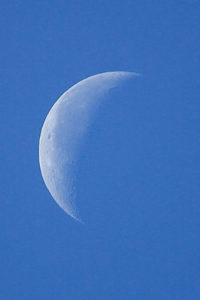 So a friend asks me today if I know the story of Uranus’ moons. Of course I know that they are named for Shakespearean characters, but he asks me why that is – why aren’t they named in the more traditional Greek style of the time.
Interesting question! The most I can find from wikiing around goes a little something like this:
In 1851, there were 3 known satellites of Uranus. Then a fourth was discovered. Astronomer John Herchel, son of William Herschel (who had discovered the first two), proposed the naming scheme: Umbriel, Ariel, Oberon, Titania. Umbriel being the newest one. It’s unclear whether the other three had names which were then changed, or if they simply hadn’t been named yet (they were discovered as far back as 1787, so it is unlikely that they had no names at all).
Here’s how I think the story goes. But first, a story of my own.
Once upon a time, I started a new job, and they gave me two server computers to set up. As the computer geeks out there may know, particularly in Unix land, you have to name your servers. Naturally, I named them Macbeth and Macduff. Seemed logical since I had the set. Well, later on, we hired someone to do that job for us who decided that my naming scheme had been “mac- words” and proceeded to go to town, so to speak, creating things like “macaroniandcheese”, “macgruffthecrimedog”, and a few others I can’t remember.
This later became “mc” words, including “mcfly” (Back to the Future), which somebody took and turned into “80’s catchphrases” and named a machine “bueller” for Ferris Bueller, and so on. Sometimes naming schemes take a funny turn.
Now, back to the story. Folks may recognize “Umbriel” as a character from Alexander Pope’s Rape of the Lock. It is also reminiscent of the Latin umbra-, for shadow. Umbriel is the darkest of Uranus’ moons. So I like to think that maybe Herschel was poetically inspired by the darkness and selected Umbriel as a fitting name.
It so happens, and this is where it gets interesting, that there is also a character in Pope named Ariel. “Aha!” thinks Herschel, “Ariel is also a Shakespearean character! And you know, there’s lots more Shakespeare characters than Pope characters to choose from. Maybe I should use Shakespeare instead.” Thus we got Ariel, Oberon and Titania (the two biggest, by the way, and thus the king and queen).
Almost a century later we got Miranda, and these days there’s something like 27 of them, as noted in the originally linked post. The only hole in my theory is that he named them all at the same time. If he really wanted to be consistent he could have chucked Umbriel and gone all Shakespeare.
I have no idea how the names really came about, I just like the idea of a guy 150 years ago using the same sort of creativity to name planets that I use to name my computers. Perhaps the geekiest bit of the story is that as late as 1986 somebody named one of the moons Belinda….which is back to the Pope scheme again! So surely there’s an astronomer out there with a geeky sense of humor just like mine who decided that not only was he not messing with the naming scheme, but he was actually being more true to the original. I like him.