We Need To Talk About Maggie Smith

The first ladies of Shakespeare are, no doubt, Dame Judi Dench and Dame Helen Mirren. But there’s a third contender for that throne who does not get nearly enough blog time here on Shakespeare Geek. Let’s remedy that, shall we?

You likely know Dame Maggie Smith as either Professor McGonagall in the Harry Potter movies, or the Dowager Countess from Downton Abbey. But those are just two of her more recent and more popular roles.  She’s been in over fifty movies.  How many of these have you seen?

Gnomeo and Juliet. Sister Act. Nanny MacPhee. Hook. The Best Exotic Marigold Hotel. The Room With A View. The Prime of Miss Jean Brodie.

I’m literally just pulling the ones there that I think are most recognizable. Sometimes it feels like she’s in everything, the industry’s go-to “cranky but kind-hearted, amusing old lady.”

Just like with Alan Rickman, I see an actor I like and think, “Please tell me there’s some Shakespeare there.”

Her stage debut came as Viola in Twelfth Night, 1956.

How about Desdemona opposite Olivier’s blackface Othello in 1965?

Or Beatrice in 1967 Much Ado About Nothing? (She played opposite her husband Robert Stephens – something later echoed by Kenneth Branagh and Emma Thompson in his 1995 version.)

We can’t forget the Duchess of York in Sir Ian’s 1995 Richard III!

And those are just her IMDB credits.  I can’t even list all of the stage credits to be found on her Wikipedia page. She’s won numerous Shakespeare awards, and has worked with both Sir Laurence Olivier and Sir Ian McKellen (not to mention Dames Helen Mirren and Judi Dench).

Unfortunately I think I see why we don’t see her nearly as often as we should in our Shakespearean side of the universe.  It’s not just that Shakespeare didn’t write a Prospero or Lear for the ladies (that certainly didn’t stop Helen Mirren). No, it’s that Smith herself just doesn’t see it:

I wanted to be a serious actress, but of course that didn’t really happen. I did Desdemona [at the National, opposite Olivier] with great discomfort and was terrified all the time. But then everyone was terrified of Larry.

Ultimately, Shakespeare just wasn’t her thing.  No, seriously.

My career is chequered. Then I think I got pigeon-holed in humour; Shakespeare is not my thing.

That’s ok, we still love you.  To end on a happy note, enjoy How To Be Fabulous, starring Judi Dench, Helen Mirren and Maggie Smith 🙂

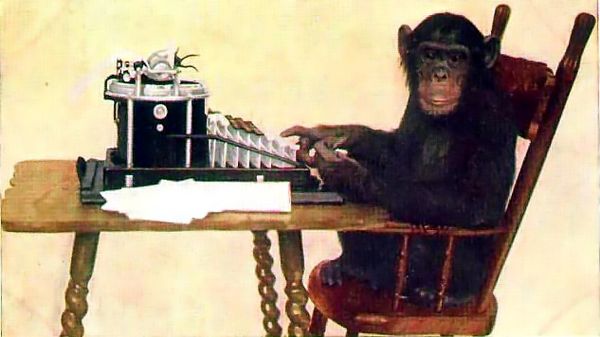
P.S. – Here’s where I got that image.  Check out Helen Mirren! Wow.

A Geeklet Remembers

Parents of middle school children, you know this scene. You’ve got to head up to the school hours after classes are over to pick up one of your children who had to stay after for one activity or another.  As a parent you think, “Great! One on one time! Bonding!”

“How was school?” you ask.

“Eh,” you  hear come from the back of her head. She’s busy texting.

“What were you doing after school?”

“What? Daddy, I’m trying to schedule my next appointment. And I need to pee.”

“Oh. So we’ll just sit here in silence, then.”

“I just have to do this.  And pee.  Badly. I haven’t gone to the bathroom since seven this morning.”

Now, I’m the kind of dad that won’t take this sort of thing lying down. So I spend the ten minute drive home narrating the entire trip.  “Hey look a red light, we’ll just hang out and be quiet longer, that’ll be nice. Oh, no, wait, turned green, here we go. Taking a left.  You know the police tend to hang out on this street you have to be careful, it says limit 25 but before you know it you’re going 40 and that’s when they get ya. I should really slow way way down. You did say you had to pee, didn’t you?  Wouldn’t want to get pulled over, that would take forever.”

You get the idea.  Get sassy with me missy and you’ll pay for it.

So we get home, she flies upstairs, we go about our business.  I help make dinner.  Eventually dinner is ready and we all sit down to dinner.

“Guess what?” this same sassy child tells me as I’m setting the table.

“What?” I ask.

“We had a Shakespeare presentation at school today!”

“….I WAS IN THE CAR WITH YOU FOR TEN MINUTES AND YOU DIDN’T FEEL LIKE MENTIONING THAT?”

“I told you, I had to pee.”

“What kind of presentation?” I asked.

“Some guy dressed up like Shakespeare, told us everything about him.”

“Which you probably knew already.”

“Yeah, mostly. Then he did some stuff from the plays.  He recited a sonnet.”

“Which one?”

“The shall I compare thee one.”

“18.  Obvious choice.”

“And I was sitting there listening and I thought, ‘Hey, I know this one.'”

“You certainly should, you’ve literally known how to sing it since you were five years old!”

How Sharper Than A Serpent’s Tooth, To Have A Thankless Geeklet

My children have literally grown up with Shakespeare, from the time my oldest was five, my middle three, and my son one.  Of course it was much more prevalent when they were younger and I could read/sing/show them whatever I wanted. As they’ve gotten older, life gets in the way and other responsibilities and activities take over.  So I’ve often wondered how much of what I tell them remains.

The other day I was telling them about the plan to scan Shakespeare’s grave, despite the curse.

“What did they find?” asked my oldest.

“They haven’t said yet,” I told them. “Apparently it’s a big deal for the 400th anniversary of his death, so we have to wait until then.”

“When did he die?” my middle child asked.

“I have no middle child,” I said, mouth agape.

She froze, realizing that Shakespeare Day is something I may have mentioned two or three thousand times in their lives. “Give me a hint,” she asked.

“Did he die on my birthday, or close to my birthday?” I asked. Embarrassed silence.  “Oldest child,” I said, “Help her out, would you?”

“When’s your birthday?” asked oldest child.

I’m changing my will and giving everything to the boy.  Also, changing his name to Cordelia.

Watch Empty Space. Seriously. Right Now. Go.

OK, stop what you’re doing.

“Empty Space” is a love-letter to live theater, a nine-episode web comedy that explores and glorifies the world of diehard thespians, those hardcore beasts of the theater who soldier on against the slings and arrows of outrageous fortune because, after all, the show must go on.

That’s direct from their About page, and I don’t think I could describe it any better. Remember Slings & Arrows? Of course you do.  The love of Shakespeare extends beyond the text. We love to be around other people who love Shakespeare.  Put me in the audience, or let me watch from backstage or heck, let me hang out with these people in their normal lives. We all have a shared passion, and it’s great to be around.  (And let me tell you, having hung out with theatre people back in college, “we all have a shared passion” has a whole double meaning I hadn’t even considered when I wrote it!)

We open with Kira, our Juliet, speaking directly to the audience while she sits in makeup. She’s open in her criticism of the crew, and we clearly see one of them flip her off in the background.  “This is a mirror,” she says, “I can see you!”
Our story then parallels Mr. Shakespeare as we quickly see the two houses – “Montacrews” and “Castalets”, as the director dubs them – hate each other. The actors claim that crew are just has beens and wannabes.  The crew claims that actors are, and I love this line, “Props with dialogue.” The feud escalates into a literal sword fight (albeit with prop swords) until the Prince/Director steps in to declare that the next time anybody starts something, they’re fired, banished from the theatre, you name it.  Get the picture?
You can probably see where it’s going.  We introduce Orson, a new Mercutio, after the old one falls off the stage and breaks himself.  Orson then starts fraternizing with a pretty costume designer.  How long before he’s off to the drug store for poison?
Ok,  maybe it doesn’t go that far. I think that most of the parallels were just their way of showing that they could go there if they wanted to. This whole production – just ten episodes, running around ten minutes each – is wonderfully self aware, and I’m sure the theatre geeks who’ve actually gotten up there and done the half speed stage combat and the overly dramatized back stage romances will find even more inside jokes than I did.  Heck I laughed out loud when they dropped in a random reference to a production being “post apocalyptic” like that explained everything.
The whole point is, as I quoted above, a love letter to live theatre. Everything but the kitchen sink is thrown at actors, director and crew. People are fired. Replacements do not live up to expectations. Props are switched. Russian mafia come looking for the stage combat guy. Yet the idea of the show not going on just never materializes. Everybody rolls with it. Because at curtain call, when the audience applauds? It’s all worth it. Always.
Oh, and if it sounds like I enjoyed the series? The epilogue (of course there’s an epilogue, haven’t you been paying attention?) knocked me out of my seat.  Our Mercutio, who also happens to have written the show, comes out to address us.  “I can take any empty space and call it a bare stage,” he begins. “A man walks across this space whilst someone else is watching him and this is all that is needed for an act of theatre to be engaged.”
“Damn,” I think. “That’s really good. I mean, I get that, immediately. I understand that sentiment completely.”
“Peter Brook,” he continues.
“Oh, well, there you go,” I say to my empty living room.
He then continues his … what should we call it? A call to arms? A mission? About the actors’ duty to fill the empty spaces of the world with theatre at every opportunity. Seriously, it made me want to go enlist. I want to go find some guerilla Shakespeare now.  Maybe I should start some…

…oh, and did I mention this is all entirely free online? Not on Netflix, not on Amazon Prime, not coming to a theatre near you.  Just hanging out on a web page, every episode, just waiting for you to fill up some empty space in your day by binge watching it.  So why are you still reading?  Go!
Watch Empty Space
 

Does Scanning Bones Count As Disturbing Them?

There’s been talk for years about excavating Shakespeare’s grave, and of course that’s never going to happen, but plan B has always been to scan the ground and see what’s under there because we just can’t leave well enough alone.  Apparently it’s finally been done, and we have to wait to learn the results.

I’m not sure how I feel about this. On the one hand I want to know everything.  But on the other, I mean, the man’s dead, what right do we have to go checking him out in his final resting place? Why exactly is taking a quick peek any better than breaking out the shovels?  I prefer the Schrodinger’s Cat interpretation of Shakespeare’s curse:

Good friend, for Jesus’ sake forebeare,
To digg the dust enclosed heare;
Bleste be the man that spares thes stones,
And curst be he that moves my bones.

Forget the literal dig and move nonsense, since certainly those were the only methods of disturbance that the author (likely not Shakespeare, of course) could imagine.  Clearly the desire, as really it should be with all graves, is to leave it the hell alone.