Not By Shakespeare : Women Speak Two Languages, One Of Which Is Verbal

It’s been a long time since I did a “Not By Shakespeare”. But I’ve been looking around for material to put on t-shirts and merchandise and spotted this one, which just didn’t feel right.
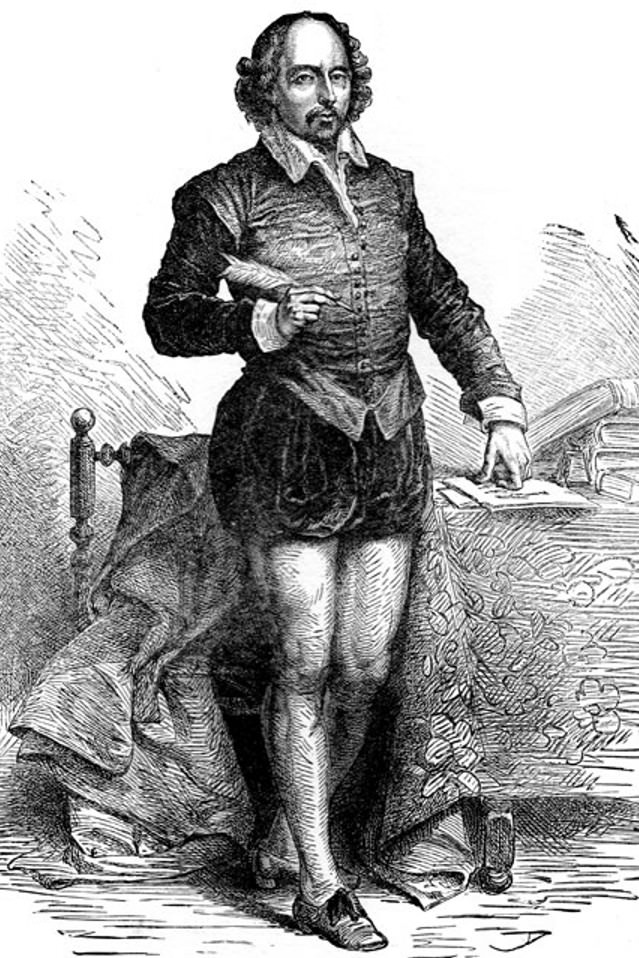
The easiest way to tell a Not By Shakespeare is to ask, “Ok, what’s the citation?” What play or sonnet or poem does it come from? Surely when it’s so popular that there’s pages upon pages of Google results, one of them will have a source attribution. Once you have that, you can head to Open Source Shakespeare or something and check.

As you can imagine, I found none. Everywhere I find is just attributed to William Shakespeare.

Ok, second approach – look for the more interesting words in the quote, and search the text for those words. This is a little trickier because we have to allow for quotes to evolve over time, and take Shakespeare’s original spelling into account. First I went looking for “verbal“, which is easy – Shakespeare only used the word four times. None in a context that could be construed as the source for this quote.

Then I tried “language” and that’s trickier with 41 hits. But again, nothing useful. It’s at this point that I judge this quote Not By Shakespeare.

But then we have to ask, “Can we figure out where the quote does come from?” That’s where Google does sometimes help. I originally searched “women speak two languages” and found this:

“All women speak two languages:
the language of men
and the language of silent suffering.
Some women speak a third,
the language of queens.”

Mohja Kahf, “E-Mails from Scheherazad”

Cool. This appears to be dated 2003. Then we ask, “Were people using this quote before 2003?” If so, maybe the poet got her inspiration from that. If not, maybe the reverse. The quote here isn’t exactly the same thing as the one attributed to Shakespeare, but it’s the closest we’ve got to a lead.

Which leads us here, to a “fortune file” – ancient Unix speak for “quote file”. Google dates this file in 2000 but right in the URL it says 2013 so I’m doubtful. However, it attributes the quote to a Steve Rubenstein so now I have something else to Google.

And then I found this article from 2010 that tells me to stop Googling for the night.

Because it’s me. I’ve already been down this rabbit hole. Gives “googling yourself” a whole different meaning! (Although I guess that definitely proves it didn’t come from the 2013 poem!)
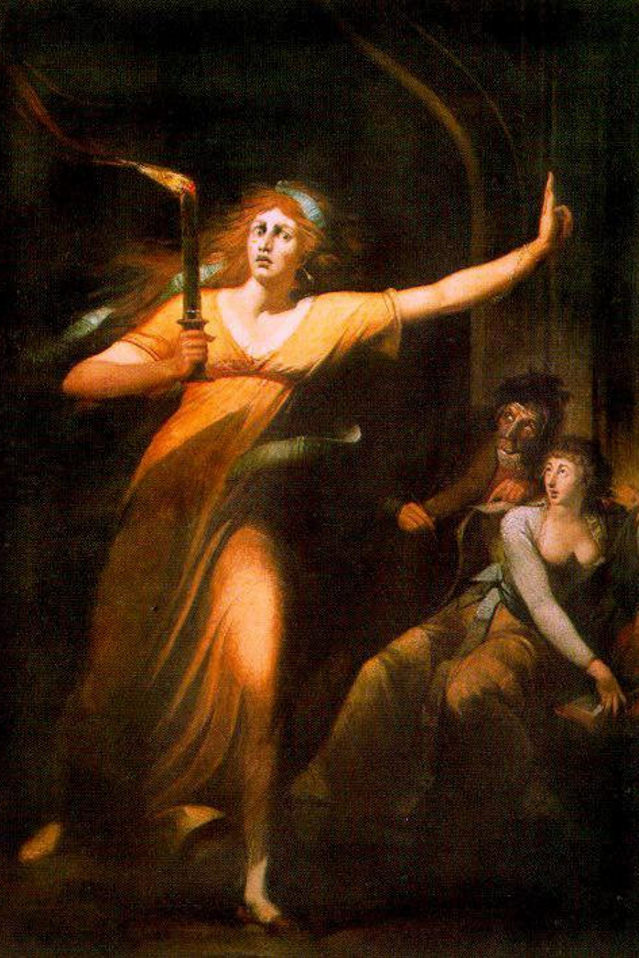
How About A Young Adult Lady Macbeth Musical?

That’s a stream of words I never thought I’d type. But sure enough, word is that Channing “Magic Mike” Tatum and Scooter “Taylor Swift Hates Me” Braun are teaming up with Amazon for just such a project.

 “the story is said to center on a teenage girl who grapples with her own morality as she contends with the dreadful consequences of her ambition.”

Of course, if nobody had specifically written the Macbeth connection that could just as easily be Mean Girls.

I have no idea if it’ll be any good, or even ever see the light of day. I’d expect about as much of such a project as I do for any other teenage retelling of Shakespeare inspired stories. 10 Things really set the bar too high.

https://www.broadway.com/buzz/199739/channing-tatum-more-join-forces-for-ya-lady-macbeth-musical-for-amazon/

Ye, No.

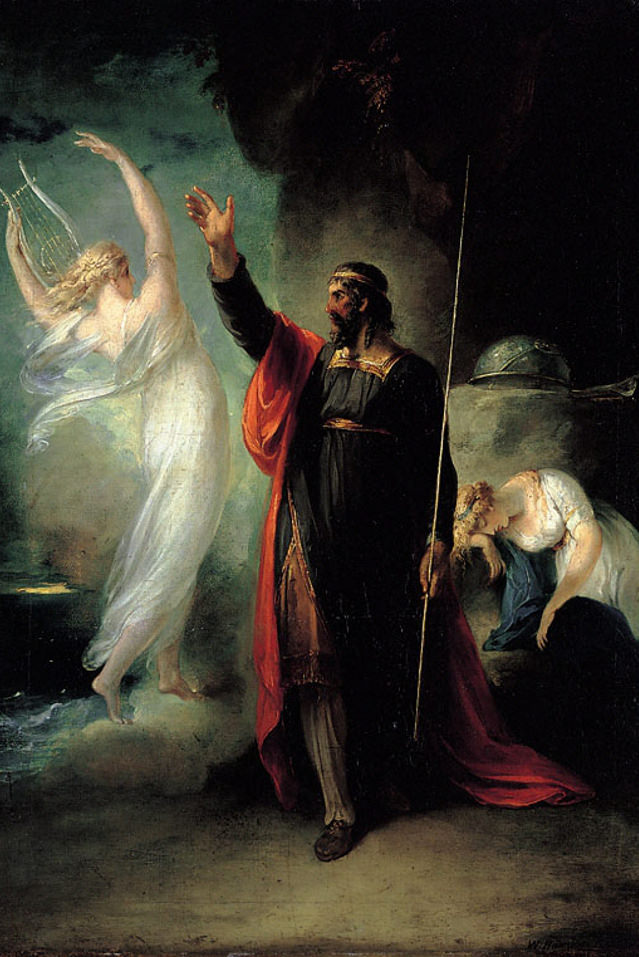
A few weeks ago I had the opportunity to have celebrity impressionist Jim Ross Meskimen do some Shakespeare of my choosing. I knew exactly the voice and passage I wanted – Robin Williams as Prospero doing “We are such stuff as dreams are made on.” It is quite breathtaking.

Unfortunately it was breathtaking for all the wrong reasons for long-time reader JM who, aghast, returned to comment, “It’s yea, not ye. Ye is a pronoun, (you) Yea is affirmation, or ‘yes’. I have no idea why he didn’t know that.” Such a small thing, and yet I can only imagine to someone more versed (ha!) in the verse than I, it would be like hearing someone say “all intensive purposes” or worse, “could of.”

Thing is, Jim didn’t make the mistake, I did. I copied the text for him. I rushed to the source I used – MIT’s version (people smarter than I see where this is going). I checked Open Source Shakespeare. Same problem. I checked the actual First Folio (with JM’s link), and there it is, the right way:

Our revels now are ended. These our actors,
As I foretold you, were all spirits and
Are melted into air -- into thin air --
And, like the baseless fabric of this vision,
The cloud-capped towers, the gorgeous palaces,
The solemn temples, the great globe itself,
Yea, all which it inherit, shall dissolve,
And, like this insubstantial pageant faded
Leave not a rack behind. We are such stuff
As dreams are made on, and our little life
Is rounded with a sleep.

The problem is that both MIT and Open Source Shakespeare are based on the Moby Shakespeare, a public domain version of the complete works that is (a) darned near ubiquitous (see “public domain”) but also (b) known to have substantial errors.

I know this. I guess I just always assumed that the errors were like very small needles in a very big haystack, and that they would simply never be an issue for me. That is not good thinking. I won’t say it wrecked my tribute to Robin Williams, but it sure tainted it. I wonder if Mr. Meskimen would make us another one? I’ll have to ask.

What other errors have you found propagated all over the internet because of Moby? Any really glaring ones? I know that Open Source Shakespeare actively updates their text to fix errors as they are reported, but I don’t believe MIT does (which would also no doubt be true of 99% of the other texts out there).

With Caliban Still Enslaved

A couple weeks ago on Twitter I had an interesting conversation about The Tempest and I’ve been meaning to post about it. A reader directed me to the poem Fuck / Shakespeare and I was left head scratching a bit at the ending:

Play ends / Cali still enslaved / Bruh / that shit fucked

My first thought was, “Is that really how it ends? That’s not how I remember it. Caliban gets the island. Prospero leaves. Sounds like freedom to me.”

Then I went back and looked at the text.

PROSPERO
He is as disproportion'd in his manners
As in his shape. Go, sirrah, to my cell;
Take with you your companions; as you look
To have my pardon, trim it handsomely.

CALIBAN
Ay, that I will; and I'll be wise hereafter
And seek for grace. What a thrice-double ass
Was I, to take this drunkard for a god
And worship this dull fool!

PROSPERO
Go to; away!

There is no moment of understanding between them. No “sorry for enslaving you, here, I’ll make it up to you by leaving and letting you have the island like you always wanted” exchange. Prospero’s last words to Caliban are, in fact, still those of master to slave.

I think my misunderstanding of the ending comes from two places. First, I’m visually thinking of Helen Mirren’s portrayal in Julie Taymor’s film version. If I recall that correctly, there is a clear moment (albeit in silence, since Shakespeare gave no words) that fills the need for what I wrote above.

The other is that I’ve just never really thought of The Tempest, my answer to “Which one is your favorite play?” in terms of slavery and racism and colonization. I love it as a story of fathers and children and forgiveness. That just goes to show just how good it is, that it can be both. You can read it as a happy ending fairy tale to your children about wizards and monsters and long lost princesses returning to their kingdoms. Or you can read it as a four hundred year old depiction of the darkest aspects of human behavior still on display to this day.

It’s given me a lot to think about. I’ve always known about those themes in the play, I’ve just never really focused on them, preferring instead to think of it as a positive book end to Shakespeare’s writing. Which is a bit ironic because in my modern reading I often chide books that wrap things up too nicely, and prefer those that give me something to think about and work on. If Caliban is forever enslaved because of what Prospero did, then how can we ever break the cycle?

Which ending do you prefer? Is Caliban free now to be king of the island? Or is he forever enslaved by what Prospero did to him, long after Prospero is gone?

Only Shakespeare’s Birthplace to Reopen

This past summer I saw a near lifelong dream fulfilled when I went to Stratford and visited Shakespeare’s birthplace. I saw the church, I saw the tomb, I saw all the houses. I stood where Shakespeare stood.

Here we are a year later and most of those properties are closed because of the pandemic. When you’re a charity that generates 98% of its own income thanks to 850,000 visitors a year and the universe tells you “Guess what! No more visitors!” hard times are ahead for the Shakespeare Birthplace Trust (SBT). People I met last year may no longer be employed soon.

The SBT has stated that they plan to reopen the Birthplace itself this summer, but the other properties – New Place, Anne’s Cottage, Hall’s Croft and Mary Arden’s Farm – will remain closed until “spring 2021” at least. There’s no mention of the church in this article (the SBT does not run the church, so that makes sense). Does anybody know its status? The whole question of church services here in the US has been a hotly debated question, so I really have no idea what’s going on in Stratford.

I don’t know what we can do to help. If we can’t show up and buy our tickets and browse the gift shops it’s going to be an uphill battle. For a second there I got excited thinking that we can storm the online gift shop! But no – the web page says they’re completely closed, unable to accept new orders. Now I’m really sad.