Hamlet is 16. Discuss.

In my head, the words and works of Shakespeare are … how can I explain this …. they exist outside of time.  They are timeless, and I mean that in all senses of the word.
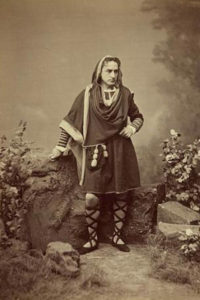
I could not tell you off the top of my head whether Merchant of Venice is technically supposed to happen in 1275, 1623 or 1941.  It is part of what I love.  It is what enables people to go to the well over and over and over again, keeping the essence while simultaneously changing everything.  If you tried to tell me that there is something about Hamlet that *must* take place in 1601, you’d ruin it for me.

So it is something of an eye-opener for me to stumble across a book like Steve Roth’s “Hamlet: The Undiscovered Country” where he very literally maps the action of Hamlet to actual calendar days, in the process rebuilding many core beliefs about the play.

I am not in the least kidding when I say that he discusses which of the action, for example, happens on a Monday.  More so, *what* Monday and why that is important, why Shakespeare chose it.

I first stumbled across Steve’s work on the “Hamlet is 30” topic, which we’ve discussed twice before.  It is his position that the well known “I have been sexton here, man and boy 30 years” – the primary evidence that Hamlet is 30 – is actually a misinterpretation.  He feels that the line actually reads “I (the gravedigger) have been sixteen here (i.e., have been at this job 16 years)…”  It is a bold position to take.  The secondary bit of evidence, that Yorick – who Hamlet played with as a child – died 23 years ago, is harder to contradict.  But Roth finds Q1 evidence that the line was originally 12 years, which would fall right in line.

As I said above, and as my regular readers probably know, this is not how I do it.  There’s a world of difference between just assuming that “some time” elapsed before the nunnery confrontation, and mapping that time out to a number of days, a time of year, everything.  The flowers that Ophelia picked (if she didn’t imagine them), were they in bloom at that time of year? The old king was supposedly sleeping in his orchard… how cold was it?  There are folks that eat that stuff up.  I’m willing to bet that there’s a handful of regular readers of my blog, in fact, who are all over it.

It’s often hard to make the case, and Roth knows that.  When he’s got details he makes his case clear.  When the case is a little weaker on fact, he’s not afraid to say “That sounds about right.”  In particular, Hamlet’s time with the pirates is particularly tricky to nail down. There are also times where I just don’t plain understand what calendar we’re supposed to be using.  The anachronism of “going back to Wittenberg” is oft-cited – it wasn’t there in Hamlet’s time, but would have been in Shakespeare’s time.  Ok, fair enough.  But much of Roth’s calendar calculation is done against the 1601 calendar, when Hamlet would have been *performed*, not when it took place.  Is that too much a convenience?  Did Hamlet really write in-jokes and references that would have been out of date a year later, much less 400?

Within all the calendar counting, though, there are still opportunities to learn new things (again, this is part of what I love).  For instance, this book brings up the idea that Hamlet’s harping on Gertrude not going to bed with Claudius is not because he’s got some Oedipal issues, but because (if Hamlet is 16, mind you), Gertrude is clearly still young enough to bear a child by Claudius.  A child that would be next in line to the throne, bumping Hamlet out of the picture.  Maybe that’s common knowledge, but I’d never thought of it.  And if Hamlet is 30, it’s more far fetched.

Roth’s book is small, barely 150 pages, and has its fair share of tables taking up space.  So it’s a quick read.  You don’t have to buy the “Hamlet is 16” premise to enjoy it either, though Roth certainly makes a good showing for his case.  This book would be a fine addition to the collection of any Hamlet geeks out there.

I’d Love A Romeo, But I Think I’m More Falstaff-Shaped

Now, see, this is just a tease.  Normally I do not get dressed up for Halloween, but apparently kids’ school is having a family night and going as a family implies that we all get dressed up.  The thought most certainly crossed my mind (I just mentioned it on Twitter not 10 minutes ago) about doing something Shakespearey. Wouldn’t you know it, but the Shakespeare Theatre Company is having a costume sale!

Because the theater has covered a lot of Shakespearean ground since 2006—remember Twelfth Night, Hamlet, and Macbeth?—the selection is diverse. Period details such as doublets, cloaks, and armor pull an elaborate character together—or check out some of the unexpected options, such as animal headdresses or 1960s mod fashions. And it’s not just clothes, either: There’ll be jewelry, masks, and props such as sculpted wedding rings and table settings from The Taming of the Shrew.

Alas, it’s down in Washington DC and I’m no way near there.  But if you are, go check it out! More details can be found here:  http://www.washingtonian.com/blogarticles/shopping/shoparound/13787.html (There’s gotta be a joke in here someplace about going as Bottom and not needing a costume at all…..)

//romeo&juliet/

I don’t typically post every review or press release about every new interpretation I see, just the ones that catch my eye.  Like this one, which sums up much of what we talk about here:

You need to do it old school enough to serve the language and story, but not so old school that it flashes back to mandatory high school reading lists. It’s about splitting time between classic and cool, between poise and unpredictability.

That gets my attention right off the bat, infinitely more than people who talk about having to bring the language up to date.  Lose that, you lose the Shakespeare.  Keep that, and everything else I think is up to your own interpretation. Then again…

Some characters have been cut, or merged with others; Juliet is now raised by a single mother, for example.

Hmmm.  That’s quite the statement to make with your production.  The helplessness of Juliet’s situation is pretty crucial to her “I have no choice but to kill myself” logic.  How exactly do you get across “Marry the guy I tell you to marry or GTFO” from a single mom??? http://www.24sevencities.com/features/arts/theater/how-juliet-met-romeo.html

Shakespeare Geek’s Top 10 Shakespeare Plays

Over the years I’ve seen many Shakespeare lists.  Instead of linking to yet another one I thought it would be fun to combine several and come up with my own, the Shakespeare Geek Top 10.  This is not my opinion, this is the mathematical analysis (according to my own algorithm :)) from a variety of places, some here and some elsewhere, that people have voted on a general “top 10” for Shakespeare’s plays.

How you define “best” is up to you and I fully expect that people use different scales all the time.  That’s why I’m looking at it statistically – if most people pick Dream as the best play, then does it really matter why they think they picked it?

Ready?

#10. The Tempest.   Maybe it’s the fascination with “Shakespeare’s last play”, maybe the fairy tale, happy ending nature of the story (I know it’s the latter that gets my vote), but I’m happy to see one of my favorites just make the top 10.
#9. Julius Caesar.  I appreciate that this is one of the great tragedies that most of us will read in high school, but I was surprised at the showing it made.  I don’t understand.  If the Twilight lady announced that she was filming a new version of Julius Caesar I’d bet you can hear the crickets chirp.

#8. A Midsummer Night’s Dream.  I know there are folks out there who will put Dream up against Hamlet as one of the best, and I have to concur.  I’ve ranted at times that I get sick of seeing it, but really, as I called it the other week after seeing a production, it’s “pretty near perfect on the page.”

#7. Richard III.  I’m not familiar enough with this one to have cast a vote on it.  Tell me why you love it?  Just the evilness of the title character, or something more?

#6. Henry V.  Do we all love it because of the Crispin’s Day speech and the Muse of Fire, or is there more to it?

#5. Romeo and Juliet.  Now we get into some of the more obvious ones, will there be any surprises in the top 5? Does Romeo and Juliet deserve a spot this high or is it just because we’re all so familiar with this high school favorite?

#4. Othello.  I’ve seen many people speak of Othello as one of the great underrated tragedies, and I have to agree.  When you really take the time to dig into it, it’s far better than the more shallow analysis might suggest.

#3. Macbeth. Glad to see the Scottish play fare so well, it’s one of my top choices.

…and the big question *still* not answered:

#1 King Lear and Hamlet
We have a statistical tie for the #1 spot with Hamlet and King Lear both getting the exact same score!  (That just means I need more data, hint hint hint.)

Disclaimer : Only 7 of my top 10 made the final list, so I’m not skewing the results to my own personal choices.

I can’t say there are many surprises.  If I pulled it out to a top 15 we’d start to see some of the popular comedies, As You Like It, Much Ado About Nothing, Twelfth Night … but at some point I run out of numbers to make a meaningful argument, too.

Disagree?  Make your own top 10 and post it in the comments!  I’d love to keep my statistics up to date and have a true and accurate top 10 list, as defined by the audience of Shakespeare geeks as a whole and not just one person’s personal opinion.  I may have even added you already, if you’ve made a list. Who knows? 🙂