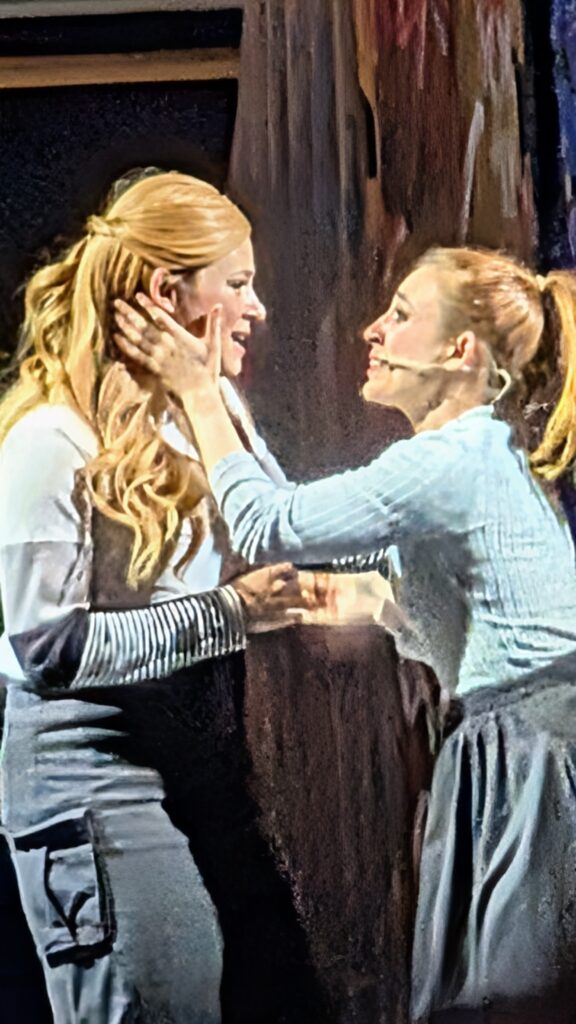
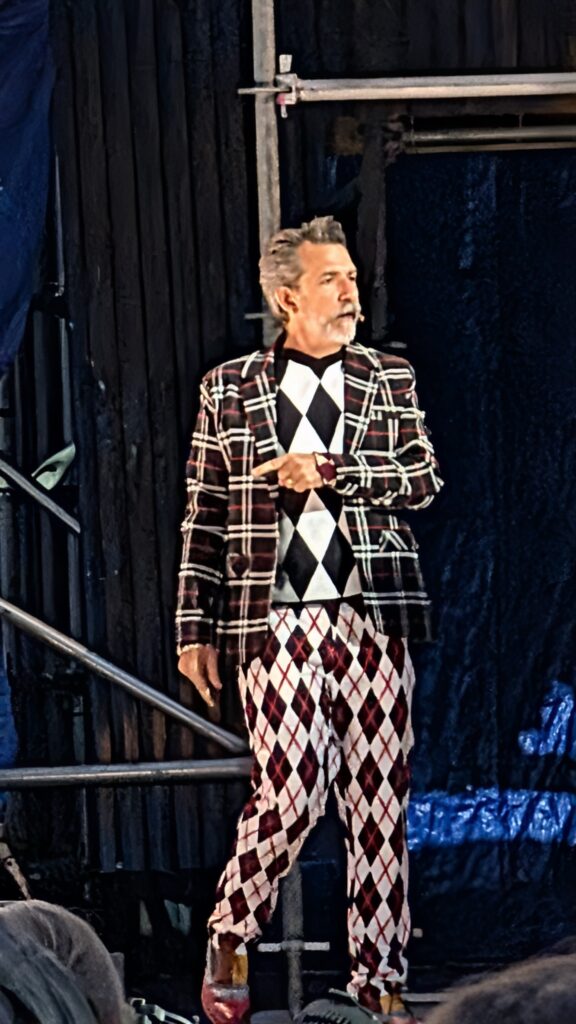
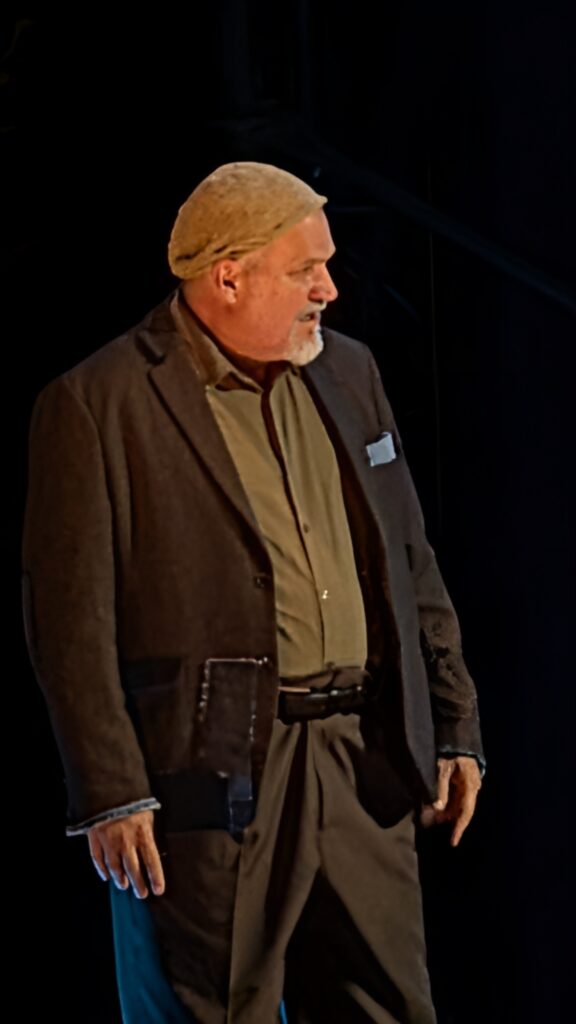
Review: Hamnet by Maggie O’Farrell

Author’s Note – For a long time, I confused Hamnet (2020) by Maggie O’Farrell with the books of the Hogarth Shakespeare (2018) series. The latter was a series of modern novelizations of Shakespeare’s work by contemporary authors, including Margaret Atwood. Somewhere, I got it into my head that Hamnet was that series’ version of Hamlet. It’s not, and never was.

For everything we don’t know about Shakespeare’s life, there’s a novel that ponders how it might have gone. This fall, when the movie arrives, a whole lot of people are going to suddenly become interested in the short life of Hamnet, Shakespeare’s only son, thanks to Hamnet by Maggie O’Farrell. I didn’t read this one when it first came out, thinking that it was some overarching attempt to map Hamnet’s story into a Hamlet story. But with the movie coming out next month, I decided to try it again.

Though Hamlet does play an eventual part in this story, it’s thankfully not “a Hamlet story.” Instead, it’s exactly what it seems – a fictionalized biography of Anne (or, here, Agnes) Hathaway, a woman who marries her Latin tutor and has three children, one of whom dies.

I think that last thought is how we begin. I often explain Hamlet by telling people, “Hamlet’s father died.” It’s a powerful emotional punch that frames the entire play. Likewise, here, “Agnes’ son died.” I don’t think that’s a spoiler; it’s generally in the opening lines of the marketing material. You know what you’re getting into with this book.

Here’s the most fascinating thing about the book, that I decided I love. The word “Shakespeare” never appears. Or if it does, it appears so infrequently that I missed it completely. This is not the story of “Shakespeare’s wife”. It is the story of Agnes, and Shakespeare is only ever referred to indirectly – he is the father, the husband, the Latin tutor. There are times when the narrative has to talk in circles a little bit to make this work, but once you get used to it, it’s a powerful voice to choose. For this to be the story of Shakespeare’s son would make Agnes a minor character. No, this is the story of a woman who lost her child, and it doesn’t even matter what her husband ultimately did for a living. You could, in fact, read this book without ever realizing that it’s about the Shakespeare family.

A quick note on “Agnes,” since it had me wondering as well. Why not Anne? We’ve always known Shakespeare’s wife as Anne Hathaway. Given that there’s a current working actress with the same name, it’s the source of many memes. But here, O’Farrell has chosen to go with Agnes. I’m told that, for the period, the names were fairly interchangeable. This is interesting, and not something we think about much today. I had an Aunt Agnes. She was Aggie.

The audiobook makes this a bit clearer, though, by pronouncing it “AHN-yes”, with a soft G, instead of how we might traditionally hear it today. With that in mind, “Ahn-yes” is easily shortened to “Anne.” Ok, mystery solved.

Hamnet walking with his father

The story itself is well-written and does a good job of mapping to those details of Shakespeare’s life that we do know – the glove business, the debt issues. Agnes becomes pregnant, and the wedding is rushed. The relationship between the families is strained. John, the Latin tutor’s father with the debt issues, is only appeased when he figures out a way the situation might be financially beneficial for him.

The story remains in Stratford, and details Agnes’ life in plague-ridden Elizabethan England. They try to make their new life together work. They have three babies. The husband leaves for London, presumably with the opportunity to help expand his father’s business, but soon finds himself pulled toward the theatre. We hear about his life through the occasional letter home. No play names are ever mentioned; we just hear occasionally about “a new comedy” or an opportunity to play before the Queen. Sometimes, infrequently, he returns home, always anxious to return to London.

Life is hard, and we know this is not a happy story. The inevitable happens, Hamnet passes away, and we’re an audience watching what happens to a marriage after such a tragedy. He wants to go back to London? What, how? How is that even a thought? But it is, and he does. I’m not going to get much into how the story finally ends, because the author clearly builds to something, and I’m not going to take that from you. I had some issues with it; I think it didn’t pay off the way she hoped. But that’s just me and my one opinion.

(Quick trigger warning, and I don’t usually do this – the aftermath of Hamnet’s death is depicted in great and lengthy detail, including treating his body, sewing him into the shroud, and his ultimate burial. If you already found this a heart-breaking story, this section might be especially difficult to get through.)

Is Hamnet Hamlet?

The connection has always been obvious, hasn’t it? Shakespeare’s most famous character, Hamlet, is one letter away from the name of his dead son Hamnet. In a place and time where spelling, including names (Anne/Agnes) was not exactly bound by strict rules. How does that play into the story? I’m just going to say, “Don’t worry, it does.” and leave it at that.

Something For Shakespeare Geeks

Something I enjoyed throughout the story was finding “easter egg” Shakespeare references. There are no direct quotes. Or are they? When Judith is sad that her father has once again left them to return to London, she says, “Will he not come again?” which I can only hear as Ophelia’s song:

OPHELIA

[Sings]
And will he not come again?

I’m not even sure Judith said it exactly like that (I only have an audiobook), but that’s what I’m talking about. The story simultaneously never mentions Shakespeare and yet still shows how his life inspired much of his writing. Later, when Agnes is going through Hamnet’s clothes, it almost certainly has to be in reference to Constance’s famous speech on grief:

CONSTANCE

Grief fills the room up of my absent child,
Lies in his bed, walks up and down with me,
Puts on his pretty looks, repeats his words,
Remembers me of all his gracious parts,
Stuffs out his vacant garments with his form;
Then, have I reason to be fond of grief?

Maybe I’m reading too much into it. From the story’s perspective, Shakespeare and his wife don’t have the kind of relationship where he’d ever know these thoughts were going through her mind. But that’s nitpicking. The author could just as easily have written in this scene for the readers who might catch the connection.

All in all, an excellent book worthy of a read. I’m going to pick up a paper copy and “put it in rotation” for my family’s book club, which in this case means that my daughter, wife, and mother-in-law will all take turns reading it. If this were a Shakespeare book, I wouldn’t do that. But this story stands by itself without the help of the Shakespeare name, and I think the movie’s going to show the same thing. (I hope that the people going to see Paul Mescal as Shakespeare aren’t disappointed at how little he’s actually in it!)


How Do I Get This Lady Macbeth Game From The RSC?

https://mashable.com/article/royal-shakespeare-company-video-game-macbeth-lilli

I’ve seen multiple links about this upcoming Lady Macbeth game from the Royal Shakespeare Company, and I think I may have even posted about it in the past. But it seems closer now to reality, so I wanted to dig in deeper and see if there are some hints about how we’ll be able to play it. (Spoiler alert – alas, not yet.)

Lady Macbeth My Queen Hooded Sweatshirt

Lili has now been shown at Cannes and the Venice Film Festival, which I still don’t fully understand because isn’t it a videogame, not a film? Or is it really going to turn out to be a film that’s got just enough interactive elements that they’re pitching it as a game?

In Lili, one must enter a hacker’s den with a USB stick in hand, don headphones, and follow the poetic instructions of the Hecate collective — Macbeth’s three witches, reimagined here as hackers.

Ok, I’m with you so far. Are you this Lili character? She never actually interacts with the witches, so probably not.

Lili begins as an initiation, where the player is asked to take a vow and accept the hacker persona, giving you agency within a moral grey zone. One assumes control of the game’s surveillance technology to the fullest, as you have access to Lili’s personal documents like her marriage certificate, photos, and passport, and can tune into one of the three different CCTV cameras placed in her house as well as her phone and computer screens.

Ok, so we’re not Lili, we’re spying on Lili, which is cool from a game perspective. But I’m not sure who that makes us, and how it maps to Macbeth.

At one point, you are prompted by the Hecate witches to shut off Lili’s access to a YouTube makeup tutorial, just like the Iranian government can do it at any time. You can then control Lili’s VPN connection and, with that, the flow of information.

Again, interesting. Reminds me a little of the David Tennant / Patrick Stewart version of Hamlet, where they kept showing us angles through security cameras and really playing up the sense of paranoia. Here we’re taking that even further, it’s not just what Big Brother knows, it’s what power they have over things like your access to information.

But will we ever get to play this game? <starts skimming…>

The creators behind Lili are hoping to keep the momentum going to raise funds for the full version of the game,

Aw, man! So basically it’s still just a demo to be shopped around the festivals, and probably will be for some time. What a shame. The ideas sound fascinating, even if they’re not as directly related to Macbeth‘s text as one might hope. It does appear to be a VR game, regardless, so even if it does get made you’re presumably going to need an Oculus or something similar.

Still, we can hope! I’ve been doing the Shakespeare Geek thing for 25 years now and I’ve written about a whole lot of Shakespeare video games – some big, some small. Some made it out the door, some never did. Who knows where this one will end up.

Review: Commonwealth Shakespeare’s As You Like It 2025 (Part 2)

Ok, I had to get all those stories out of the way, sorry about that. For me, those were the highlight of the night.

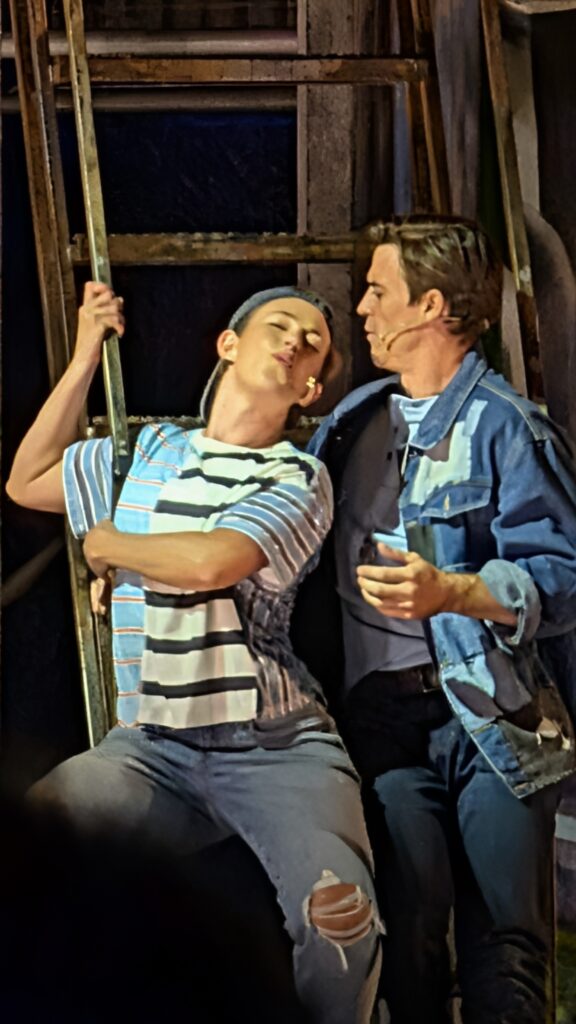
Ganymede and Orlando

How was the play? It was good. Fine. I’m not a big fan of this one because there’s not really a lot to work with. The plot is thin, the characters for the most part are so shallow a casual audience-member will easily lose track of which one is which. And the ending is just nuts.

It dawned on me this year that AYLI is basically a teen sitcom storyline. It’s all “OMG he likes me what do I do what do I say?!!” with lots of giddy screaming and running around. It’s definitely funny at parts, a real crowd pleaser when it’s being over the top obvious and not lost in the wordplay. But there’s nothing to sink your teeth into and discuss.

Or is there?

I don’t know if I just never noticed it, or this production really played up the angle, but it seemed this year that Ganymede leaned really heavily on the “How can you not see that I’m Rosalind?” moments. He says, talk to me like you’d talk to Rosalind Just go ahead and call me Rosalind. There’s even an awkward scene with a kiss. Orlando’s confused about a lot of feelings, to put it mildly.

Which got me thinking, Maybe this is obvious to the younger crowd maybe I’m just an old man trying to understand. But …let’s start the play in the forest. Orlando meets a new friend, Ganymede. Ganymede certainly looks and talks and presents himself like a fellow boy. But Ganymede’s also obviously much more comfortable talking about girl things. He wants to tell Orlando what girls want. He wants Orlando to talk to him like a girl. And then, just like that, one day Ganymede is gone and Rosalind is in their place.

We the audience know that it’s Rosalind disguised as Ganymede. But, and I’m sure I’m going to get my terminology wrong here, what if Ganymede was in fact a character that on the outside was presenting themselves to the world like a male, but inside, identified as female? Until one day they are?

Orlando, for his part, doesn’t seem to have a problem with his attraction for this character, either. I don’t think Orlando cares who Ganymede identifies as. Is that what they mean by “pan”?

I don’t really know where I’m going with this. Like I said, I’m just an old dad trying to understand a lot of new things. Tell me that AYLI isn’t just about “gender bending” and “cross dressing,” tell me it’s about gender identity, and suddenly I’m paying attention. Then it’s something more than just a farce to laugh at. Then it’s got a point to make the audience think about.

How about I get off my soapbox now and share some pictures?

Review: Commonwealth Shakespeare’s As You Like It 2025 (Part 1)

Here we go again! As I’ve gotten older I’ve started telling myself, “It’s ok if I miss Shakespeare on Boston Common this year.” The kids have gotten older, schedules are busy. And, perhaps most importantly, they’re doing As You Like It which they did back in 2008, which I saw, and reviewed.

But then I tell myself, “This is my night. This over all other days is my chance to bask in my Shakespeare world and go surround myself with all things Shakespeare.”

Commonwealth Shakespeare As You Like It
A little taste of Arden Forst while I get the interesting stories out of the way.

So I did what I also do every year. I dressed up in merch – this time donning my “Shakespeare Makes Life Better” long-sleeve – and filled up my little goodies sack with an assortment of stickers, magnets, and 3D Shakespeares, and we were off. We had a special guest this year, as my daughter’s got a new friend who is both obsessed with Shakespeare and has never been to a free Shakespeare in the park show. So she’s all in.

We stop for gas before heading into Boston, pulling in behind a big (big) pickup truck. That happens to have its backup lights on. So as I get out, not wanting him to roll into me accidentally or something, I say, “Hey did you know that your…” and then they go off. “Never mind, I say.” The driver of the big (big) pickup is a big fellow in his own right. He’s not giving “biker,” but he’s definitely the size and shape of somebody who you wouldn’t want to mess with at the bar.

So he’s pumping his gas, I’m pumping mine, and I can see out of the corner of my eye that he hasn’t stopped looking at me. Have I offended him in some way by mentioning his lights? Does he think I’m stupid because I didn’t know they’d go off? I avoid his gaze for as long as I can.

“Are you an English teacher?” he asks.

I get it immediately. “No,” I say, “Just a fan.” He looks confused. “I assume you’re referring to my shirt?” I ask.

“Yeah,” he says.

“We’re big Shakespeare fans. We’re actually going in to Boston tonight to see Shakespeare in the Park.”

“Oh,” he says. “What play?”

“As You Like It,” I tell him.

“That’s a good one!” he says, looking … wistful? I wonder what he was thinking.

So, that’s one Shakespeare encounter I did not expect. You never know who you’re going to connect with around Shakespeare.

We get to the park, and the normal routine begins, which basically amounts to keeping busy for almost 2 hours waiting for the show to begin. I take the easy way out of my mission, handing my bag of Shakespeare goodies to the kids and saying, “Your mission is to find people to give stuff to.” And off they go. Once they’re gone I of course think, “I should have kept some for myself, I hope they don’t give everything away.” But they don’t, they’re back soon enough to let me know that they gave out some stickers.

The night progresses, the crowd grows There are volunteers walking around who have programs to give out, as well as stickers of their own. The longer I wait, a plan forms in my head. I’ll give something to a volunteer. I’ll tell them, “How often does somebody give you something?” I have two 3d printed Shakespeares left. One is bigger than the other. I will wait until one of the volunteers comes by alone because it would be rude to give two different sizes. Yes, I think about these things. Maybe it comes from having kids and having “everybody gets the same” drilled into my brain. Or maybe I’m just thinking of excuses to chicken out like I do every year.

The darker it gets, the less they wander, and I’m missing my opportunity. Finally a young man walks by who we’ve already seen before. He’s given a program and stickers to the young couple next to us. He’d asked me if I needed a program, too, but we already had a couple. I try to get his attention, but he walks past, and I think that’s it, it’s dark, show’s starting, my chance is past.

Until he’s standing next to me. “Did you need something?” he asks.

I brandish a tiny Shakespeare. “For you,” I say.

He’s speechless. “Wait, really?” he says. “Seriously?”

“You’re out here giving everybody free stuff, how often does anybody give you anything?” I ask.

“Never!” he says, “Nobody’s ever given me anything!”

“Well exactly!” I tell him. “Now you can go show off to the other volunteers that you got something.”

And he does, I watch as he goes over to the two nearest volunteers to excitedly show them his prize, gesturing back at me (probably, “Look what the guy in the Shakespeare Makes Life Better shirt just gave me!”) One of them looks over to me, I make eye contact and smile. Had she come over, I would have given her the other Shakespeare. I don’t know what I would have done if both of them had.

It gets better.

I’m enjoying this. I made somebody happy with Shakespeare. Many people have commented on my shirt. It’s a good night, I don’t want it to end (even though the show hasn’t even begun!) The young woman next to us has been friendly and polite, having first asked if she could sit there (not a courtesy that is always shown), and asking me questions about how the show is organized. So I fish one of my magnets out of the bag and reach it over to her. “Would you like a magnet?” I ask. She definitely would. There’s a funny age gap at work here – as somebody of Dad age, I think that giving out stuff like stickers is childish and, no, nobody wants a sticker. But I have yet to meet a 20-something, all my kids now included, who doesn’t say, “Hell yeah I want a sticker.” Or in this case, a magnet.

“You’re bringing so much joy,” she says.

She has no idea how much that meant to me. I’ve tried to build up the courage for years to be the guy who exudes Shakespeare wherever he goes. “Shakespeare makes life better” isn’t just a tagline for a website. I deeply and truly believe it and want to put actions to words. Tonight, finally, I got to do that. I got to bring joy to people, through Shakespeare, and even have it acknowledged. I don’t remember when I’ve been happier.

This is a long post, and I never even talked about the play. I guess that’ll have to be part two!

A New Partnership: I’m Now a MasterClass Affiliate

Loyal Readers,

I have some news that’s equal parts exciting and “here, let me put it on the table so you can see every card I’m holding.”

Last week I was accepted into the MasterClass affiliate program. That means if you click one of their links or banners on this site and end up subscribing, I earn a small commission—at no extra cost to you.

Now At MasterClass : Helen Mirren Teaches Acting

Relevance > Revenue

I didn’t go hunting for any affiliate program that would pay a buck. I specifically looked for something that overlaps with what we already obsess over here: Shakespeare, acting, storytelling. MasterClass happens to have Natalie Portman, Helen Mirren, Samuel L. Jackson, and more teaching exactly those topics. Trust me when I say this, I’m looking at all the different ad campaigns available to me now, and you won’t be seeing anything about mastering the markets or designing every space in your home. We do Shakespeare here, and I don’t plan to stray from that.

All Ads Are Not Created Equal

Look, I know there are ads on the site already. I hate them as much as you do. But I’m also not a fan of the fact that I’ve run this site (which means paying to host it) for many years, and never really tried to make money from it. My daughter was just born when I started. You know what? She’s finishing college this year. You know what else? That costs a lot of money. I hope no one begrudges me that.

Where I can make money to offset my costs, I have to consider my options. And even though I have my core of loyal readers, I have thousands of anonymous people dropping in from Google searches, too. So, not monetizing their traffic is just leaving money on the table, honestly.

I’d much rather make money through partnerships like this. They’re less invasive, more relevant, and ultimately, I make more revenue. So if you bear with me for a little while as I continually try to optimize this area of site maintenance, I think we’ll all benefit in the long run. Click on some banners, explore what MasterClass (and possibly soon other affiliates) have to offer. Not for you? Maybe something you could give as a gift to the actor or Shakespeare geek in your life?

Of Course There Are Always Other Ways

Woman at the beach wearing a Nothing Like the Sun purple t-shirt
Visit the Shakespeare Geek Merchandise Shop

I’m going to go ahead here and say that merchandise sales can be a great alternate source of revenue, too! Please make it a point to stop by the Shakespeare Geek Merchandise Shop before you leave! What were we just saying about gifts for your friends?)

Or, you know, if you want, you can just go ahead and “buy me a coffee” as they say. I appreciate donations in all forms.

The Content Won’t Change

I’ve been in the web game for a very long time. I know all the tricks for how to “optimize” your content when really that means optimizing my revenue, not your experience. That’s not what this is about. I’m not planning on suddenly coming up with posts about how “Shakespeare Shows You How To Master The Markets” just so I can pull more Google traffic and get more clicks. I’ll say it again – we got here by talking about Shakespeare, and that’s not going to change.

Try Before You Commit

MasterClass offers a 30-day refund window. If you dip in and it isn’t for you, you can cancel – commission revoked, guilt-free.

TL;DR

I’m thrilled to partner with a platform whose acting courses line up with the work we already love. If you ever feel the ads are getting in the way, email me—seriously. The curtain only stays up when everyone in the audience can still see the stage.

Thanks for reading, and for trusting me with your inbox and your time.

Break legs,
Duane

Helen Mirren Teaches Acting at MasterClass

P.S. If you’d like to check out the acting lineup (and maybe support the site while you’re at it), you can start here:
MasterClass Acting.