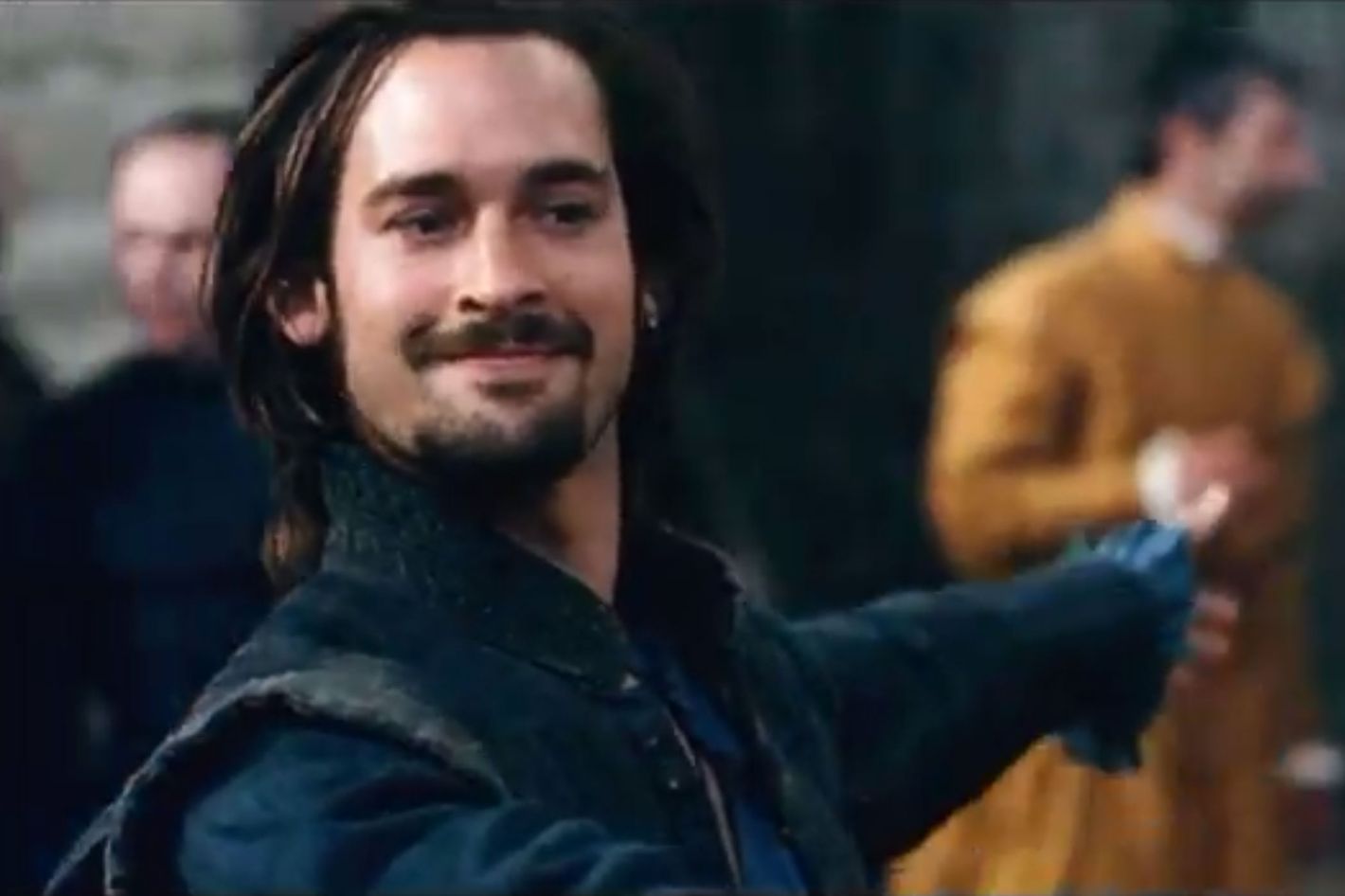
Bucket List : Ask Me About My Shakespeare Shirt. Check!

Spent my daughter’s birthday wandering through Boston with the family, so of course I’m wearing my Mercutio Drew First shirt :).  “Gotta advertise when you get the chance!” I tell my daughter.  She laughs and says, “I think that every time when I’m running! I wear my shirt and I just imagine people seeing that it’s got Shakespeare on it and thinking, There goes Duane’s daughter.”

Anyway, we’re in the North End for lunch, and I’m waiting for the ladies when a man asks me, “Can I take a picture of your shirt?”

But of course!  I sit up straight, do what I can to suck in the gut and hope I don’t look too much like Comic Book Nerd from the Simpsons.  “Thanks,” he says, “I have to send that to my daughter, she’s really into Shakespeare.”

“I made it,” I tell him.  “It’s available on Amazon.”

He asks, “Really? Do you have a business card or something?”

I tell him no, but I’m easily googled as “Shakespeare Geek,” and that there’s a whole bunch of us, there’s a lot more shirts, we’re on Facebook,


Twitter, all of that.

He says he’ll have to tell his daughter about us, and thanks me again.  After he left my son, tells me, “Oh my god you have such a big smile on your face since he came up to you.  Your face wasn’t even in the picture.”

“Not why I’d be smiling,” I told him.  “I’ve always wanted somebody to ask me about my shirt, that’s why I wear it!  Not to mention that’s totally a blog post.  Just in case he does tell his daughter, and she does google us.”  So, if she happens to be here doing exactly that, hi there 🙂  Here’s the Amazon page with all the shirts currently available.  But check back in the fall because I’m adding more all summer!

That’s one for the bucket list.  The next two are:

  • See a complete stranger wearing my merchandise.
  • Have somebody actually recognize me as Shakespeare Geek.

Should either of those happen, you know I’ll be writing about it here!


I Only Knew Three Of These

There’s never a shortage of Top 10 lists I could re-blog, so I try to limit it to the ones where I find some unique value.  Here we get to talk about 10 Shakespearean Stories in Modern Fiction.

This one caught my eye because I can see that they’re using a photo from the recent Lady Macbeth movie.  From what I understood, there’s almost no actual Shakespeare in that one?  Does anybody know one way or the other?  I thought all it really took from the original was the name.  But extra special Easter egg points if you click through the book shop link where you’ll see that the translation was handled by a Mr. McDuff.  Love it.

I’m also intrigued by The Diviners, a Canadian novel from 1974 that’s supposed to be loosely based on The Tempest?  I’ve truly never heard of that one.

For the curious, the three I knew where A Thousand Acres, The Tragedy of Arthur and of course Rosencrantz and Guildenstern Are Dead. I feel like it’s cheating to even include that one. 🙂

I’ve heard a lot about Shylock Is My Name but never read it.  The others on the list are complete mysteries to me.  I’ve heard the term “Withnail and I” over the years but I’m not sure I ever knew it’s supposed to be Hamlet?

If there’s some gold in this list that I’m missing, enlighten me!


(Extra special thanks that there’s no f$%^&*ng Lion King on it, too!)


Manly Shakespeare

Ok, a site called Art of Manliness offers up an article entitled, “20 Classic Poems Every Man Should Read.” Will Shakespeare be on it?

That’s an easy one, because I wouldn’t be writing about it if he didn’t show up.  But which Shakespeare makes an appearance?  Any guesses? Let’s say it’s a sonnet (it is).  Which one shall be anointed “manliest”?

Sonnet 29, “a lamentation on the loss of fame and fortune [that] ends with a meditation on the love that he has for his beloved.”  Does it, as the article suggests, conjure up similar themes with It’s A Wonderful Life?  Never really thought about that.

I’m ok with it.  I don’t have strong knowledge of the sonnets in general, other than the most popular dozen or so that we always talk about – is there a better choice?

Also – this list is good.  It’s weird to see the juxtaposition of “manly” and “poetry” but it works.  There’s some stuff on the list that I’ve never read, but now I want to, and that’s about the best praise I can give a list like this. Whitman makes the list, but not with “O Captain My Captain”.  Longfellow’s here too, but not with the “Wreck of the Hesperus” or “Hiawatha”.  Kipling, too, without “Gunga Din”.  So it’s not like they just went through and picked the easy ones.  Some actual thought went into this list.


First, Let’s Kill Tybalt

Without Tybalt, would there be a Romeo and Juliet?  My preferred interpretation of the “ancient grudge” is that it’s on its dying days, if not for Tybalt single-handedly keeping it alive.

  • The Prologue tells us, “from ancient grudge break to new mutiny.”  I’ve always taken this to mean that during the play we will see the grudge reignited.
  • Sure, the opening scene is a fight between Montagues and Capulets, but it’s also a comedy scene, isn’t it?  None of the four (I just realized, Balthazar is in that scene but doesn’t appear to have any lines?) comes off as a genius.  It’s all talk, and doesn’t turn into a fight until, you guessed it, Tybalt shows up.  Tybalt’s not there, maybe they exchange some heated words and go on their way.
  • Also worth pointing out here is that not only is the Montague (Benvolio) trying to stop the fight, he tries to reason with Tybalt to do the same. He doesn’t just attack Tybalt.
  • Enter the heads of both families – both men wielding (or calling for) their swords, but both women holding them back and talking to them like they’re idiots for even thinking about it.  Nobody assumes that either Lord Capulet or Lord Montague is going to join the fray, it’s just posturing to not show weakness in front of the other.
  • So, maybe without Tybalt escalating this one, we don’t need the Prince to lay down the law because they’ve thrice disturbed the peace.  Who knows, maybe it was Tybalt instigating it every time?  The Prince wants to speak with Capulet first, so maybe he’s planning to say “Dude, what are you going to do about Tybalt? He’s the trouble maker here.”
  • Next time we see Lord Capulet:  “’tis not hard, I think, for men so old as we to keep the peace.”
  • Then there’s the masquerade ball.  Who calls out Romeo?  Tybalt.  Lord Capulet doesn’t care, and even yells at Tybalt for ruining the party.  Imagine if Gregory or Sampson from the first scene was the one to bust Romeo.  Lord Capulet says don’t worry about it, they say fine, they don’t worry about it.  But because it’s Tybalt, we get what reminds me of the scene from Karate Kid II where the constipated uncle learns his lesson but the hot-headed nephew can’t get over losing his honor.  “NOW……TO YOU……I AM DEAD!
  • Of course we know what comes next. Tybalt comes seeking Romeo to avenge the stain on his honor, and whether Mercutio drew first or not, the body count climbs and the rest is history.  Very different from the Karate Kid II ending.

So, what’s your position on the grudge?  If there was no Tybalt, would the story still play out the same?  Somebody else would simply step into his shoes and, like any other sci-fi time travel story, whatever was destined to happen will still manage to happen?  Or is the story really all about Tybalt?


Hooked on Shakespeare

Both dead.Challenge:  Can we come up with “hooks” for Shakespeare?

Normally when somebody mentions a hook today they’re talking about music, and that short repeated musical phrase (possibly not even words) that gets stuck in your head.  Chances are when you hear the song again on the radio you don’t even recognize it the first few times until you hear the hook and you say, “Oh, yeah, this is that song, I love this song.” Know what happens, though?  You recognize more of the song each time.  You pay attention to the words. Before you know it, you can recognize it from the opening notes.

But the actual definition, at least according to Google, is

a thing designed to catch people’s attention.

So I’m wondering if we can’t come up with a hook for Shakespeare’s various plays. I saw a teacher complaining earlier that he’d given the students No Fear Shakespeare and yet still found himself having to translate that for them. I thought, “We’re doing this backwards. We hold the text up to be the Holy Grail and then we say let me make it simpler for you, let me make *that* simpler for you, let me make that simpler for you…” and all the materials are in that context of “Here’s how far removed you are from the actual good stuff.”

Let’s change the perspective.  Can you reduce Hamlet down to a single sentence?  I don’t want to summarize all the elements of the play. What I want is the students’ attention. I want them saying, “Sounds interesting, tell me more.”

I have this image like something out of a movie, the harried English teacher walking down between the desks while the kids sit on their phones, throw paper airplanes, and generally ignore him. The teacher is holding a copy of the complete works.  He gets to his desk, turns, and slams the book down on his desk to get their attention.  And he says …  what?

Sure, he could go with, “Two households!  Both alike, in dignity.  In fair Verona where we lay our scene.” And if you’re like me lightning bolts shoot up your spine because that happens every time. But he doesn’t have a classroom full of Shakespeare geeks, and he needs to hook their attention some other way.

“Girl meets boy at party. Two days later they’re both dead.”

“Hamlet’s dad is gone and he wants to kill his step dad.”

“The only person that knows Macbeth just killed his boss is Macbeth’s wife, because she told him to do it.”

“Everybody knows Beatrice and Benedick love each other, except Beatrice and Benedick.”

As I write these I realize it sounds like click bait, but I don’t want to call it that.  Clickbait implies trying to trick the user into looking under the covers for something that’s not really there. But everything I said above is true. I *want* my students to be interested in what happens next.

Anybody else got some good ones?  The goal is to have a list of great starters that any teacher of Shakespeare could use to kick off a new lesson.