
Update Feb 18, 2010 – Sorry to the sudden surge of traffic hitting this page, but it looks like the “Meet Bill” link has died. No further information available. Oh, well. Stay, hang out, look around. Questions we can answer?
[Ok, there’s a story that goes along with this that I’ll share shortly…]Meet Bill is a bit different from the typical Shakespeare biography. Example?When Will was eighteen he fell in love with Anne Hathaway. After the requisite amount of headbanging they were married.Oh. I’m not sure whether to debate the bit about how much he really loved his wife (who was, what, ten years his senior?) or to laugh over the “requisite headbanging” that came before the marriage (she was knocked up when he married her, right?).The Bard’s group was bad. They kicked ass so bad his competitors used to send out speed writers, shorthand artists and bribe other actors in his plays to try to make their own bootlegged copies of his plays. The unauthorized “boots” were known as “The Bad Quartos.” (Weird but true.) I like the style. It obviously addresses an audience not usually coming to look for Shakespeare biographies.Ok, you want to hear the story too? This is one of those stories that I like to call “The universe is small” stories. This weekend I was playing around at GoDaddy looking to see just how many variations of Shakespeare domains were out there, how many were being cybersquatted, and so on. One of the first I stumbled across was the fact that romeoandjuliet.com was actually registered 10 years ago, for the Luhrman movie. I’d never known that. Never been to that site. Saw it for the first time this weekend. My browsing led me to the Wikipedia page for the movie (not the play), where I found some errors and corrected them.Now go look and see where this Meet Bill site is hosted? romeoandjuliet.com. But I found it strictly in my morning’s headlines, I did not ever actually browse through that site. Weird.
Category: Shakespeare Geek
How Old Is Romeo in Romeo and Juliet?
How old is Romeo? There’s a simple question. Sure, we all know Juliet is 13, because the nurse immediately tells us. And often, I think we then make the leap and assume that Romeo is also 13.
But that’s hardly true. Would that imply that Mercutio, Tybalt, and Paris are also all about 13? Surely it was the case that men simply chose younger wives (Capulet is much older than his wife, is he not?), and actually, we can assume that Romeo and the others are in what, maybe in late teens or early 20s?
It wouldn’t be a good idea to point out that age difference these days, of course. I can just imagine Romeo & Juliet being closed down because it promotes pedophilia or something. But honestly, I’m cool with it (the age difference, not the pedophilia!) The more I read the play, the more I appreciate that Juliet is the most mature person in it. That she’s 13, surrounded by people a generation older than her, is quite impressive. I don’t need to make her older to justify anything, and I don’t need to make Romeo younger to balance it out.
 Sponsored by Masterclass

Romeo can be older and still be rash and impetuous. Juliet can be young and smart. It’s better than trying to imagine 13-year-old Tybalt saying, “I hate the word as I hate Hell….”
But How Old Is Romeo?
The short answer is that Romeo’s age is never mentioned in the play’s text. Romeo is old enough to be running around in the streets of Verona with his friends. His father, Lord Montague, doesn’t even know where he is. That’s all we get to work with.
Did You Know?
I learned something interesting while looking at the trivia for Baz Luhrmann’s movie. Natalie Portman auditioned for the role of Juliet. But because of her small frame, in her words, “Leonardo looked like he was molesting me.” The director said the same thing I said above, only backward — “Leonardo was 21, but could look 18 – and she made him look 21.” In other words, he looked too old, not that she looked too young. So that certainly backs up the idea that you have to cast R&J of roughly equivalent ages to avoid squicking out your audience.






















Shakespeare, by Pink Floyd
Excuse me while my head explodes, in the good way. When I saw this blog’s headline, “David Gilmour – Sonnet 18”, I first skipped past it. Then said “Wait a minute…the Pink Floyd guy?” I got excited. Everybody hopes to hear the sonnets put to music, could it be that there’s audio of Pink Floyd doing it? Talk about your head exploding in the good way.
I won’t lie — the iambic pentameter model does not lend itself well to music — but who cares! It’s got that Pink Floyd sound, there’s nothing bad about that.
How to Memorize Shakespeare
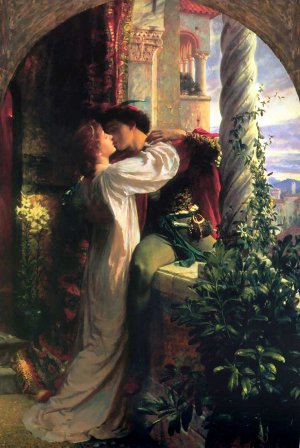
 Been told that you have to memorize Shakespeare? Been there, done that. Probably Romeo and Juliet, right? Balcony scene? You’re not alone. You probably resent the assignment. You’ve probably already tried it and aren’t doing too well, and are looking for ideas.
I’m with you. I think the whole concept of “Memorize Shakespeare, it’ll be good for you” might be the worst thing that teachers do when it comes to the subject. Because they do it all backwards. You have no context for the words, you’ve probably been told “don’t even think about watching the movie until after you read the script,” and you probably don’t really care in general. You’re just doing it because you’ve been told to do it, and you want to get it done as soon as possible.
I have an easy way to demonstrate how bad of an idea this really is. Let’s take a song that I like. Say, Astronomy Domine, by Pink Floyd. It helps if you’ve never heard it. Now, memorize it. Why? Because I said so. Because I’ve told you that it has value, and I’m the teacher, and I’m in a position to punish you if you fail. Do it on time, too, or else you fail.
 Even if you succeed, do you think you’ll ever like that song? Sure, maybe you could recognize it and even pull a few lines out of your memory, but would you know what the words mean? Would you care? Not likely. Very early on in your education I’m quite sure that they started watching for something called “reading comprehension,” which means that you can do more than just repeat the words, you can actually understand the meaning of what it is that you’re saying.
So why isn’t this true with Shakespeare? The way it is positioned — memorize first, understand second, appreciate last (if ever) is just totally backwards. The most important thing to you has to be just being able to mindlessly repeat the words so that you can pass the assignment. And you then promptly forget them after you get your passing grade.
How To Memorize Shakespeare
So having said all that, I can finally get to the tips. Some ideas for you, in no special order:
- See if your teacher will let you memorize a passage of your choice. Many will, assuming that it is of an acceptable length. This gives you more freedom in finding a passage that is more comfortable for you. Some people find the balcony scene from Romeo and Juliet just too sappy to take seriously. So maybe take something from the great sword fight that Romeo and Tybalt have in Act Three? Or even something from the Chorus at the very beginning. Juliet’s “Gallop apace, you fiery footed steeds…” bit is great, once you realize that she’s basically hanging out at the window saying “I wish it would hurry up and get dark so Romeo can get here.”
- See the movie! How are you supposed to know what these words sound like if you don’t hear someone speak them? To memorize Shakespeare, remember he wrote plays not novels. His words were meant to be performed. If your teacher insists that you not do this, then ask if you can complete the assignment by copying down the words instead of reciting them. If you only memorize what the words look like on paper, no one can expect you to know what they’re supposed to sound like.
- Get some context for the words, by any means necessary. Ask somebody who has read the play, if you can’t see the movie. You need to have some clue about what the words mean, otherwise I could just as well ask you to memorize “blue garbage cat does triangle five table hands title”… or any other string of random words. In the balcony scene, Romeo hides in the bushes and sees Juliet come out onto the balcony. He’s talking to himself, trying to find words to describe how beautiful she is, how she stands out against the night sky (that’s where all that “Juliet is the sun” stuff comes from). Juliet, meanwhile, is also talking to herself out loud, saying “Of all the men in the world, how come I had to fall in love with one of my family’s mortal enemies?”
- Find the rhythm in what you’re memorizing, as if it were music. This is poetry, after all. As you read it, tap your hand along and try to get the appropriate dah DAH dah DAH dah DAH sound. But SOFT what LIGHT through YONder WINdow BREAKS, it IS the EAST…
- Try to group the lines into a logical set. Usually one “line” is not a complete sentence. Shakespeare did tend to be wordy. “But soft, what light through yonder window breaks?” is a complete sentence, but it is a question. So what’s the answer? “It is the east, and Juliet is the sun.”
- “Practice” by keeping an ear open for other lines in the play that stuck in your head. It’s actually easier to memorize 20 individual lines scattered around the play than it is to memorize 20 in a row. Much of the difficulty in trying to memorize Shakespeare monologues is just plain lack of confidence. You get a block that says “I can’t do it” and thus you can’t. But once you realize that you’ve already memorized a bunch of lines without even trying, that mental block tends to go away.
- Try to remember that these are indeed people talking to other people, trying to get their point across. Put some emotion into the words. That’s one of the reasons that I say to try finding a passage that you really like. When I was in high school and memorized the balcony scene, there were 4 boys and 4 girls in the class and we were paired up to recite it. And, of course, all of us were painfully shy over the whole prospect, since if we actually did it well, then we’d have to endure endless speculation that we must like each other (ewwwwwww). I remember deliberately doing it badly just to avoid that. So maybe try a scene where Romeo is angry (like after the death of Mercutio), or when Juliet actually stands up for herself.
Break a leg!
Try not to let the experience of trying to memorize Shakespeare make you hate it for life. There’s some good stuff in there, if you listen for it. Twenty years after this homework assignment is over you’ll be so much happier recalling a line here and there that you understand and enjoy, than trying to remember a lengthy passage with no special meaning to you at all.
More Stories on Memorizing…
Shadowplay : Shakespeare as secret political rebel?
Here’s an interesting story for a Sunday morning. In her new book “Shadowplay”, author Clare Asquith presents the case that Shakespeare was writing coded political messages into his plays. Asquith claims to be the first person to have discovered the code, as well as crack it.
A little sample, from the article…
Sunburn:
The sun represented divinity, and so sunburn denotes closeness to God. Shakespeare described himself as ‘tanned’ in Sonnet 62.
Turtle dove:
A traditional image for the apostles, used to signify those who remained faithful in the face of persecution.
Nightingale:
The story of Philomela, who was turned into a nightingale, was an image of the desecrated church and its covert protests.
Red rose:
A term used by Catholics for their ‘old, beautiful’ religion.
Dark:
The new, Protestant religion, associated with black print and sober dress.
Five:
Devotion to the five wounds of Christ led to patterned emblems on the banners borne against the new regime. Shakespeare uses it in the form of flowers, birthmarks or heraldic blazons as a marker of Catholicism.